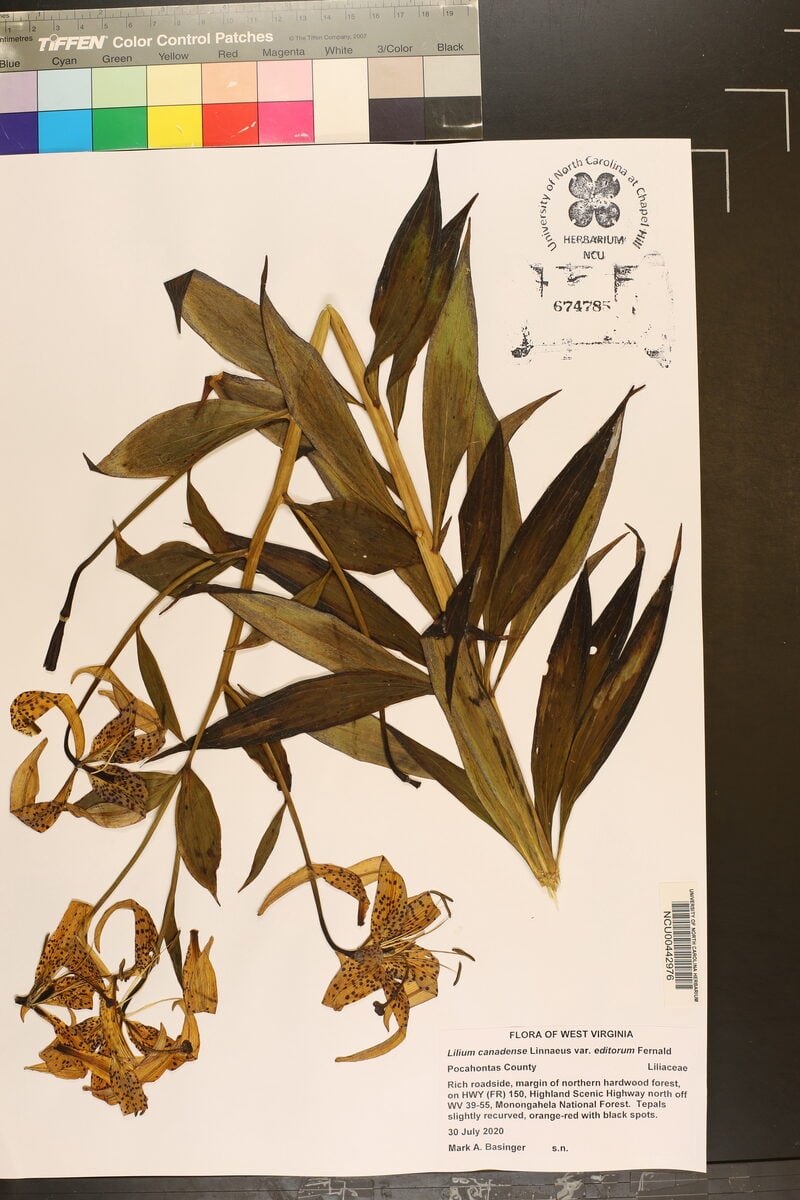
Lilium philadelphicum var. andinum
(Nutt.) Ker-Gawl
Wood lily, Prairie lily
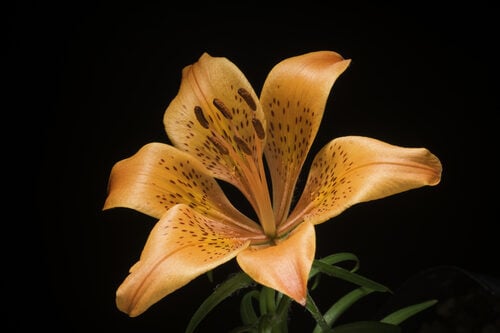
iNaturalist· cc-by-nc-sa
(c) Ginetta & Ron, some rights reserved (CC BY-NC-SA)
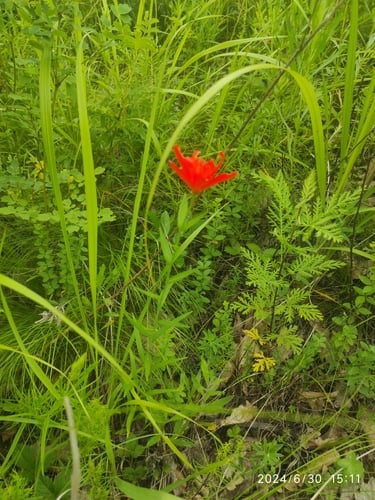
iNaturalist· cc-by-nc
(c) John Boldt, some rights reserved (CC BY-NC), uploaded by John Boldt
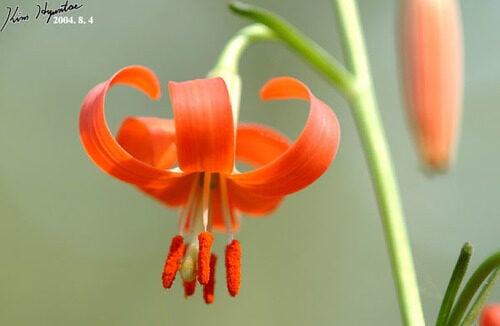
iNaturalist· cc-by-nc-sa
(c) dogtooth77, some rights reserved (CC BY-NC-SA)
Summary
Source: WikipediaLilium philadelphicum, also known as the wood lily, flame lily, Philadelphia lily, (wild) tiger lily, prairie lily, or western red lily, is a perennial species of lily native to North America.
Description
A temperate herb in the lily family with edible bulbs. The plant grows from bulb segments that can be dried and eaten as a nibble.
This description is brief — help expand it
Edible Uses
The bulb segments are eaten dried as a nibble.
Traditional Uses
The bulb segments are eaten dried as a nibble.
This uses section is brief — help expand it
Known Hazards
Cats are extremely sensitive to lily toxicity and ingestion is often fatal. Households and gardens that are visited by cats are strongly advised against keeping this plant or placing dried flowers where a cat may brush against them and become dusted with pollen that they then consume while cleaning. Suspected cases require urgent veterinary attention. Rapid treatment with activated charcoal and/or induced vomiting can reduce the amount of toxin absorbed (this is time-sensitive so in some cases, vets may advise doing it at home), and large amounts of fluid by intravenous injection can reduce damage to kidneys to increase the chances of survival.
Distribution
It is a temperate plant.
Where It Grows
North America, USA,
References (2)
- Moerman, D. F., 2010, Native American Ethnobotany. Timber Press. p 307
- Toupal, R. S. & Hollenback, K., 2009, An Ethnobotany of Indiana Dunes National Lakeshore: Plant Uses of the Ojibwa People. Bureau of Applied Research in Anthropology. University of Arizona