Plicosepalus acaciae
(Zucc.) Wiens & Polhill
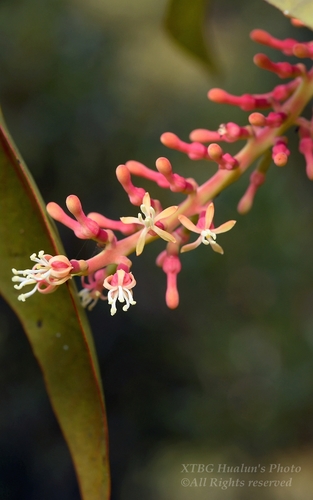
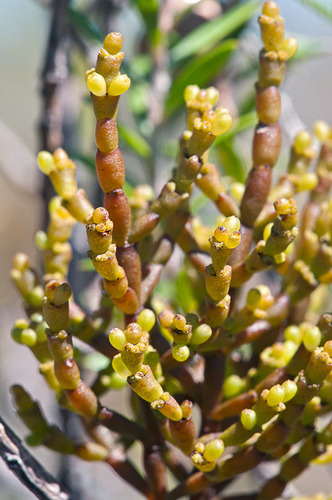
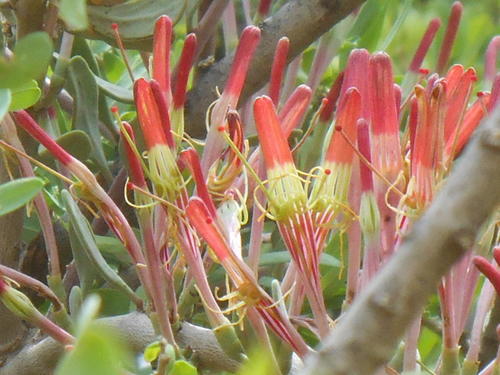
Acacia strap flower
iNaturalist· cc-by-nc
(c) Stefano Doglio, some rights reserved (CC BY-NC), uploaded by Stefano Doglio
iNaturalist· cc-by-nc
(c) Rafi Amar, some rights reserved (CC BY-NC), uploaded by Rafi Amar
iNaturalist· cc-by-nc
(c) Yael Orgad, some rights reserved (CC BY-NC), uploaded by Yael Orgad
Summary
Source: WikipediaPlicosepalus acaciae (syn. Loranthus acaciae), the acacia strap flower, is a species of hemiparasitic flowering plant in the family Loranthaceae. It is native to northeastern Africa, the Levant, and the Arabian Peninsula. As its common and scientific names suggest, it parasitizes acacias; Vachellia tortilis subsp. raddiana (formerly Acacia raddiana) and V. t. subsp. tortilis (formerly A. tortilis). It seeds are dispersed by the white-spectacled bulbul (Pycnonotus xanthopygos).
Description
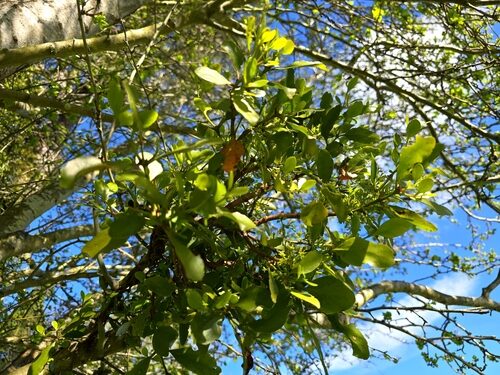
It grows attached to other plants such as Acacias. The leaves are opposite. They are oval and 3-8 cm long by 1-3 cm wide.
This description is brief — help expand it
Edible Uses
The flowers are eaten as a vegetable.
Medicinal Uses
The flowers have an anti-diabetic effect.
Distribution
It is a tropical plant. It grows at about 1,300 m above sea level.
Where It Grows
Africa, Chad, Egypt, Eritrea, Ethiopia, Kenya, Lebanon, Mediterranean, Middle East, Oman, Palestine, Saudi Arabia, Sinai, Somalia, Sudan, Syria, Yemen,
Notes
The flowers have an anti-diabetic effect.
Synonyms
References (2)
- Grubben, G. J. H. and Denton, O. A. (eds), 2004, Plant Resources of Tropical Africa 2. Vegetables. PROTA, Wageningen, Netherlands. p 564
- World Checklist of Useful Plant Species 2020. Royal Botanic Gardens, Kew