Barbarea vulgaris
R. Br.
Upland cress, Yellow rocket
iNaturalist· cc-by-sa
(c) Douglas Goldman, some rights reserved (CC BY-SA), uploaded by Douglas Goldman
iNaturalist· cc-by-nc
(c) Татьяна Химера, some rights reserved (CC BY-NC), uploaded by Татьяна Химера
iNaturalist· cc-by-nc
(c) amlambert11, some rights reserved (CC BY-NC), uploaded by amlambert11
Summary
Source: WikipediaBarbarea vulgaris, also called wintercress (usual common name), or alternatively winter rocket, rocketcress, yellow rocketcress, yellow rocket, wound rocket, herb barbara, creases, or creasy greens, is a biennial herb of the genus Barbarea, belonging to the family Brassicaceae.
Description
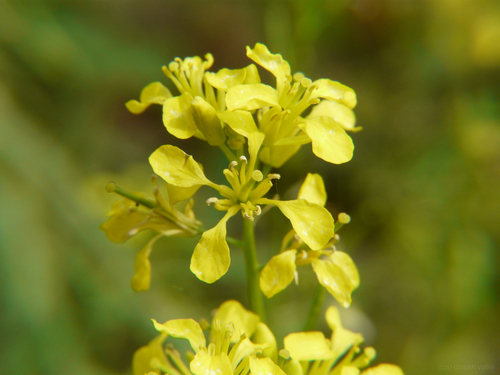
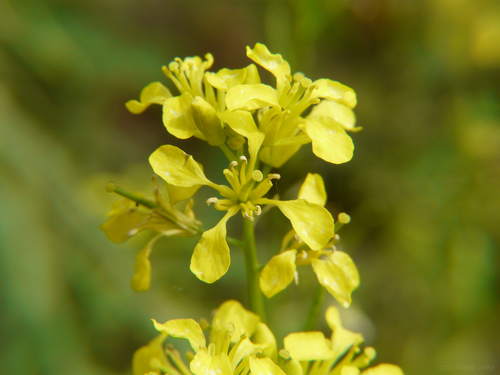
A cabbage family herb. It grows up to 80 cm tall. It completes its life cycle over 2 years or can grow for a few years. It has rings of dark glossy green leaves at the base. These have teeth around the edge. The stems are erect and have a few branches. The lower stem leaves are broadest just above the middle. They are 7-15 cm long and have deep lobes along the sides. They have leaf stalks. The leaves further up the stem are smaller and without stalks. The flowers are bright yellow. They occur in clusters in a cylinder shape. Each flower has 4 narrow yellow petals. The fruit pods are very narrow and 1.5-3 cm long. They have a short beak at the tip. The pods split open along their length to release the small seeds.
Edible Uses
Edible Parts: Flowers Leaves Edible Uses: Young leaves - raw or cooked like spinach. A hot cress-like flavour. Young leaves are chopped up finely and added to salads, older leaves can be used as a potherb but they are rather strong and are best cooked in one or two changes of water. The leaves are available all year round, even in the winter, especially if the weather is mild. To increase the productivity of the plants, remove the flowering stems as they appear (they can be eaten like the leaves) and pick the outer leaves as the plant regrows. Some caution is advised, see the notes above on toxicity. Young flowering stems - harvested before the flowers open and cooked like broccoli. Foraging: Leaves (raw in small amounts; best cooked), pre-bloom shoots/buds as raab. Flowers are garnish-edible. Edibility rating: 3/5 (reliable pot-herb; quality depends on youth and site) [2-3]. Raw: peppery/mustardy, “relatively mild” versus other wild mustards but still assertive. Briefly boil (2–3 min) or blanch and then sauté yields savory, mildly bitter greens and a vibrant, yellow-green broth ideal for soups/grains. Mix with fat (olive oil, butter) and acid (lemon/vinegar). Tight buds stir-fry well. Avoid roadside or fertilized edges that can intensify harshness [2-3]. Seasonality (Phenology): Rosettes: autumn–early spring. Harvest greens: early–mid spring (best pre-bolt). Flower/seed: late spring–early summer; palatability declines after full bloom. Seed set: early/mid summer. Look-Alikes & Confusion Risks: Other yellow-flowered mustards (Sinapis/Brassica, Rorippa, Descurainia), and edible upland cress (B. verna). Confirm glabrous plant, clasping upper leaves, and siliques with ~=3 mm beak. Not to be confused with toxic buttercups (5+ petals, different fruit) or hemlock (umbels, not racemes). Traditional/Indigenous Use Summary: Primarily a European potherb adopted by settlers in North America; in many regions it served as a spring tonic green. Limited indigenous North American food records compared with other native mustards.
Traditional Uses
The leaves have a hot peppery flavour useful in cooking. It can be used in salads, soups, sandwiches. Leaves from young rosettes in late winter when the weather is less frosty are less bitter. The later more bitter leaves need to be cooked in 2 or 3 changes of water.
Medicinal Uses
Antiscorbutic Appetizer Diuretic Vulnerary The leaves are vulnerary and have been used as a poultice for treating wounds. A tea made from the leaves is appetizer, antiscorbutic and diuretic.
Known Hazards
There is a report that ingestion of the leaves can lead to kidney malfunction.
Distribution
A temperate plant. It grows along ditches, river banks, damp grasslands, waste places, roadsides, fields, disturbed sites between 700–4100 m altitude in China. It can grow in reasonably moist conditions. It does best in sun of partial shade. It responds to good fertility. It suits hardiness zones 6-10.
Where It Grows
Afghanistan, Africa, Albania, Algeria, Argentina, Armenia, Asia, Australia, Austria, Azerbaijan, Balkans, Belarus, Belgium, Bosnia, Britain, Bulgaria, Canada, Caucasus, Central Asia, China, Czech Republic, Denmark, Estonia, Europe, Finland, France, Georgia, Germany, Himalayas, Hungary, India, Iran, Iraq, Ireland, Italy, Kazakhstan, Korea, Kyrgyzstan, Latvia, Lithuania, Luxembourg, Madagascar, Mediterranean, Middle East, Mongolia, Nepal, Netherlands, New Zealand, North Africa, North America, Norway, Pakistan, Poland, Portugal, Romania, Russia, Scandinavia, Siberia, Sicily, Slovakia, Slovenia, South America, Spain, Sri Lanka, Sweden, Switzerland, Tajikistan, Tasmania, Tibet, Turkey, Türkiye, Turkmenistan, Tunisia, Ukraine, USA, Yugoslavia,
Cultivation
Identification & Habit: Biennial to short-lived perennial; glabrous. Basal leaves pinnate with fewer lobes than B. verna; upper leaves clasping and lobed. Bright yellow 4-petaled flowers in racemes. Siliques 2–5 cm, rounded-tetragonal, typically with a distinct beak to ~3 mm (key difference from B. orthoceras). Plants often form colonies along wet ditches and stream edges. Succeeds in sun or shade in a moist well-drained soil. Tolerates a pH in the range 4.8 to 7.5. The plant can continue to grow all winter, especially if the weather is mild. A short-lived perennial, though plants usually self-sow freely when in a suitable position. There is at least one named form, developed for its ornamental value. 'Variegata' has variegated leaves and grows less strongly than the type. A good bee plant. Cultivar/Selection Notes: No named horticultural cultivars for wild use; culinary seed is sold as wintercress/yellow rocket. Some strains are slightly broader-leafed and milder. Pests & Problems: Flea beetles, aphids, sporadic cabbageworms; diseases include white rust (Albugo candida), downy mildew, and leaf spots in wet springs. Heat causes rapid bolting.
Propagation
Seed - sow spring or autumn in situ. Germination usually takes place within 2 - 3 weeks. Division in spring. his plant is a short-lived perennial, and also usually self-sows freely, so we have not found division to be worthwhile.
Other Uses
Ecology & Wildlife: Early nectar/pollen for hoverflies, bees. Larval host for some brassica-feeding Lepidoptera; stands can harbor beneficial predators that help adjacent crops. Special Uses Attracts Wildlife
Production
Leaves are normally picked nefore flowering. The leaves can become bitter in later spring. Covering the leaves near harvest to blanch them can reduce bitterness.
Other Information
It is sold in local markets.
Notes
There are 12 Barbarea species.
Nutrition
| Part | Moisture | kJ | kcal | Protein | Vit A | Vit C | Iron | Zinc |
|---|---|---|---|---|---|---|---|---|
| Leaves | — | — | — | — | 130 | — | — | — |
Synonyms
Also Known As
Barbara's cress, Ktsmndkzuk, Land cress, Lassana, Navadna barbica, Ou zhou shan jie, Surepka, Vinterkarse, Wintercress
References (39)
- W. T. Aiton, Hortus kew. ed. 2, 4:109. 1812
- Beckstrom-Sternberg, Stephen M., and James A. Duke. "The Foodplant Database." http://probe.nalusda.gov:8300/cgi-bin/browse/foodplantdb.(ACEDB version 4.0 - data version July 1994) (As Campe barbarea)
- Bircher, A. G. & Bircher, W. H., 2000, Encyclopedia of Fruit Trees and Edible Flowering Plants in Egypt and the Subtropics. AUC Press. p 54
- Bodkin, F., 1991, Encyclopedia Botanica. Cornstalk publishing, p 132
- Brickell, C. (Ed.), 1999, The Royal Horticultural Society A-Z Encyclopedia of Garden Plants. Convent Garden Books. p 160
Show all 39 references Hide references
- Cerne, M., 1992, Wild Plants from Slovenia used as Vegetables. Acta Horticulturae 318
- Cheifetz, A., (ed), 1999, 500 popular vegetables, herbs, fruits and nuts for Australian Gardeners. Random House p 37
- Duke, J.A., 1992, Handbook of Edible Weeds. CRC Press. p 46
- Elias, T.S. & Dykeman P.A., 1990, Edible Wild Plants. A North American Field guide. Sterling, New York p 99
- Ertug, F, Yenen Bitkiler. Resimli Türkiye Florası -I- Flora of Turkey - Ethnobotany supplement
- Esperanca, M. J., 1988. Surviving in the wild. A glance at the wild plants and their uses. Vol. 2. p 354
- Facciola, S., 1998, Cornucopia 2: a Source Book of Edible Plants. Kampong Publications, p 52
- Flora of China @ efloras.org Volume 8
- Geraci, A., et al, 2018, The wild taxa utilized as vegetables in Sicily (Italy): a traditional component of the Mediterranean diet. Journal of Ethnobiology and Ethnomedicine (2018) 14:14
- Girard, N. J., 2020, Sustainable Foraging of Wild Edible Plants in Norway. A Biocultural Approach. M. Sc. thesis Norwegian University. p 129
- Hedrick, U.P., 1919, (Ed.), Sturtevant's edible plants of the world. p 92 (As Barbarea arcuata)
- Irving, M., 2009, The Forager Handbook, A Guide to the Edible Plants of Britain. Ebury Press p 80
- Kiple, K.F. & Ornelas, K.C., (eds), 2000, The Cambridge World History of Food. CUP p 1885
- Kolosova, V., et al, 2020, Foraging in Boreal Forest: Wild Food Plants of the Republic of Karelia, NW Russia. Foods 2020, 9, 1015; p 8
- Licata, M., et al, 2016, A survey of wild plant species for food use in Sicily (Italy) – results of a 3-year study in four Regional Parks. Journal of Ethnobiology and Ethnomedicine 12:12
- Luczaj, L. et al, 2012, Wild food plant use in 21st century Europe: the disappearance of old traditions and the search for new cuisines involving wild edibles. Acta Soc Bot Pol 81(4):359–370
- Lyle, K. L., 2010, The Complete Guide to Edible Wild Plants, Mushrooms, Fruits and Nuts. Falcon Guides. p 20
- Mabey, R., 1973, Food for Free. A Guide to the edible wild plants of Britain, Collins. p 78
- MacKinnon, A., et al, 2009, Edible & Medicinal Plants of Canada. Lone Pine. p 214
- ç
- Plants for a Future database, The Field, Penpol, Lostwithiel, Cornwall, PL22 0NG, UK. http://www.scs.leeds.ac.uk/pfaf/
- Razanameharizaka, J., et al, 2022, Catalogue Legumes Traditionnels de Madagascar. Université d’Antananarivo, Antananarivo (101), Madagascar. Vol. 1. p 30
- Redzic, S. J., 2006, Wild Edible Plants and their Traditional Use in the Human Nutrition in Bosnia-Herzegovina. Ecology of Food and Nutrition, 45:189-232
- Redzic, S., 2010, Use of Wild and Semi-Wild Edible Plants in Nutrition and Survival of People in 1430 Days of Siege of Sarajevo during the War in Bosnia and Herzegovina (1992–1995). Coll. Antropol 34 (2010) 2:551-570
- Saunders, C.F., 1948, Edible and Useful Wild Plants. Dover. New York. p 124,
- Seidemann J., 2005, World Spice Plants. Economic Usage, Botany, Taxonomy. Springer. p 62
- Simkova, K. et al, 2014, Ethnobotanical review of wild edible plants used in the Czech Republic. Journal of Applied Botany and Food Quality 88, 49-67
- Tozer, F., 2007, The Uses of Wild Plants. Green Man Publishing. p 45
- Urgamal, M., Oyuntsetseg, B., Nyambayar, D. & Dulamsuren, Ch. 2014. Conspectus of the vascular plants of Mongolia. (Editors: Sanchir, Ch. & Jamsran, Ts.). Ulaanbaatar, Mongolia. “Admon“ Press. 334pp. (p. 79-90).
- USDA, ARS, National Genetic Resources Program. Germplasm Resources Information Network - (GRIN). [Online Database] National Germplasm Resources Laboratory, Beltsville, Maryland. Available: www.ars-grin.gov/cgi-bin/npgs/html/econ.pl (10 April 2000)
- Wiersema, J. H. & Leon, B., 2013, World Economic Plants. A Standard Reference CRC Press. 2nd Ed. p 93
- World Checklist of Useful Plant Species 2020. Royal Botanic Gardens, Kew
- www.wildediblefood.com
- Zhou Taiyan, Lu Lianli, Yang Guang; Ihsan A. Al-Shehbaz, BRASSICACEAE (CRUCIFERAE), Flora of China.
More from Brassicaceae
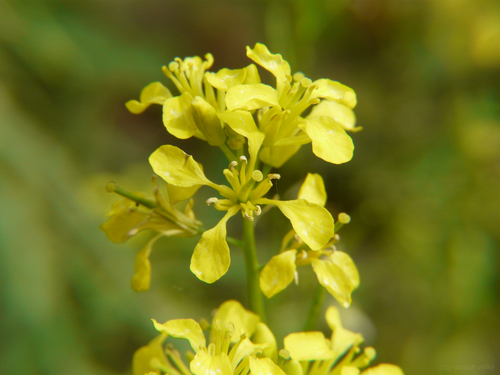
Brassica juncea var. involuta
Involute mustard
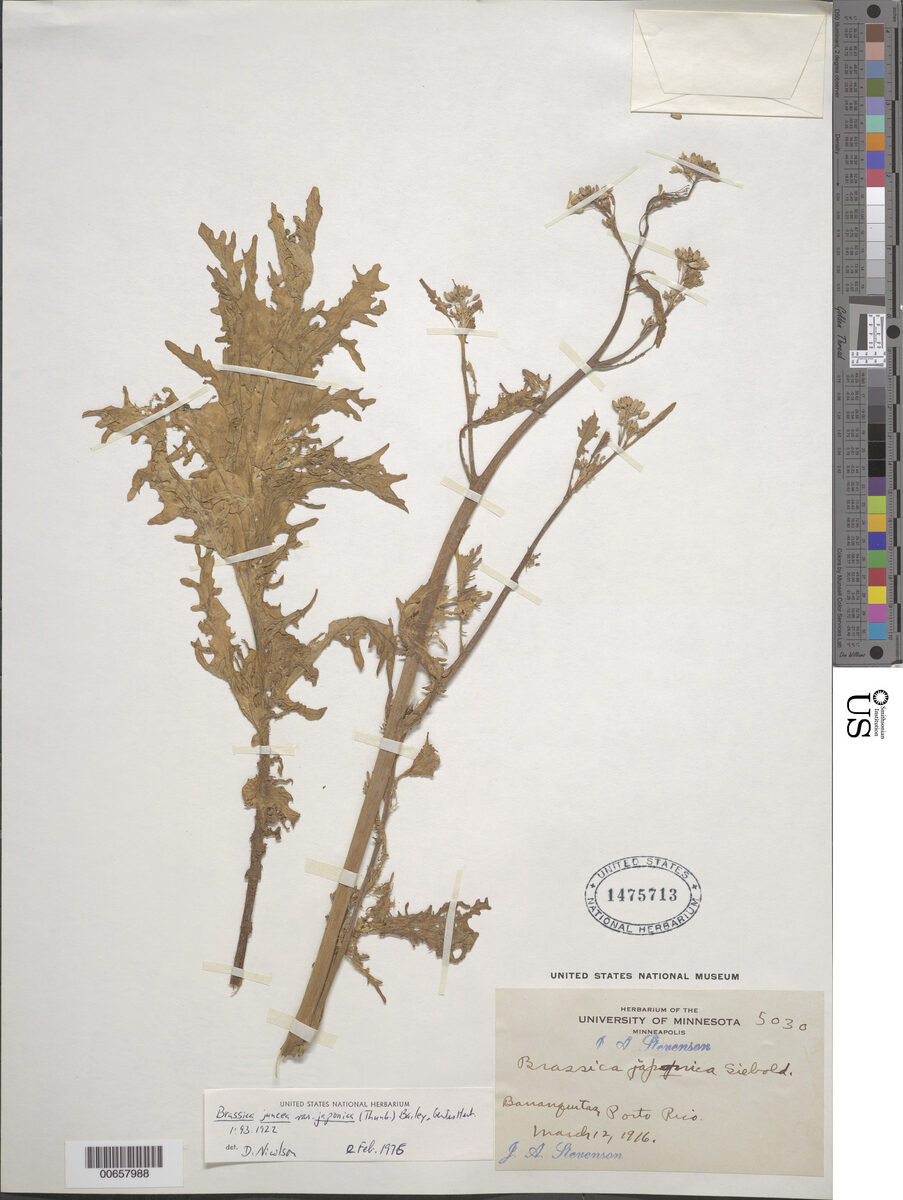
Brassica juncea var. japonica
Mizuna, Cut-leaf mustard
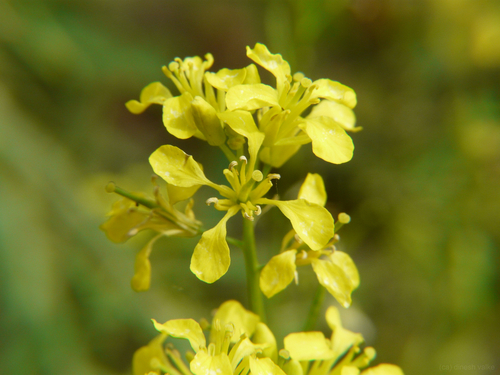
Brassica juncea var. latipa
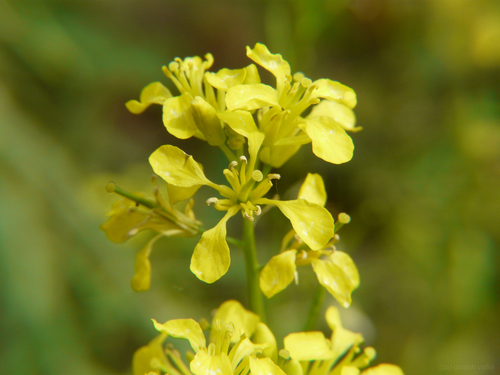
Brassica juncea var. leucanthus
Brassica juncea var. megarrhiza
Tuberous-rooted mustard, Large-rooted mustard
Brassica juncea var. multiceps
Chicken mustard, Multishoot mustard, Nine-head mustard