Fockea angustifolia
K. Schum.
Water root, Narrow-leafed kambro
iNaturalist· cc-by-nc-nd
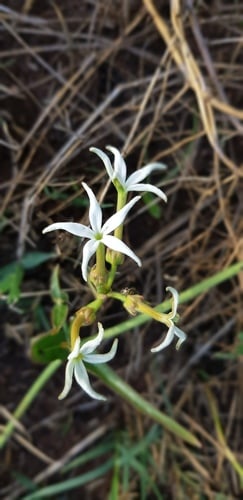
(c) Barbara Schneider, some rights reserved (CC BY-NC-ND), uploaded by Barbara Schneider
iNaturalist· cc-by-nc-nd
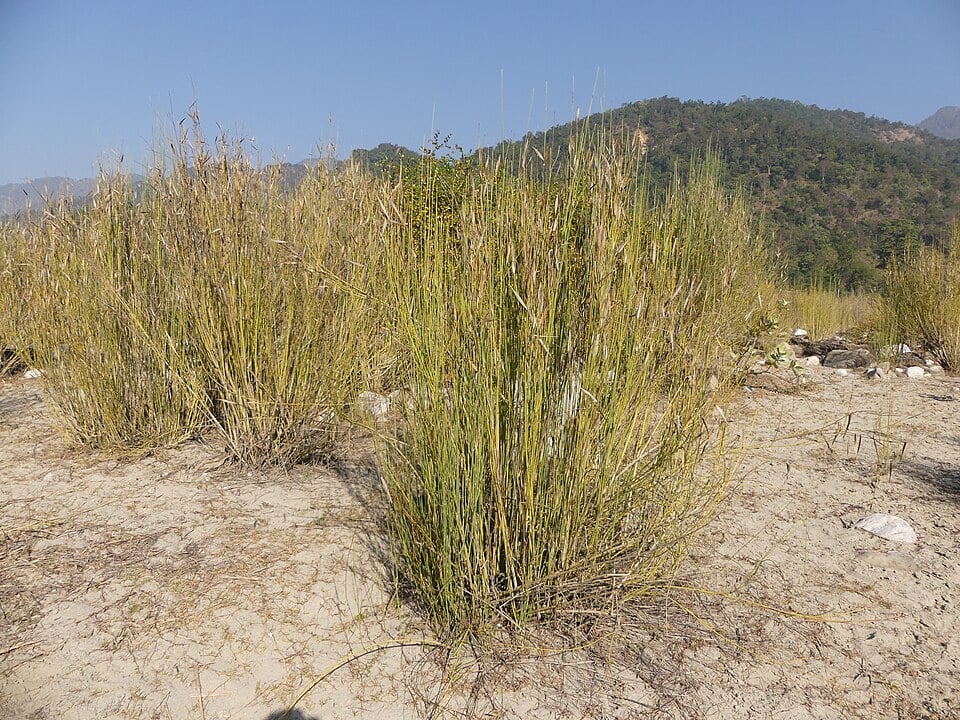
(c) Barbara Schneider, some rights reserved (CC BY-NC-ND), uploaded by Barbara Schneider
iNaturalist· cc-by-nc-nd
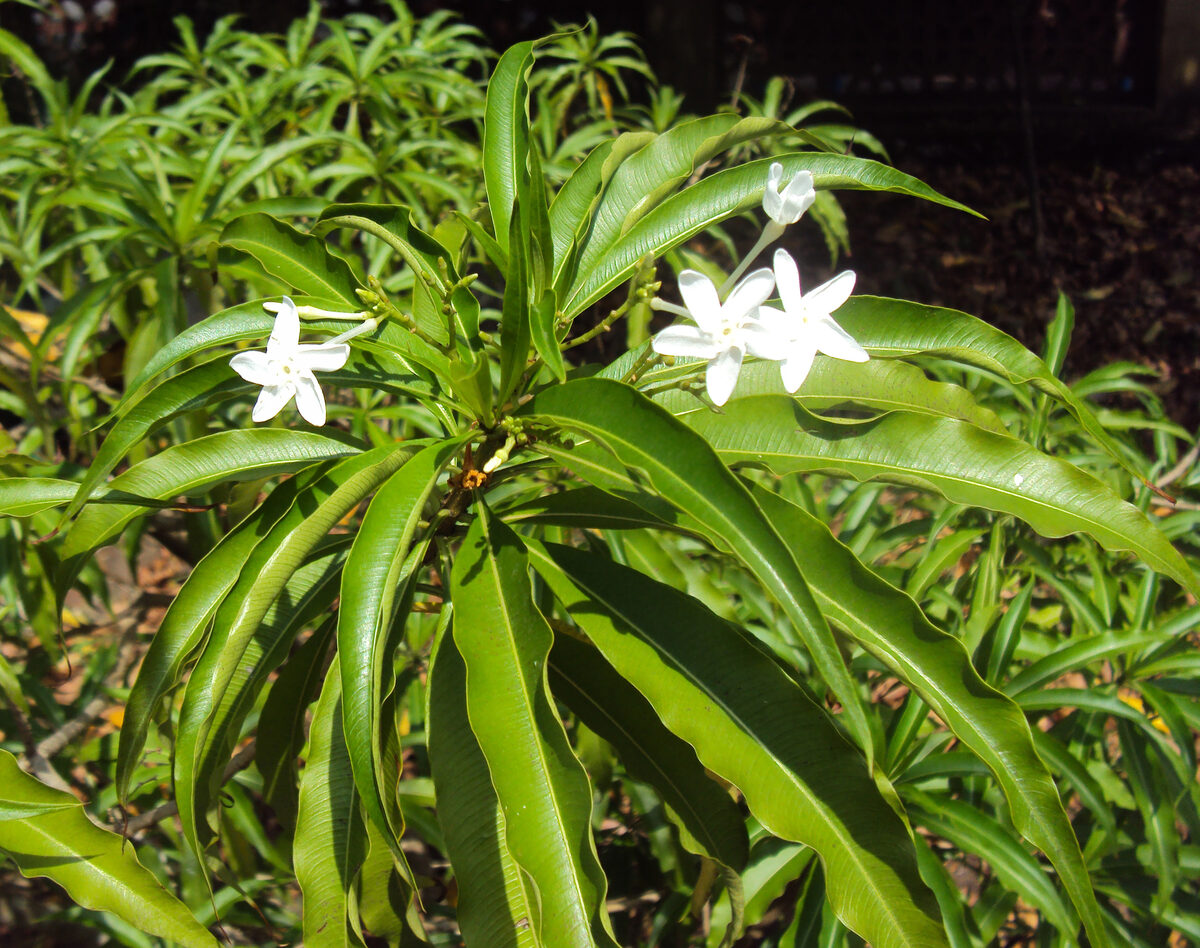
(c) Christien Steyn, some rights reserved (CC BY-NC-ND), uploaded by Christien Steyn
Description
A climber. It has a few fine hairs. It has a taproot and keeps growing from year to year. The stems and tubers have a milky sap. The leaves are oblong or strap shaped and 7 cm long by 5 mm wide. The flowers are almost without stalks. They occur in compact clusters. They are green and white. The flowers are about 1 cm long. The flower stalks are hairy. The fruit are 8 cm long by less than 1 cm wide. The seeds are 10 mm long by 3 mm wide. The tubers are 50 cm long and 30 cm wide. They have a brown skin and are somewhat spongy.
Edible Uses
The tubers are eaten raw when young or roasted when older, and are also made into jams and preserves by cutting them into small squares, soaking them in lime-treated water, and cooking them into a chunky jam. The stems and roots are also edible.
Traditional Uses
The swollen roots are eaten raw when young. Older ones are roasted. They are also used for jams and preserves. The tubers are cut into small squares and put in water to which a little lime has been added and the extract is used to prepare a chunky jam.
Medicinal Uses
The tubers are the most important source of water for bushmen in Namibia.
Distribution
A tropical plant. It grows in hot arid places. They need a sunny warm position. In Swaziland it grows in the lowveld only. It grows in the Kalahari. It grows in regions with a dry period of 6-11 months. It is best in shade. In southern Africa it grows between 800-1,200 m altitude.
Where It Grows
Africa, Angola, Botswana, Central Africa, East Africa, Eswatini, Kenya, Namibia, South Africa, Southern Africa, Swaziland, Tanzania, Zambia, Zimbabwe,
Cultivation
The top of the tuber is usually left in the ground to re-grow.
Propagation
Seed - Cuttings
Production
The tuber can be harvested again after 2-3 years.
Other Information
The tubers is the most important source of water for bushmen in Namibia.
Notes
There are 6 Fockea species.
Nutrition
| Part | Moisture | kJ | kcal | Protein | Vit A | Vit C | Iron | Zinc |
|---|---|---|---|---|---|---|---|---|
| Tubers | 91.3 | 103 | 25 | 0.5 | — | 3.8 | 0.6 | 0.2 |
Synonyms
Also Known As
Dicava, Ecava, Enongo, Kambro, Kghoa, Khoa, Leruswa, Licava
References (25)
- Arnold, T.H., Wells, M.J. & Wehmeyer, A.S., Khoisan food plants: taxa with potential for future economic exploitation, in Wickens, G.E., Goodin, J.R., and Field, D.V.,(Eds.) 1985, Plants for Arid Lands. Unwin Hyman, London, p 73
- Facciola, S., 1998, Cornucopia 2: a Source Book of Edible Plants. Kampong Publications, p 32
- Fowler, D. G., 2007, Zambian Plants: Their Vernacular Names and Uses. Kew. p 76
- Fox, F. W. & Young, M. E. N., 1982, Food from the Veld. Delta Books. p 109
- Ichikawa, M., 1980, The Utilization of Wild Food Plants by the Suiei Dorobo in Northern Kenya. J. Anthrop. Soc. Nippon. 88(1): 25-48 - Vegetables of African hunters (As Fockea monroi)
Show all 25 references Hide references
- Lee, 1979,
- Leger, S., 1997, A Description of Today's Use of Plants in West Bushmanland (Namibia). German Development Service. PO Box 220035, 14061 Berlin, Germany. http://www.sigridleger.de/book/
- Lim, T. K., 2015, Edible Medicinal and Non Medicinal Plants. Volume 9, Modified Stems, Roots, Bulbs. Springer p 43
- Long, C., 2005, Swaziland's Flora - siSwati names and Uses http://www.sntc.org.sz/flora/
- Maguire, 1978,
- Marshall, 1976,
- Neudeck, L. et al, 2012, The Contribution of Edible Wild Plants to Food Security, Dietary Diversity and Income of Households in Shorobe Village, Northern Botswana. Ethnobotany Research & Applications 10:449-462
- Peters, C. R., O'Brien, E. M., and Drummond, R.B., 1992, Edible Wild plants of Sub-saharan Africa. Kew. p 63
- Plowes, N. J. & Taylor, F. W., 1997, The Processing of Indigenous Fruits and other Wildfoods of Southern Africa. in Smartt, L. & Haq. (Eds) Domestication, Production and Utilization of New Crops. ICUC p 191
- Ruiters-Welcome, A. K., 2019, Food plants of southern Africa. Ph.D. thesis. Univ. of Johannesburg p 23
- Story, 1958,
- Sullivan, S., 1998, People plants and practice in drylands: Socio-political and ecological dimensions of resource-use by Damara farmers in north-west Namibia. Ph.D. Univ. College London.
- Swaziland's Flora Database http://www.sntc.org.sz/flora
- Tanno, T., Plant Utilization of the Mbuti Pygmies. (As Fockea monroi)
- van Wyk, Be., & Gericke, N., 2007, People's plants. A Guide to Useful Plants of Southern Africa. Briza. p 88
- Wehmeyer, A. S, 1986, Edible Wild Plants of Southern Africa. Data on the Nutrient Contents of over 300 species.
- van Wyk, B-E., 2011, The potential of South African plants in the development of new food and beverage products. South African Journal of Botany 77 (2011) 857–868
- Welcome, A. K. & Van Wyk, B.-E., 2019, An inventory and analysis of the food plants of southern Africa. South African Journal of Botany 122 (2019) 136–179
- World Checklist of Useful Plant Species 2020. Royal Botanic Gardens, Kew
- Youngblood, D., 2004, Identification and Quantification of Edible Plant Foods in the Upper (Nama) Karoo, South Africa. Economic Botany 58 (Supplement) :S43-S65