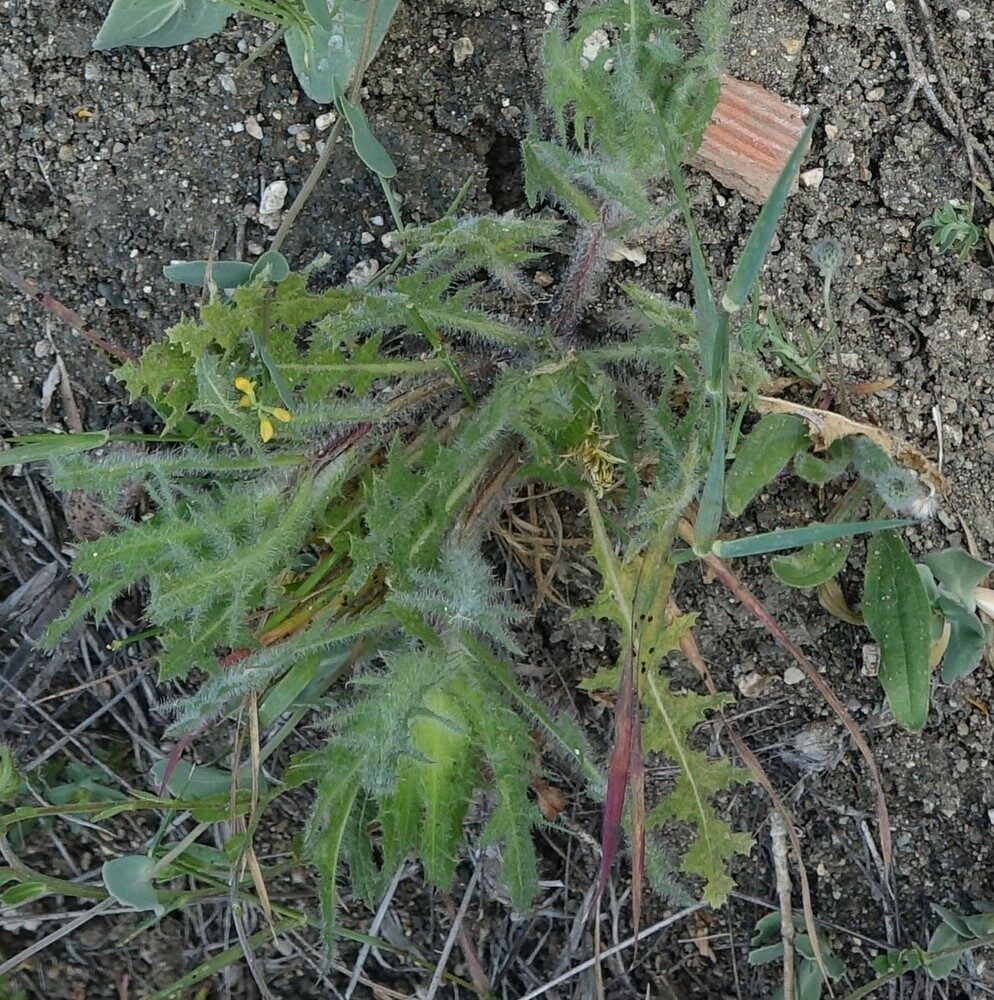
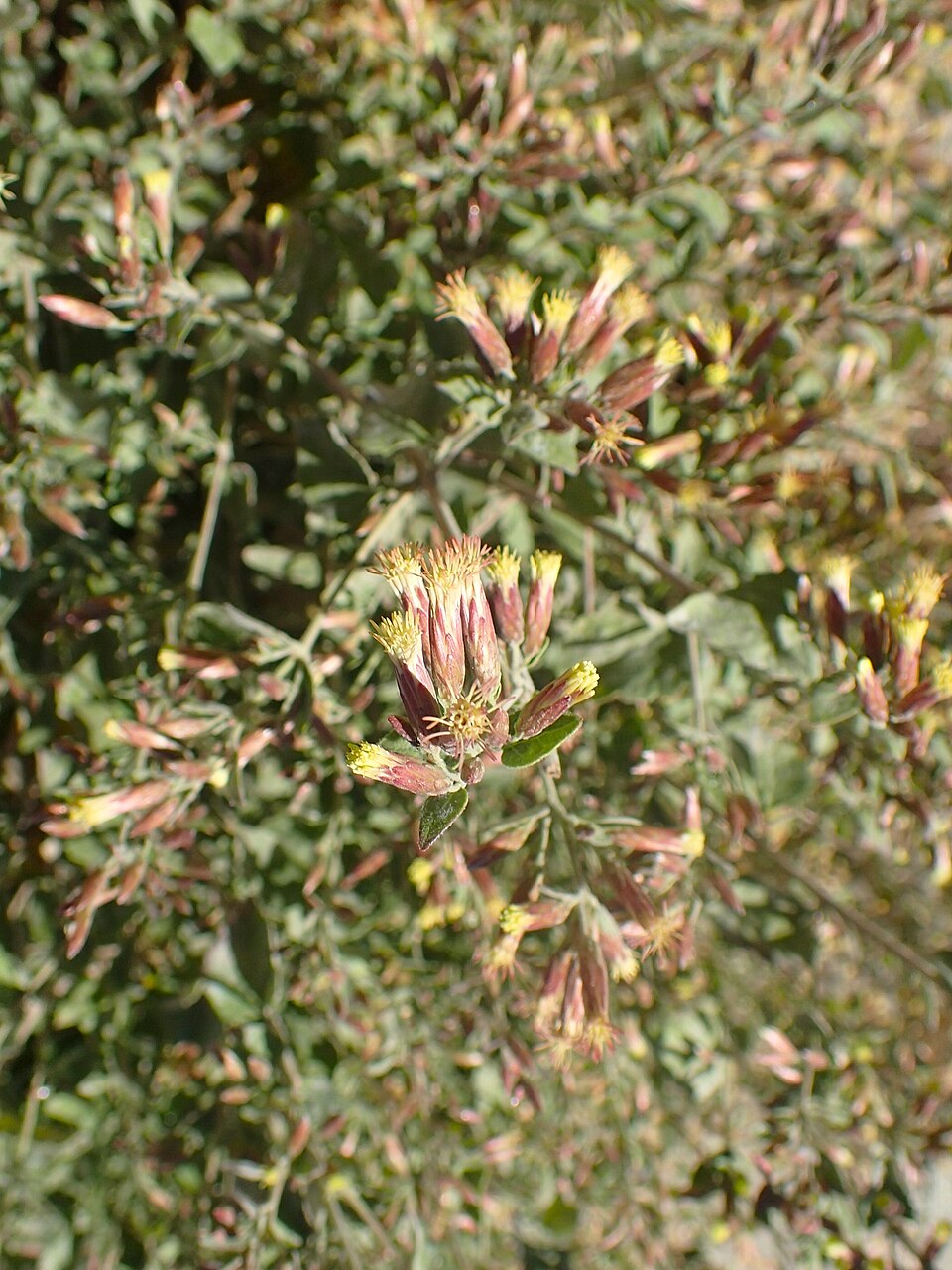
Cynara scolymus
L.
Globe artichoke
iNaturalist· cc-by-nc
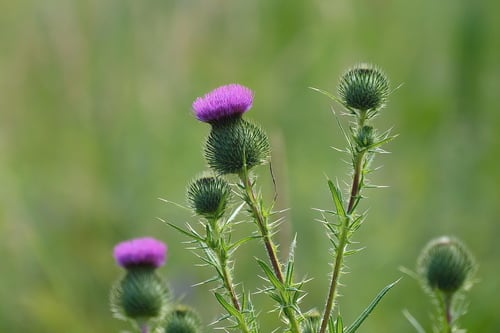
(c) Vicky Foltz, some rights reserved (CC BY-NC)
iNaturalist· cc-by-nc
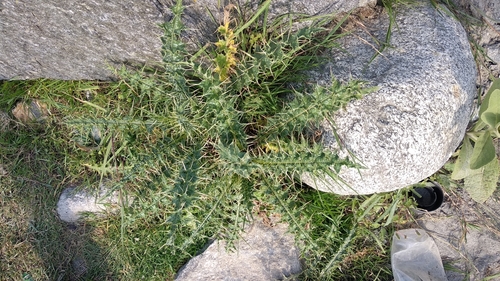
(c) Vicky Foltz, some rights reserved (CC BY-NC)
iNaturalist· cc-by-nc
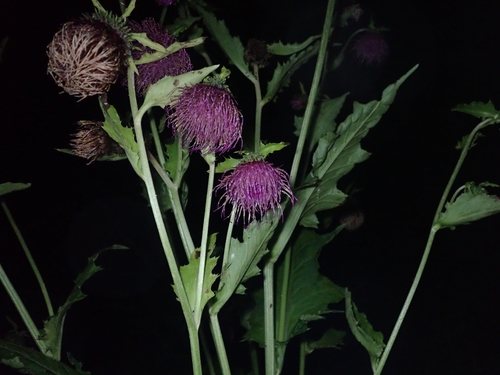
(c) lucapassalacqua, some rights reserved (CC BY-NC)
Summary
Source: WikipediaA robust perennial growing to 1.5 m tall and 1 m wide at a medium rate. Hardy to UK zone 6 and not frost-tender. Flowers from August to September with seeds ripening September to October. Hermaphroditic and self-fertile, pollinated by bees, moths, and butterflies. Attracts wildlife. Accommodates light sandy, medium loamy, and heavy clay soils with well-drained preference and salt tolerance. Suits mildly acidic, neutral, and basic soils. Requires full sun and prefers moist soil. Tolerates strong winds but not maritime exposure.
Description
A thistle like perennial plant. It grows 1-2 m high and spreads to 1 m across. It forms a clump. It has deeply lobed leaves. The leaves are 80 cm long. They are greyish green above. They have a woolly, white surface underneath. They do not have spines. The flower is purple and surrounded by green bracts. It forms a large head. The flower head is about 8-15 cm across. There are several cultivated varieties.
Edible Uses
Flower buds are eaten raw or cooked, harvested just before the flowers open — usually boiled before eating. Only the base of each bract and the heart are consumed. The flavour is mild and pleasant, though globe artichokes are considered fiddly to eat. Small or baby artichokes produced on lateral stems can be pickled or used in soups and stews. Plants yield around 5 to 6 main heads per year from their second year onwards. Flowering stems can be peeled and eaten raw or cooked, with a sweet, nutty flavour. Young leaf stems are used as a celery substitute, normally blanched to remove bitterness before being boiled or eaten raw — many find them too bitter to enjoy. Leaves are cooked but have a bitter flavour. Dried flowers serve as a rennet substitute for curdling plant milks.
Traditional Uses
The fleshy bracts of the flower and the base of the flower head are boiled and eaten. They can be used in soups. They can be eaten raw, boiled, steamed, baked, fried, stuffed or marinated. The small side shoots are pickled, preserved in oil, or used in soups and stews. (To stop the cut artichoke turning brown in air, they can be dipped in lemon juice.) The tender inner portion of the flower stalk can be eaten raw or cooked.
Medicinal Uses
The globe artichoke has become medicinally important following the discovery of cynarin, a bitter compound in the leaves that improves liver and gall bladder function, stimulates digestive juice secretion (especially bile), and lowers blood cholesterol. The leaves are anticholesterolemic, antirheumatic, cholagogue, digestive, diuretic, hypoglycaemic, and lithontripic, and are used internally for chronic liver and gall bladder diseases, jaundice, hepatitis, arteriosclerosis, and the early stages of late-onset diabetes. Leaves are best harvested just before flowering and can be used fresh or dried. The German Commission E Monographs approve Cynara scolymus for liver and gallbladder complaints and loss of appetite.
Known Hazards
Can cause allergic reactions (dermatitis) due to lactones.. Use with caution in cases of biliary obstruction. May hinder breast feeding (lactation).
Distribution
A Mediterranean plant. It can be grown in the highlands in the tropics. It suits drier areas. It prefers deep, rich, alkaline soils in an open sunny position. It is frost resistant but drought tender. It suits plant hardiness zones 6-11.
Where It Grows
Africa, Andorra, Asia, Australia, Balkans, Belgium, Central America, China, Cuba, Cyprus, Dominican Republic, East Africa, Egypt, Ethiopia, Europe, France, Greece, Haiti, India, Indochina, Indonesia, Italy, Macedonia, Malta, Mediterranean, Mexico, North Africa, North America, Pacific, Papua New Guinea, PNG, Philippines, Portugal, SE Asia, Slovenia, South Africa, Southern Africa, Spain, Tasmania, Turkey, Türkiye, USA, West Indies,
Cultivation
Prefers a light warm soil and an open position in full sun. Requires plenty of moisture in the growing season and a good rich soil. Prefers a sheltered position but plants are reasonably wind resistant. Plants are tolerant of saline conditions. Plants succeed in cool climates though they may need protection in cold winters, they are unlikely to thrive in the north of Britain. Wet winters are far more likely to cause problems than cold ones. The globe artichoke is often cultivated in the garden and sometimes commercially for its edible flower buds, there are some named varieties. It is best to renew the plants by division of the suckers every 3 years but they do live for a number of years. The plant has recently been reclassified (1999) as not having specific status but being part of C. cardunculus. However, since it is distinct enough from the gardener's viewpoint (having a much larger seedhead) we have decided to leave it with its own entry for the time being. Plants seem to be immune to the predations of rabbits. The flowering plant is a magnet for bees. In garden design, as well as the above-ground architecture of a plant, root structure considerations help in choosing plants that work together for their optimal soil requirements including nutrients and water. Thick or swollen - fibrous or tap root. Cardoon stalks are typically harvested in late summer to autumn, while Globe Artichokes are harvested in late spring to summer. Both plants flower in late summer to early autumn. Cardoon and Globe Artichoke have moderate growth rates, taking about 2-3 years to establish fully and produce significant yields.
Propagation
Sow seed in early spring in a greenhouse; germination is usually quick. Prick seedlings into individual pots as soon as they are large enough to handle and plant out during summer, giving some winter protection in the first year. Seed can also be sown in situ in April, 2cm deep, with 2–3 seeds at each desired position — protect from mice. Divide suckers in November, overwinter in a cold frame, and plant out in April. Division in March/April is also possible, planting straight into permanent positions, though plants will be smaller in their first year.
Other Uses
A dark grey dye is obtained from the leaves. The plant works well as a hedge or border and its dense foliage provides habitat for beneficial insects. The large flowers are rich in nectar and pollen, attracting bees, butterflies, and other pollinators. Edible parts provide food for some wildlife, and the foliage offers limited shelter. Leaf litter and the growth habit create invertebrate habitat and ground cover. There is no significant evidence of the plant acting as a pest confuser through smell.
Production
Plants from seeds produce flowers after 240 days and plants from suckers flower earlier. The flower buds can be produced over a 2 or 3 year period. The buds are harvested when full size but before the bracts open.
Other Information
It is a commercially cultivated vegetable. Not commonly seen in Papua New Guinea although apparently gaining some acceptance in some areas.
Notes
The leaves are used in medicine for treatment of bile/liver conditions. There are about 10 Cynara species.
Synonyms
Also Known As
Alcachofera, Alcachofra, Archiciocca, Artichaut, Artičoka, Carciofo, Chao zian ji, Chousen azami, Enginar, Hathichak, Hathichoke, Kenchofe, Yabani enginar, Yang ji
References (47)
- Ambasta, S.P. (Ed.), 2000, The Useful Plants of India. CSIR India. p 156
- Bianchini, F., Corbetta, F., and Pistoia, M., 1975, Fruits of the Earth. Cassell. p 60
- Blamey, M and Grey-Wilson, C., 2005, Wild flowers of the Mediterranean. A & C Black London. p 454
- Bodkin, F., 1991, Encyclopedia Botanica. Cornstalk publishing, p 314
- Bremness, L., 1994, Herbs. Collins Eyewitness Handbooks. Harper Collins. p 162
Show all 47 references Hide references
- Brickell, C. (Ed.), 1999, The Royal Horticultural Society A-Z Encyclopedia of Garden Plants. Convent Garden Books. p 331
- Brouk, B., 1975, Plants Consumed by Man. Academic Press, London. p 68
- Brown, D., 2002, The Royal Horticultural Society encyclopedia of Herbs and their uses. DK Books. p 188 (As Cynara cardunculus)
- Burkill, I.H., 1966, A Dictionary of the Economic Products of the Malay Peninsula. Ministry of Agriculture and Cooperatives, Kuala Lumpur, Malaysia. Vol 1 (A-H) p 739
- Cheifetz, A., (ed), 1999, 500 popular vegetables, herbs, fruits and nuts for Australian Gardeners. Random House p 62
- Ciftcioglu, C. G., 2015, Sustainable wild-collection of medicinal and edible plants in Lefke region of North Cyprus. Agroforest Syst. Springer
- Della, A., et al, 2006, An ethnobotanical survey of wild edible plants of Paphos and Larnaca countryside of Cyprus. J. Ethnobiol. Ethnomed. 2:34
- Ertug, F., 2004, Wild Edible Plants of the Bodrum Area. (Mugla, Turkey). Turk. J. Bot. 28 (2004): 161-174
- Facciola, S., 1998, Cornucopia 2: a Source Book of Edible Plants. Kampong Publications, p 37
- French, B.R., 1986, Food Plants of Papua New Guinea, A Compendium. Asia Pacific Science Foundation p 138
- Hadfield, J., 2001, The A-Z of Vegetable Gardening in South Africa. Struik p 73
- Heyne, K. 1927, p 1446
- Hibbert, M., 2002, The Aussie Plant Finder 2002, Florilegium. p 79
- Hussey, B.M.J., Keighery, G.J., Cousens, R.D., Dodd, J., Lloyd, S.G., 1997, Western Weeds. A guide to the weeds of Western Australia. Plant Protection Society of Western Australia. p 96
- Hu, Shiu-ying, 2005, Food Plants of China. The Chinese University Press. p 727
- Huxley, A. (Ed.), 1977, The Encyclopedia of the Plant Kingdom. Chartweil Books. p 156
- Jardin, C., 1970, List of Foods Used In Africa, FAO Nutrition Information Document Series No 2.p 73
- Joyce, D., 1998, The Garden Plant Selector. Ryland, Peters and Small. p 218
- Kayabasi, N. P., et al, 2018, Wild edible plants and their traditional use in the human nutrition in Manyas (Turkey). Indian Journal of Traditional Knowledge. Vol. 17(2), April 2018, pp 299-306
- Kays, S. J., and Dias, J. C. S., 1995, Common Names of Commercially Cultivated Vegetables of the World in 15 languages. Economic Botany, Vol. 49, No. 2, pp. 115-152
- Kiple, K.F. & Ornelas, K.C., (eds), 2000, The Cambridge World History of Food. CUP p 1722
- Lazarides, M. & Hince, B., 1993, Handbook of Economic Plants of Australia, CSIRO. p 72
- Macmillan, H.F. (Revised Barlow, H.S., et al), 1991, Tropical Planting and Gardening. Sixth edition. Malayan Nature Society. Kuala Lumpur. p 359
- Martin, F.W. & Ruberte, R.M., 1979, Edible Leaves of the Tropics. Antillian College Press, Mayaguez, Puerto Rico. p 184
- Miguel, E., et al, 1989, A checklist of the cultivated plants of Cuba. Kulturpflanze 37. 1989, 211-357
- Molla, A., Ethiopian Plant Names. http://www.ethiopic.com/aplants.htm
- Morley, B. & Everard, B., 1970, Wild Flowers of the World. Ebury press. Plate 40
- Paczkowska, G. & Chapman, A.R., 2000, The Western Australian Flora. A Descriptive Catalogue. Western Australian Herbarium. p 161
- Plants for a Future database, The Field, Penpol, Lostwithiel, Cornwall, PL22 0NG, UK. http://www.scs.leeds.ac.uk/pfaf/
- Purseglove, J.W., 1968, Tropical Crops Dicotyledons, Longmans. p 53
- Ruiters-Welcome, A. K., 2019, Food plants of southern Africa. Ph.D. thesis. Univ. of Johannesburg p 34
- Schneider, E., 2001, Vegetables from Amaranth to Zucchini: The essential reference. HarperCollins. p 19
- Sharma, B.B., 2005, Growing fruits and vegetables. Publications Division. Ministry of Information and broadcasting. India. p 204
- Sinclair, V., 1992, The Floral Charm of Cyprus. Interworld Publications. p 105
- Small, E., 2009, Top 100 Food Plants. The world's most important culinary crops. NRC Research Press. p 92
- Smith, P.M., 1979, Artichoke, in Simmonds, N.W., (ed), Crop Plant Evolution. Longmans. London. p 305
- Sp. pl. 2:827. 1753
- Terra, G.J.A., 1973, Tropical Vegetables. Communication 54e Royal Tropical Institute, Amsterdam, p 43
- Tronickova, E. & Krejcova, Z., 1987, Ortaggi, Instituto Geografico de Agostini, Cecoslovacchia. p 182
- van Wyk, B., 2005, Food Plants of the World. An illustrated guide. Timber press. p 170
- Welcome, A. K. & Van Wyk, B.-E., 2019, An inventory and analysis of the food plants of southern Africa. South African Journal of Botany 122 (2019) 136–179 (As Cynara cardunculus)
- Zeven, A. C. & de West, J. M. J., 1982, Dictionary of cultivated plants and their regions of diversity. Wageningen. p 105