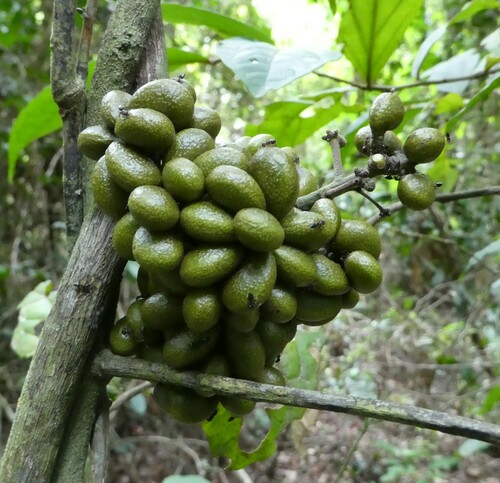
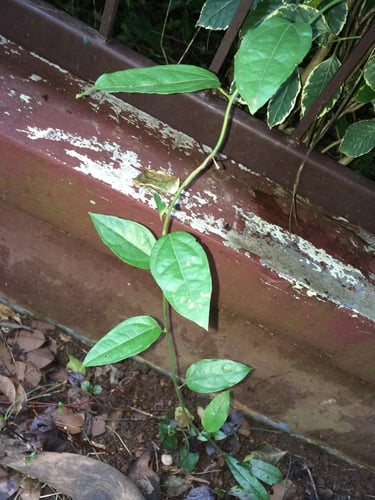
Triclisia patens
Oliv.
gbif· cc-by-nc-nd
Ehoarn Bidault
gbif· cc-by-nc-nd
Ehoarn Bidault
gbif· cc-by-nc-nd
Ehoarn Bidault
Description
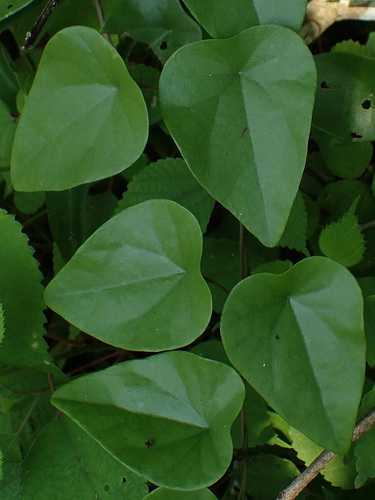
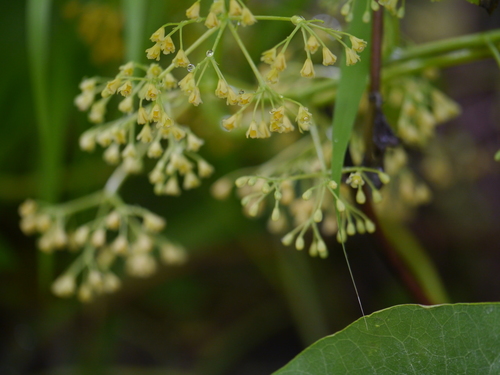
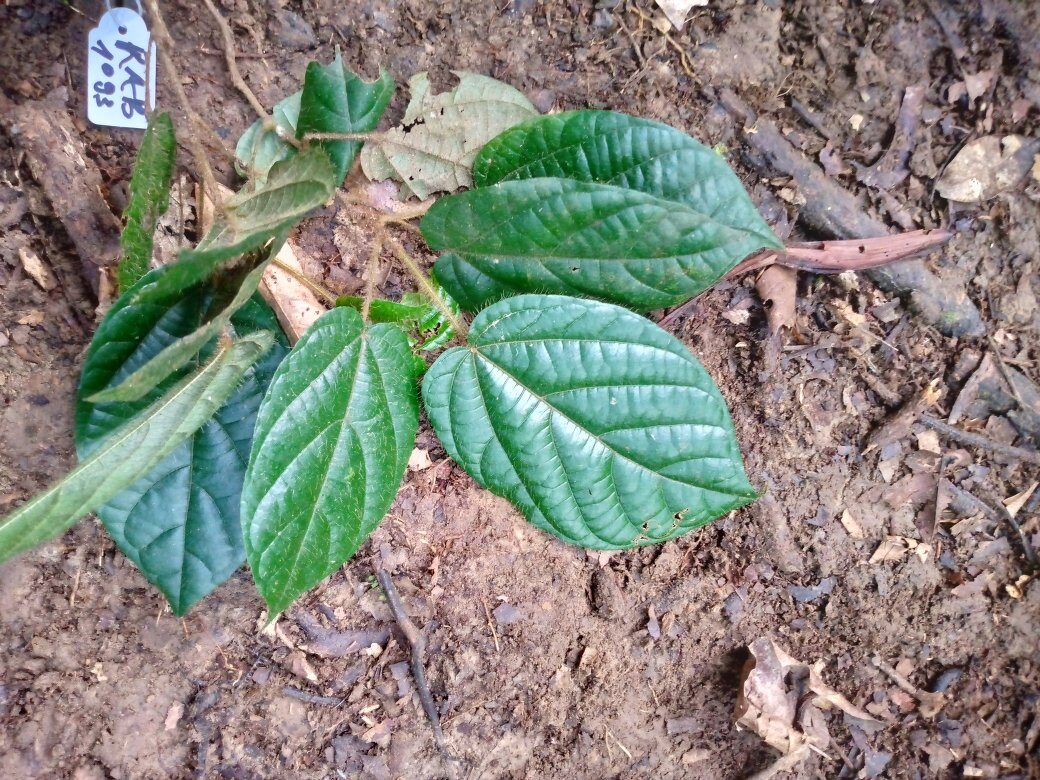
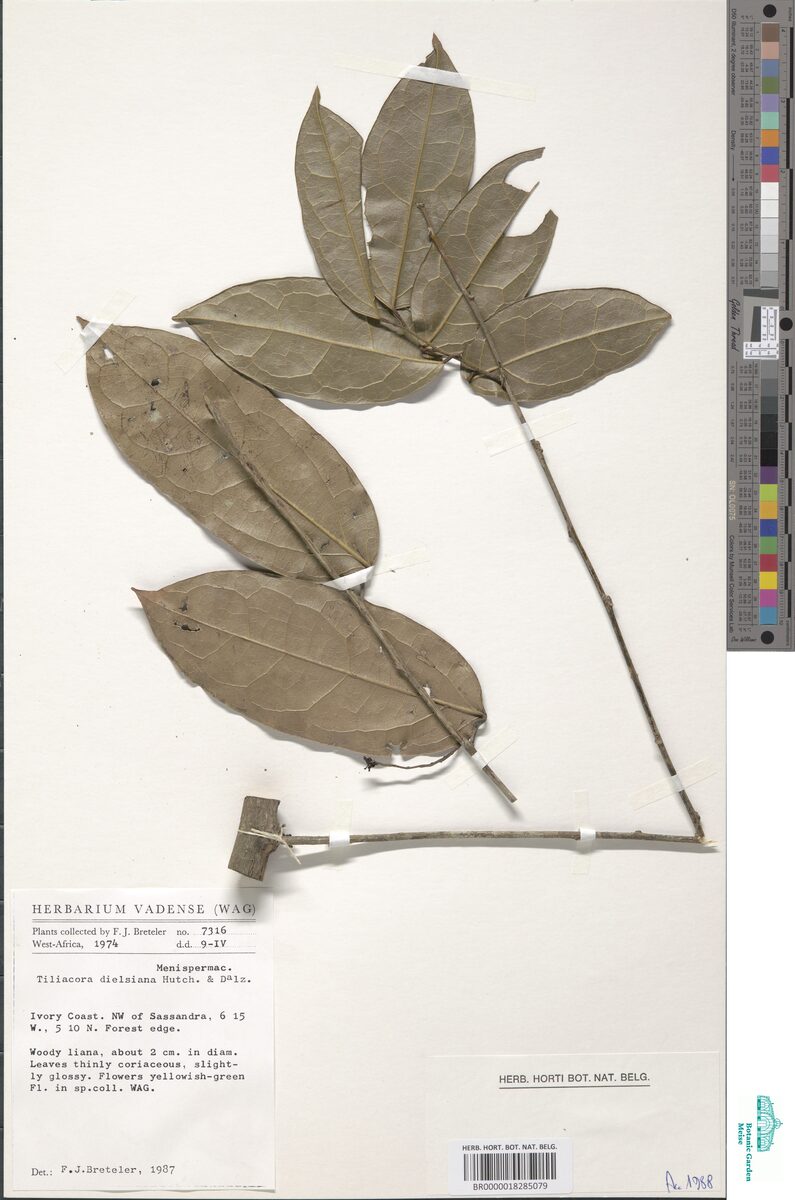
A large woody creeper. It climbs. It grows about 12 m long. The stem can be 6 cm across. The leaves are simple and alternate. Leaf stalks are 5-10 cm long. Leaves are narrowly oval and 10-18 cm long by 2-12 cm wide. The flowers are in groups 3-8 cm long by 2-12 cm wide. Male and female flowers are separate. The fruit are on oval, flattened, fleshy groups 1-2.5 cm long by 1-1.5 cm wide.
Edible Uses
The roots are used as a flavouring in brewing, and the fruit are edible.
Traditional Uses
The roots are used in brewing.
This uses section is brief — help expand it
Medicinal Uses
The plant is used in traditional medicine.
Distribution
It is a tropical plant. It grows in lowland rain-forest. It can also be in woodland along rivers and in palm groves.
Where It Grows
Africa, Benin, Burkina Faso, Côte d'Ivoire, Ghana, Guinea, Guinée, Guinea-Bissau, Ivory Coast, Liberia, Senegal, Sierra Leone, West Africa,
Cultivation
A dioecious species, both male and female forms need to be grown if fruit and seed are required.
Other Uses
The stems are made into slings which are used for climbing oil palms.
Notes
It is used in medicine.
Also Known As
Arana, Bosse, Firifora, Ka, Manar-gambanjo, Manar-kambantchum, Mbau, Mondaka, Ndawi, Portoto, Uelifedjite
References (4)
- Burkill, H. M., 1985, Vol 4.
- Catarino, L., et al, 2016, Ecological data in support of an analysis of Guinea-Bissau's medicinal flora. Data in Brief 7 (2016):1078-1097
- PROTA
- World Checklist of Useful Plant Species 2020. Royal Botanic Gardens, Kew