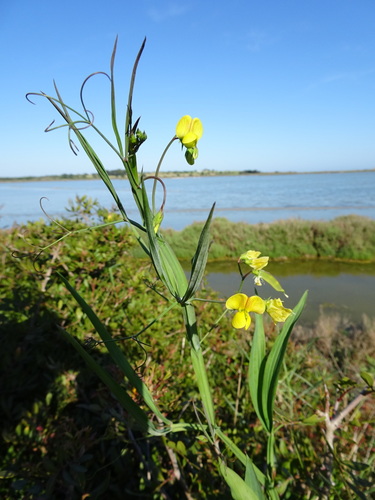
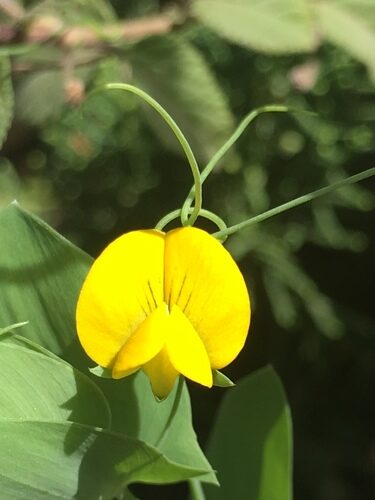
Dalbergia sissoo
Roxb. ex. DC.
Sissoo
iNaturalist· cc-by-nc
(c) Joe MDO, some rights reserved (CC BY-NC), uploaded by Joe MDO
iNaturalist· cc-by
(c) Swarochi Tathagath, some rights reserved (CC BY), uploaded by Swarochi Tathagath
iNaturalist· cc-by-nc-nd
(c) Anne Reeves, some rights reserved (CC BY-NC-ND)
Summary
Source: WikipediaDalbergia sissoo, known commonly as North Indian rosewood or shisham, is a fast-growing, hardy, deciduous rosewood tree native to the Indian subcontinent and southern Iran. D. sissoo is a large, crooked tree with long, leathery leaves and whitish or pink flowers.
Description
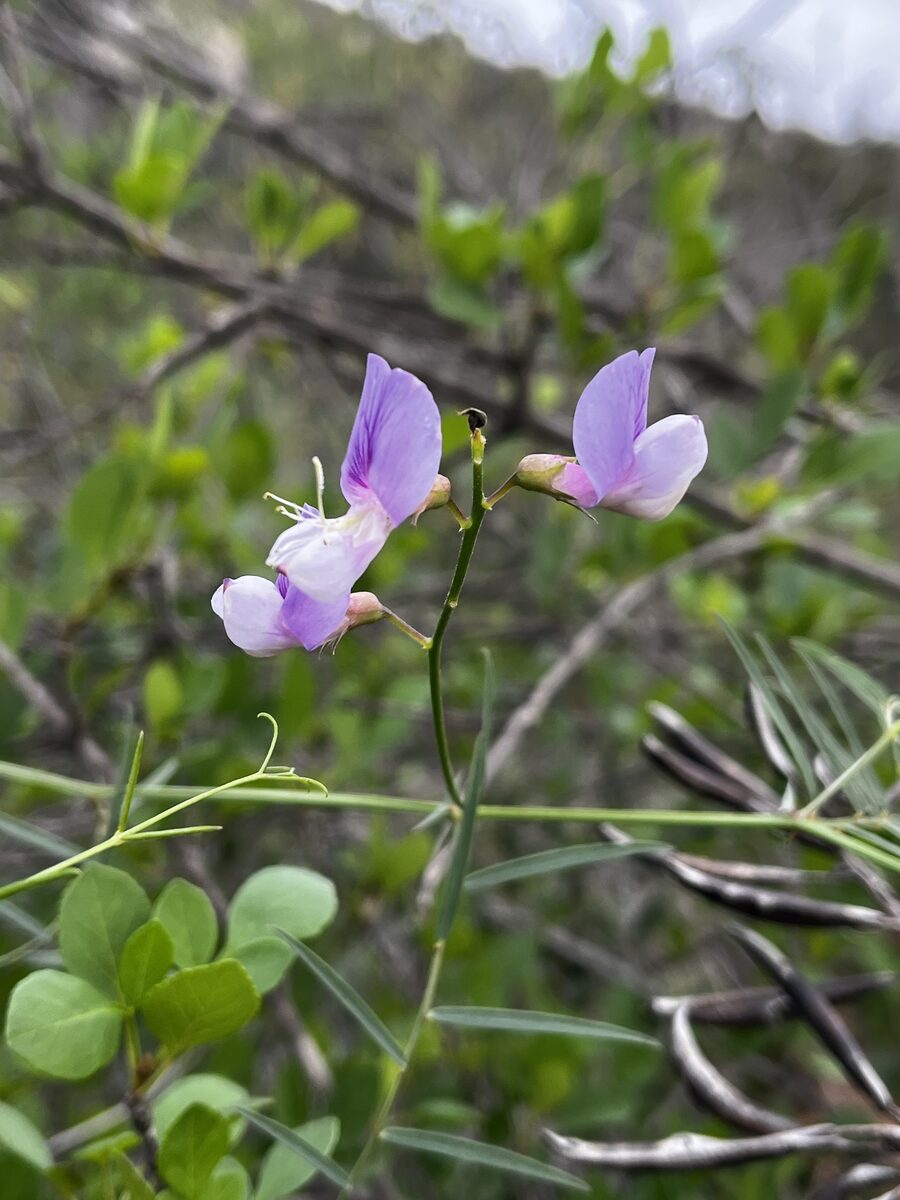
A tree. It grows 10-30 m high. The trunk is 50 cm across. The crown is narrow. The leaves have 3-5 alternately arranged leaflets. The leaflets are broadly oval. They taper to a tip. The flowers are small and creamy-white. They turn yellow. The fruit are pods in clusters. They are flat and have 1-2 seeds.
Edible Uses
Oil is extracted from the seeds.
Medicinal Uses
The tree's seed oil and powdered wood are used in the treatment of skin ailments. Dalbergia sissoo may also have efficacy in the treatment of stomach and blood conditions.
Distribution
It is a tropical plant. It grows in open woodland. It grows to 1,500 m in the Himalayas. Young trees need good sunlight. It cannot tolerate water-logging. It is moderately salt tolerant.
Where It Grows
Afghanistan, Africa, Asia, Bangladesh, Botswana, Burkina Faso, Cameroon, China, Cyprus, Dominican Republic, East Africa, Ethiopia, Himalayas, India*,Indonesia, Iran, Iraq, Kenya, Malawi, Malaysia, Mauritius, Mediterranean, Middle East, Mozambique, Myanmar, Nepal, Nigeria, Oman, Pakistan, Palestine, Nepal, SE Asia, Sierra Leone, Southern Africa, Sudan, Taiwan, Tanzania, Thailand, United Arab Emirates, UAE, USA, West Africa, West Indies, Zambia, Zimbabwe,
Cultivation
Plants can be grown by seeds, cuttings or suckers.
Propagation
Seed - usually the seeds are not extracted from the pods, but the pods are broken into 1-seeded pieces. Seeds have no dormancy, and the germination rate may be almost 100% when fresh seed from mature trees is used. Pre-treatment of seeds is not necessary, but soaking in water for 12 - 24 hours accelerates germination. Germination of fresh seed takes 7 - 21 days. Shading is recommended during the hottest hours of the day during the germination period. Like many species within the family Fabaceae, once they have been dried for storage the seeds of this species may benefit from scarification before sowing in order to speed up germination. This can usually be done by pouring a small amount of nearly boiling water on the seeds (being careful not to cook them!) and then soaking them for 12 - 24 hours in warm water. By this time they should have imbibed moisture and swollen - if they have not, then carefully make a nick in the seedcoat (being careful not to damage the embryo) and soak for a further 12 hours before sowing. When stored dry or in a cold store, seeds remain viable for up to 1.5 years. Viability is maintained for 4 years in hermetic storage and 1 - 2 years when stored in airtight containers under dry, cool conditions Root suckers and root and stem cuttings can also be used for propagation.
Other Uses
A non-drying oil which is suitable as a lubricant for heavy machinery can be obtained from the heartwood. The wood, roots and leaves have shown insecticidal activity. The seedpods contain 2% tannin. The twigs are used as toothbrushes and can kill infections in the mouth. The heartwood is golden brown to dark brown, often with deep brown streaks, and distinctly demarcated from the whitish to pale brown sapwood. The wood is hard, strong and elastic; the grain is straight, sometimes interlocked, texture moderately coarse. Once dry, the wood is very stable in service. It is fairly easy to saw and work. It can be planed to a smooth surface and takes an excellent polish. Turning, screwing, polishing and gluing give good results, and the wood can be peeled or sliced to make decorative veneer and plywood. The heartwood is durable, but the sapwood is liable to damage by insects and fungi. The wood is suitable for house construction, e.g. For door and window shutters and frames, flooring and panelling, and also for cabinet making, vehicle bodies, boat building, handles, implements such as shoe lasts, turnery, carving, veneer and plywood. It is excellent for high-class bentwood furniture, walking-sticks, umbrella handles and other bentwood articles. Pulp from the wood is suitable for papermaking. It is highly valued as firewood and for charcoal production. The energy value of the wood is about 21,800 kJ/kg. Grown as a shade tree in agroforestry systems in India and Pakistan, for reforestation of eroded soils, and as a soil improver that fixes nitrogen and provides mulch. It is also planted as a windbreak and shelterbelt. Dalbergia sissoo has an unusual amenity use as a host for orchids. The sub-Himalayas, the homeland of D. Sissoo, abound with a variety of orchids, many of which are known throughout the world for their beauty.
Production
It grows quickly.
Notes
It can be invasive.
Synonyms
Also Known As
Indian rosewood, Kala-padauk, Sasam, Sarsoa, Sheesham, Shisham, Sisso, Sissu
References (3)
- Karim, F. M. & Dakheel, A, J., 2006, Salt-tolerant plants of the United Arab Emirates. 2006. International Center for Biosaline Agriculture, Dubai, UAE. p 110
- Plowes, N. J. & Taylor, F. W., 1997, The Processing of Indigenous Fruits and other Wildfoods of Southern Africa. in Smartt, L. & Haq. (Eds) Domestication, Production and Utilization of New Crops. ICUC p 189
- World Checklist of Useful Plant Species 2020. Royal Botanic Gardens, Kew