Setaria incrassata
(Hochst.) Hack.
Vlei bristle grass
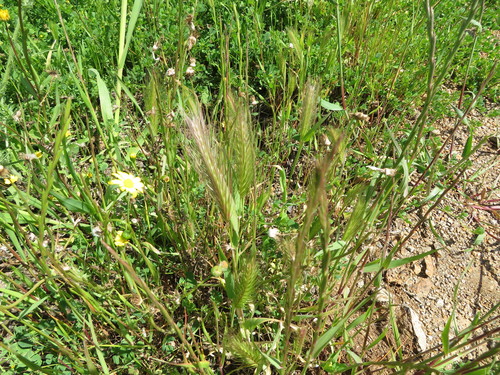
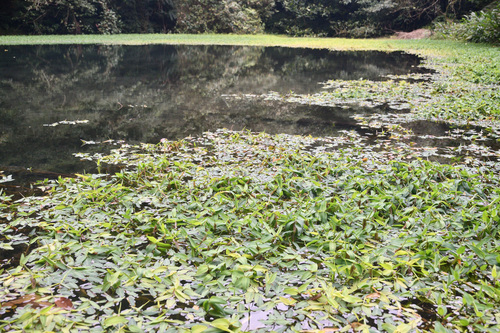
iNaturalist· cc-by-sa
(c) Nicola van Berkel, some rights reserved (CC BY-SA), uploaded by Nicola van Berkel
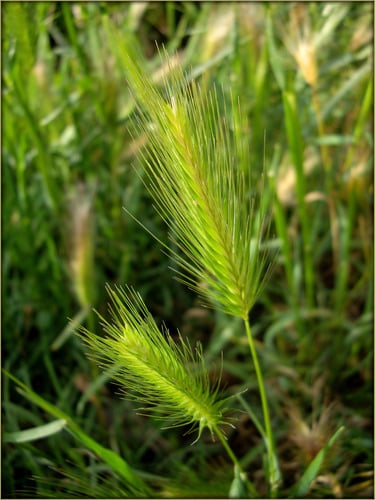
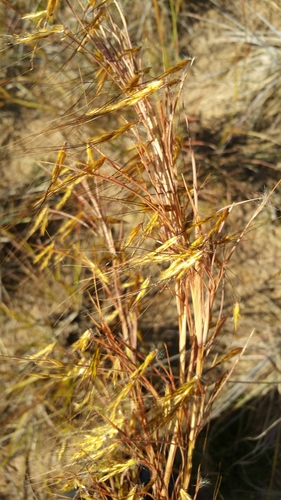
iNaturalist· cc-by-nc-sa
(c) David Hoare, some rights reserved (CC BY-NC-SA), uploaded by David Hoare
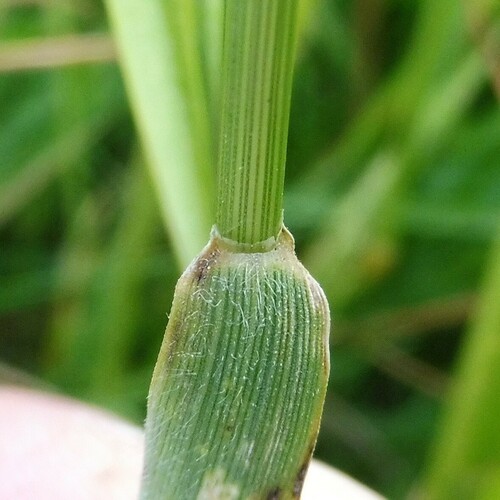
iNaturalist· cc-by-nc-sa
(c) David Hoare, some rights reserved (CC BY-NC-SA), uploaded by David Hoare
Description
A herb. It is a grass that forms dense tufts and keeps growing from year to year. It has rhizomes or underground stems. It grows 2 m high.
This description is brief — help expand it
Edible Uses
The seeds are harvested as a cereal.
Distribution
It is a tropical plant. It grows in stony soils that are sometimes waterlogged. It grows from sea level to 2,400 m above sea level. It grows in areas with an annual rainfall between 200-600 mm. It can grow in arid places.
Where It Grows
Africa, Angola, Botswana, Burundi, Cameroon, Central Africa, Central African Republic, CAR, Congo, Djibouti, East Africa, Eswatini, Ethiopia, Kenya, Lesotho, Malawi, Mozambique, Namibia, Nigeria, Somalia, South Africa, Southern Africa, Sudan, Swaziland, Tanzania, Uganda, West Africa, Zambia, Zimbabwe,
Cultivation
A plant of the tropics, where it is found at elevations up to 2,400 metres. It grows best in areas where annual daytime temperatures are within the range 16 - 30°c, but can tolerate 12 - 36°c. When dormant, the plant can survive temperatures down to about -3°c, but young growth can be severely damaged at -1°c. It prefers a mean annual rainfall in the range 700 - 1,200mm, but tolerates 500 - 1,300mm. Succeeds in full sun and in light shade. Grows best in a fertile soil. Succeeds in a wide range of soils. Prefers a pH in the range 6.5 - 7.5, tolerating 6.2 - 8.2.
Other Uses
The culms are used in hut-building and to make rope. They are generally used for thatching and for basket-making. Sown for erosion control on black earths. The plant's speed and reliability of establishment make it ideal for short-term leys.
Synonyms
Also Known As
Black soil timothy, Cununo, Muezu, Nampimpi
References (3)
- Royal Botanic Gardens, Kew (1999). Survey of Economic Plants for Arid and Semi-Arid Lands (SEPASAL) database. Published on the Internet; http://www.rbgkew.org.uk/ceb/sepasal/internet [Accessed 4th June 2011]
- World Checklist of Useful Plant Species 2020. Royal Botanic Gardens, Kew
- World Checklist of Useful Plant Species 2020. Royal Botanic Gardens, Kew