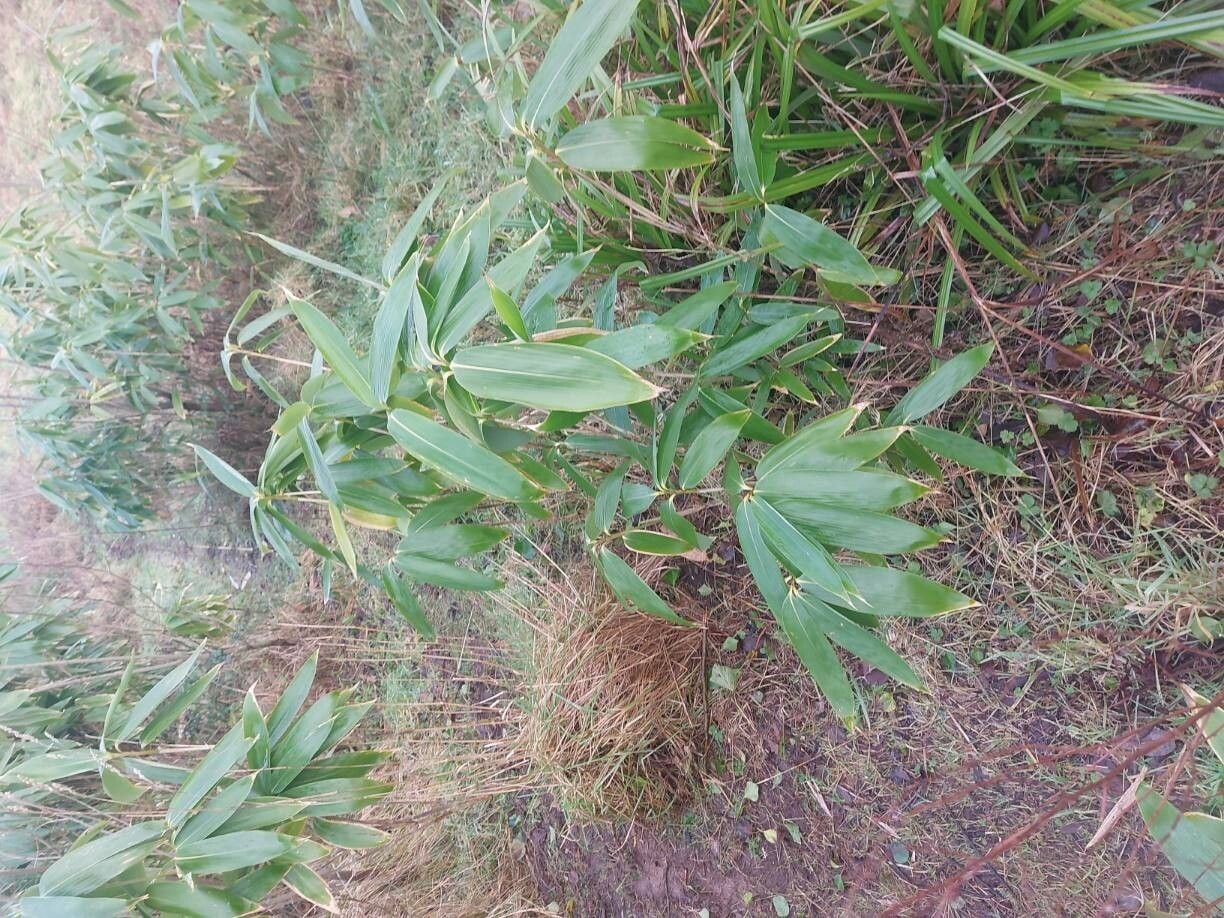
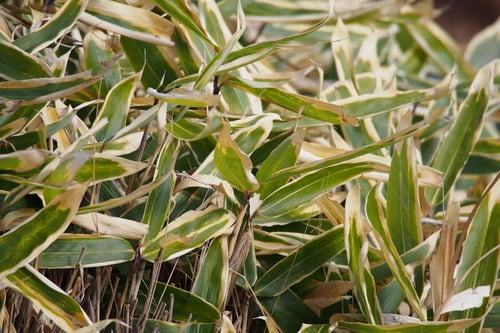
Enneapogon desvauxii
P. Beauv.
Eight day grass
iNaturalist· cc0
no rights reserved, uploaded by Cecelia Alexander
iNaturalist· cc-by
(c) Alex Abair, some rights reserved (CC BY), uploaded by Alex Abair
iNaturalist· cc-by
(c) Alex Abair, some rights reserved (CC BY), uploaded by Alex Abair
Summary
Source: WikipediaEnneapogon desvauxii is a species of grass known by the common name nineawn pappusgrass. This is a short perennial bunchgrass native to the southwestern United States, northern Mexico, parts of South America, and occurs throughout arid parts of Africa. It is known less often on other continents.
Description
A herb. It is an annual grass that forms tufts. It has stolons or runners and can keep growing from year to year. It grows 40 cm high. It has a ring of hairs around the nodes. The stalks are usually bent. The leaves are usually short and rolled. They are 3-25 cm long by 1-3 mm wide. The flower groups are 1-5 cm long.
Edible Uses
The seeds are eaten as a snack and can be used as a cereal.
Traditional Uses
The seeds are eaten as a snack.
This uses section is brief — help expand it
Distribution
It is a subtropical plant. It often grows in soils over limestone. It can be in shallow and stony soils. It grows between 200-2,200 m above sea level. In Argentina it grows between 900-3,400 m above sea level. It can grow in arid places. In Yunnan.
Where It Grows
Africa, Algeria, Angola, Argentina, Asia, Botswana, Britain, Canary Islands, Cape Verde, Central Africa, Central America, Central Asia, Chad, Chile, China, East Africa, Egypt, Ethiopia, Europe, India, Iran, Kazakhstan, Kenya, Lesotho, Mauritania, Mexico, Middle East, Mongolia, Namibia, Niger, North Africa, North America, Oman, Pakistan, Peru, Russia, Sahel, Saudi Arabia, Socotra, Somalia, South Africa, South America, Southern Africa, Sudan, Tanzania, United Arab Emirates, UAE, USA, West Africa, Yemen, Zimbabwe,
Production
It grows quickly. The seeds are collected by ants then removed from ant nests.
Synonyms
References (5)
- http://www.sabonet.org.za/downloads/20_namibian_grasses/d_namgrass_list1.pdf
- Royal Botanic Gardens, Kew (1999). Survey of Economic Plants for Arid and Semi-Arid Lands (SEPASAL) database. Published on the Internet; http://www.rbgkew.org.uk/ceb/sepasal/internet [Accessed 3rd June 2011]
- Ruiters-Welcome, A. K., 2019, Food plants of southern Africa. Ph.D. thesis. Univ. of Johannesburg p 87
- Welcome, A. K. & Van Wyk, B.-E., 2019, An inventory and analysis of the food plants of southern Africa. South African Journal of Botany 122 (2019) 136–179
- World Checklist of Useful Plant Species 2020. Royal Botanic Gardens, Kew