Moringa stenopetala
(Baker f.) Cufod.
African horseradish tree
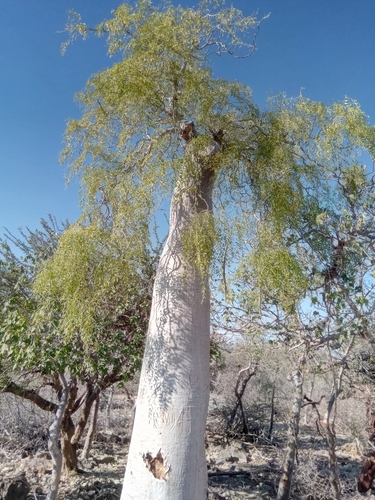
iNaturalist· cc-by
(c) Wendy Cutler, some rights reserved (CC BY)
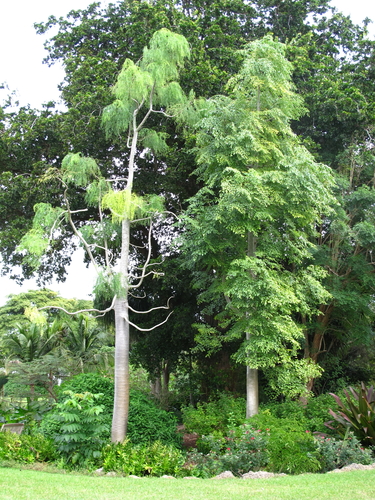
iNaturalist· cc-by-nc
(c) Subramanian Sevgan, some rights reserved (CC BY-NC)
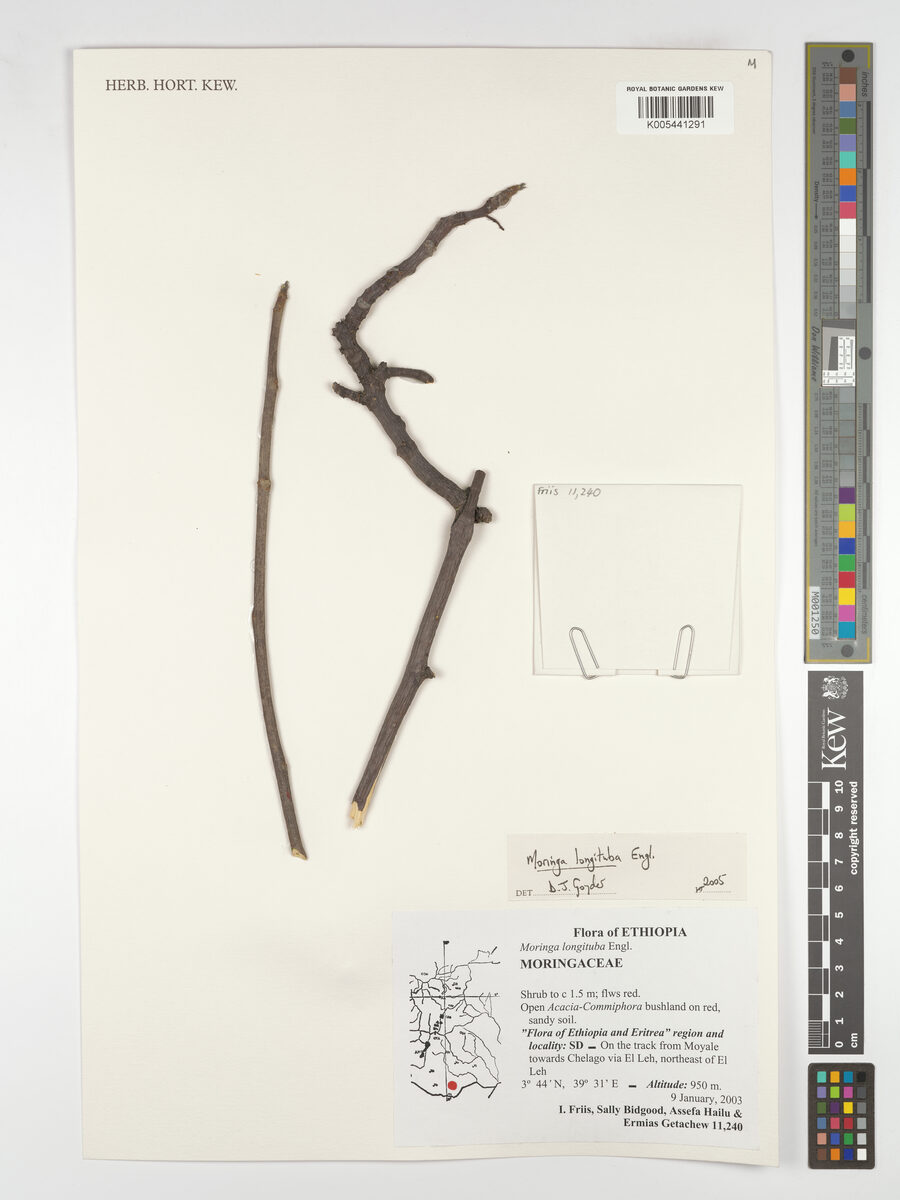
iNaturalist· cc-by-nc
(c) ephramz, some rights reserved (CC BY-NC)
Summary
Source: WikipediaMoringa stenopetala, commonly known as the African Moringa or cabbage tree, is a deciduous tree in the plant genus Moringa, native to Kenya and Ethiopia. A drought-resistant species, it is characterized by its bottle-shaped trunk, long twisted seed pods, and edible leaves likened to cabbage, from which its common name is derived. M. stenopetala is extirpated in the wild in Ethiopia, though still grown there as a crop on the terraces of the Ethiopian Highlands, mainly in the Konso region. Like its widely cultivated relative M. oleifera, Moringa stenopetala is a multipurpose tree: the leaves, pods, and flowers are edible and nutritious; the seeds contain an aromatic oil with culinary and cosmetic applications; and the seed press cake or powdered bark can be used for water purification. It is featured in various dishes and has a history of uses in folk medicine throughout its native range.
Description
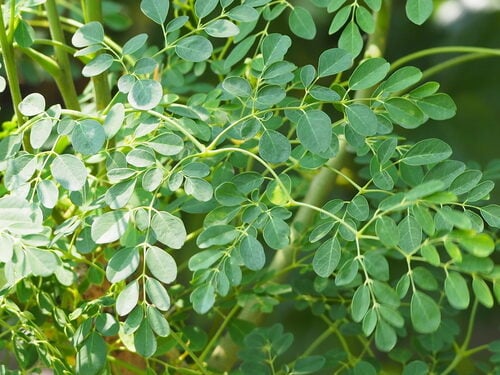
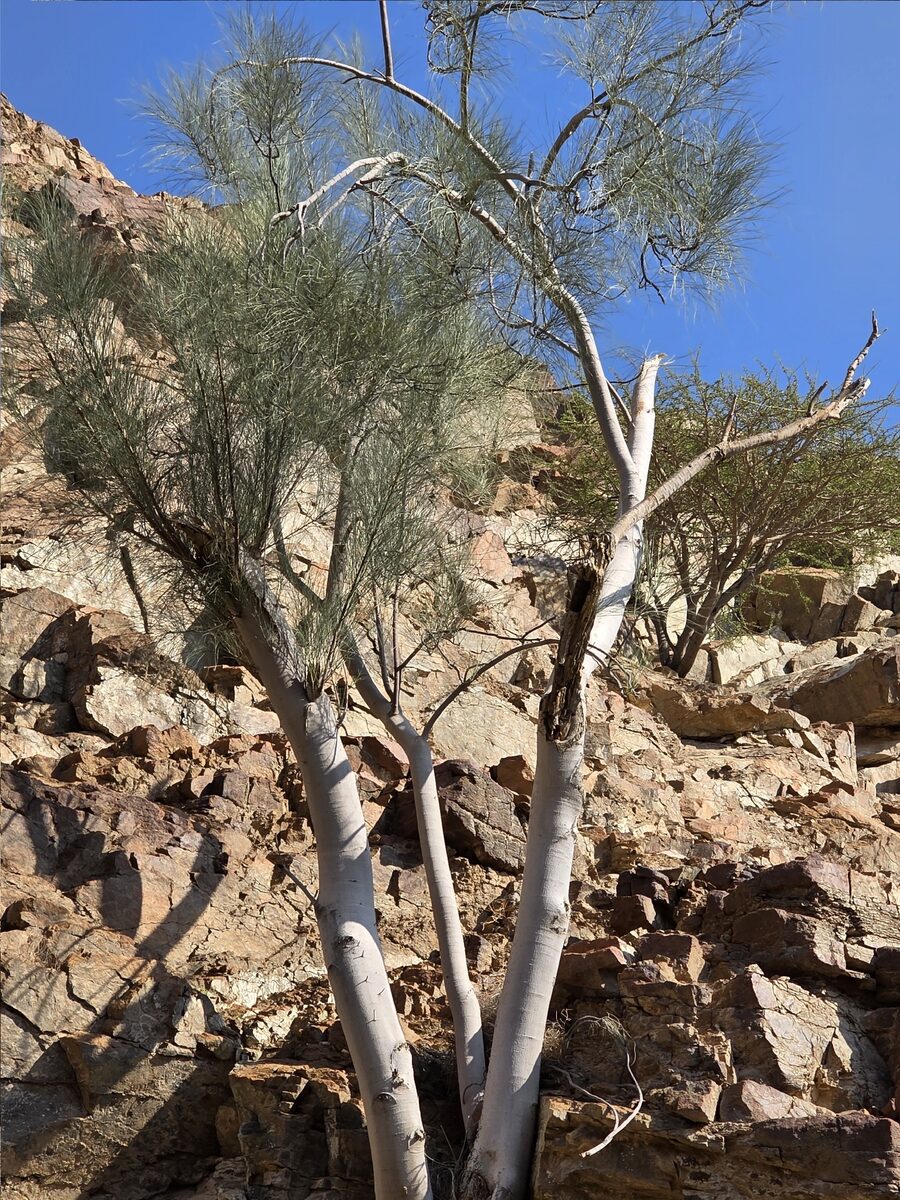
A tree. It grows 10-15 m high. The bark is smooth. The branches are soft. The leaves are compound and divided 2-3 times. The flowers have a sweet scent. They are white and occur in loose flower arrangements. The fruit are long pods. The fruit are yellow when ripe. They split open to release seeds that have 3 wings.
Edible Uses
Young leaves can be eaten raw or cooked as a vegetable. They are larger and milder in flavour than those of M. oleifera. Traditionally, leaflets are separated from the rachis and plunged into boiling water with salt or sodium carbonate added. Separately, a mixture of flours is prepared, kneaded, and shaped into balls 2–5cm in diameter, which are added to the same pot. After about 10 minutes, both the balls and leaves are ready to serve. Adding fat such as grease or butter, small cereal balls, and a generous quantity of leaves is considered to make this a good-quality meal. Young, soft fruits can also be added to the dish, though their slightly bitter taste limits use to times when food is scarce. Flowers are cooked and eaten as a vegetable. Seedpods are also cooked, referring most likely to young pods, which have a bitter flavour.
Traditional Uses
The young leaves are eaten as a vegetable. They are often cooked with balls of flour. The skin of the fruit is removed and the fruit are eaten but not the seeds.
Medicinal Uses
A leaf infusion is used as a remedy for leprosy, hypertension, retained placenta, and asthma, and as an anthelmintic and emetic to promote wound healing. The leaves of certain trees of this species are particularly renowned for treating diarrhoea. Smoke from burning roots is used to treat epilepsy, and is said to be inhaled by women in Sudan during difficult labour, though this record is likely incorrect as the species has not been collected in Somalia. Leaves and roots are used to treat malaria, stomach problems, and diabetes. The bark is chewed to treat coughs and used to prepare fortifying soups. Ethanol extracts of leaves and roots have shown promise in controlling Trypanosoma brucei and Leishmania donovani in vitro. Leaf extract causes increased uterine smooth muscle contractions, which may explain the traditional use of leaves to expel a retained placenta. A crude seed extract strongly inhibited growth of Staphylococcus aureus, Salmonella typhi, Shigella sp., and Candida albicans. An aqueous leaf extract has been found to lower blood glucose concentration, though it was less potent than glibenclamide; the effect increased with time and with higher doses of the extract.
Known Hazards
The glucosinolates in the leaves were found to cause goitre but to a lesser extent than expected on the basis of their concentration. However, in a diet poor in iodine it may be a contributing factor.
Distribution
A tropical plant. In Kenya it grows in sandy soils with a high water table. It grows between 390-1,250 m above sea level. It can grow in arid places. It grows in areas with average temperatures between 24-30°C.
Where It Grows
Africa, East Africa, Ethiopia, Kenya, Malawi, Senegal, Somalia, West Africa,
Cultivation
Plants can be grown from seeds. Trees are pruned every 5 years during the rainy season.
Propagation
Sow seeds individually in pots in a semi-shaded position, placing each seed 1cm deep in a mixture of sand and loam enriched with compost; do not allow the compost to dry out. Fresh seeds have a germination rate approaching 100% and germinate fastest at 25–30°C. Seedlings can be transplanted to permanent positions when they reach 20cm in height or are 6 months old; with adequate water supply of approximately 25 litres every 3–4 days, all plants should survive. Seeds up to 1 year old also have a germination rate close to 100%, but germination of older seeds declines with age and depends on storage method. A common traditional practice is to transplant seedlings that have established naturally beneath old trees. Before transplanting, branches and roots are cut, seedlings are left to dry for a week, roots are covered with ash, and upper parts with dung. Cuttings are possible but trees established from cuttings have been found to develop a poor root system.
Other Uses
The tree is used as a living fence. In cultivation, while vegetable production is the primary goal, it can also contribute to erosion control, serve as a windbreak, provide shade, and attract bees. Trees are traditionally grown in home gardens of up to 0.1 ha, with 5–15 trees per garden, alongside crops such as papaya, coffee, banana, cassava, maize, sugar cane, cotton, and Capsicum peppers. The seeds are highly effective for water purification. They contain a cationic polyelectrolyte protein that acts as a flocculant and can be extracted using salt water. Adding crushed seeds to even very muddy water causes solid matter and some bacteria to coagulate and sink, after which the clarified water can be poured off and boiled. The seed oil is used as a lubricant and in perfumery and soap production. The very soft wood is suitable for papermaking. It produces low-grade firewood and poor-quality charcoal.
Production
Plants can reach 3 m high in 14 months. Leaves can be harvested after 3 years.
Other Information
It is also a cultivated food plant. It is an important vegetable in Ethiopia.
Notes
The seeds can be used to clarify muddy water.
Nutrition
| Part | Moisture | kJ | kcal | Protein | Vit A | Vit C | Iron | Zinc |
|---|---|---|---|---|---|---|---|---|
| Leaves dry | 0 | 1235 | 295 | 9 | — | 28 | — | 0.53 |
| Leaves | 76.2 | — | — | 5.8 | — | — | 5.4 | — |
Synonyms
Also Known As
Aleku, Eleku, Etebusoit, Heleko, Lorsanjo, Mawali, Safara, Sheferwu, Wocheletcha
References (24)
- Addis, G., et al, 2013, The Role of Wild and Semi-wild Edible Plants in Household Food Sovereignty in Hamer and Konso Communities, South Ethiopia. Ethnobotany Research & Applications. 11:251-271
- Asfaw, Z., Conservation and use of traditional vegetables in Ethiopia. FAO
- Asfaw, Z. and Tadesse, M., 2001, Prospects for Sustainable Use and Development of Wild Food Plants in Ethiopia. Economic Botany, Vol. 55, No. 1, pp. 47-62
- Bahru, T., et al, 2013, Wild Edible Plants: Sustainable Use and Management by Indigenous Communities in and the Buffer Area of Awah National Park, Ethiopia. Ethiop. J. Sci., 36(2): 93-108
- Berihun, T. & Molla, E., 2017, Study on the Diversity and Use of Wild Edible Plants in Bullen District Northwest Ethiopia. Hindawi Journal of Botany. Article ID 8383468
Show all 24 references Hide references
- Duguma, H. T., 2020, Wild Edible Plant Nutritional Contribution and Consumer Perception in Ethiopia. Hindawi International Journal of Food Science Volume 2020, Article ID 2958623, 16 pages
- Ethiopia: Famine Food Field Guide. http://www.africa.upenn.edu/faminefood/category3.htm
- Facciola, S., 1998, Cornucopia 2: a Source Book of Edible Plants. Kampong Publications, p 156
- Grubben, G. J. H. and Denton, O. A. (eds), 2004, Plant Resources of Tropical Africa 2. Vegetables. PROTA, Wageningen, Netherlands. p 394
- INFOODSUpdatedFGU-list.xls
- Kebebew, M. & Leta, G., 2016, Wild Edible Plant Bio-diversity and Utilization System in Nech Sar National Park, Ethiopia. International Journal of Bio-resource and Stress Management 2016, 7(4):885-896
- Kunkel,
- Lulekal, E., et al, 2011, Wild edible plants in Ethiopia: a review on their potential to combat food insecurity. Afrika Focus - Vol. 24, No 2. pp 71-121
- Maundu, P. et al, 1999, Traditional Food Plants of Kenya. National Museum of Kenya. 288p
- Molla, A., Ethiopian Plant Names. http://www.ethiopic.com/aplants.htm
- Mutie, F. M., et al, 2023, Important Medicinal and Food Taxa (Orders and Families) in Kenya, Based on Three Quantitative Approaches. Plants 2023, 12, 1145
- Royal Botanic Gardens, Kew (1999). Survey of Economic Plants for Arid and Semi-Arid Lands (SEPASAL) database. Published on the Internet; http://www.rbgkew.org.uk/ceb/sepasal/internet [Accessed 4th May 2011]
- Senckenberg. Biol. 38:407. 1957
- Smith, F. I. and Eyzaquirre, P., 2007, African leafy vegetables: Their role in the World Health Organization's global Fruit and Vegetables Initiative. AJFAND, Vol. 7 No. 3
- Teklehaymanot, T., and Mirutse Giday, M., 2010, Ethnobotanical study of wild edible plants of Kara and Kwego semi-pastoralist people in Lower Omo River Valley, Debub Omo Zone, SNNPR, Ethiopia Journal of Ethnobiology and Ethnomedicine 2010, 6:23
- Ulian, T., et al, 2020, Unlocking plant resources to support food security and promote sustainable agriculture. Plants, People, Planet. 2020;2:421–445.
- Wiersema, J. H. & Leon, B., 2013, World Economic Plants. A Standard Reference CRC Press. 2nd Ed. p 454
- World Checklist of Useful Plant Species 2020. Royal Botanic Gardens, Kew
- www.worldagroforestrycentre.org/treedb/