Rapanea melanophloeos
(L.) Mez
Cape beech
iNaturalist· cc-by-sa
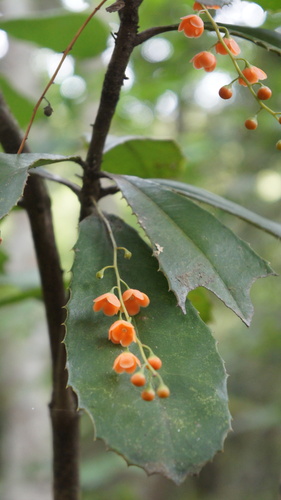
(c) Tony Rebelo, some rights reserved (CC BY-SA), uploaded by Tony Rebelo
iNaturalist· cc-by-sa
(c) Paul venter, some rights reserved (CC BY-SA)
iNaturalist· cc-by-nc
(c) Roddy CJ Ward, some rights reserved (CC BY-NC), uploaded by Roddy CJ Ward
Description
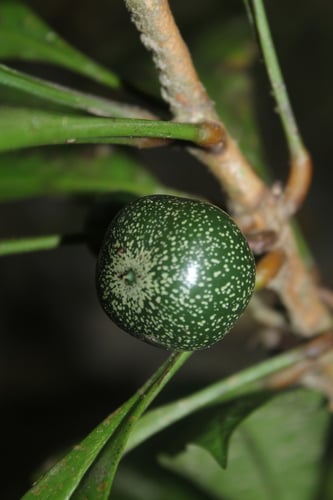
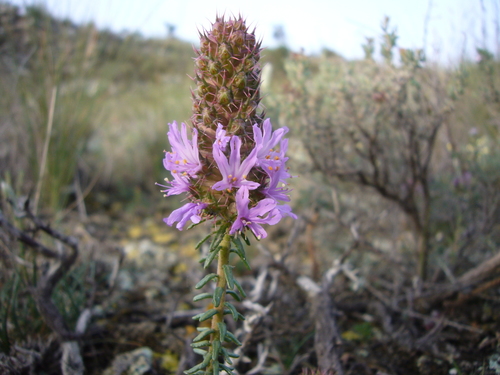
An evergreen shrub or tree. It grows 3-18 m tall. The stem is straight. It can be fluted at the base in large plants. The bark is black. The leaves are crowded at the ends of branches. The leaf stalks are pink or red. The leaf blade has clear dots or streaks along it. The flowers are in small groups. They are in the axils of leaves. The fruit are round and 3-5 mm across. They are purple and have one seed.
Edible Uses
The fruit are edible.
Distribution
It is a tropical plant. It can grow in arid places. It is usually in high rainfall areas and on exposed rocky cliffs.
Where It Grows
Africa, Angola, Burundi, Cameroon, Central Africa, Congo, East Africa, Eswatini, Ethiopia, Kenya, Malawi, Mozambique, Nigeria, Rwanda, Sao Tome and Principe, South Africa, Southern Africa, Swaziland, Tanzania, Uganda, West Africa, Zambia, Zimbabwe,
Notes
Also put in the family Myrsinaceae.
Synonyms
Also Known As
Chimbango, M'Chane, Mudonera, Mudongera, Mufuro, Mukwiramakoko, Murwiti, Mutomo
References (8)
- Chapman, J. D. & Chapman, H. M., 2001, The Forest Flora of Taraba and Andamawa States, Nigeria. WWF & University of Canterbury. p 189
- INFOODS:FAO/INFOODS Databases
- Royal Botanic Gardens, Kew (1999). Survey of Economic Plants for Arid and Semi-Arid Lands (SEPASAL) database. Published on the Internet; http://www.rbgkew.org.uk/ceb/sepasal/internet [Accessed 4th May 2011]
- Ruiters-Welcome, A. K., 2019, Food plants of southern Africa. Ph.D. thesis. Univ. of Johannesburg p 81
- Wehmeyer, A. S, 1986, Edible Wild Plants of Southern Africa. Data on the Nutrient Contents of over 300 species
Show all 8 references Hide references
- Welcome, A. K. & Van Wyk, B.-E., 2019, An inventory and analysis of the food plants of southern Africa. South African Journal of Botany 122 (2019) 136–179
- World Checklist of Useful Plant Species 2020. Royal Botanic Gardens, Kew (As Myrsine melanophloeos)
- www.zimbabweflora.co.zw 2011