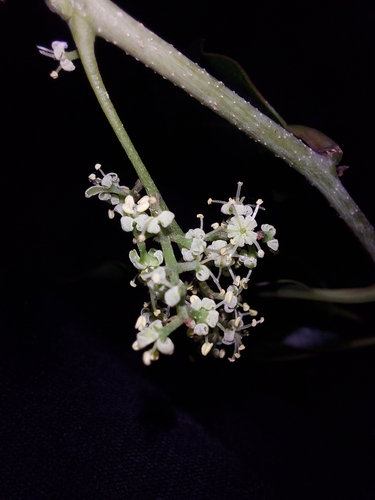
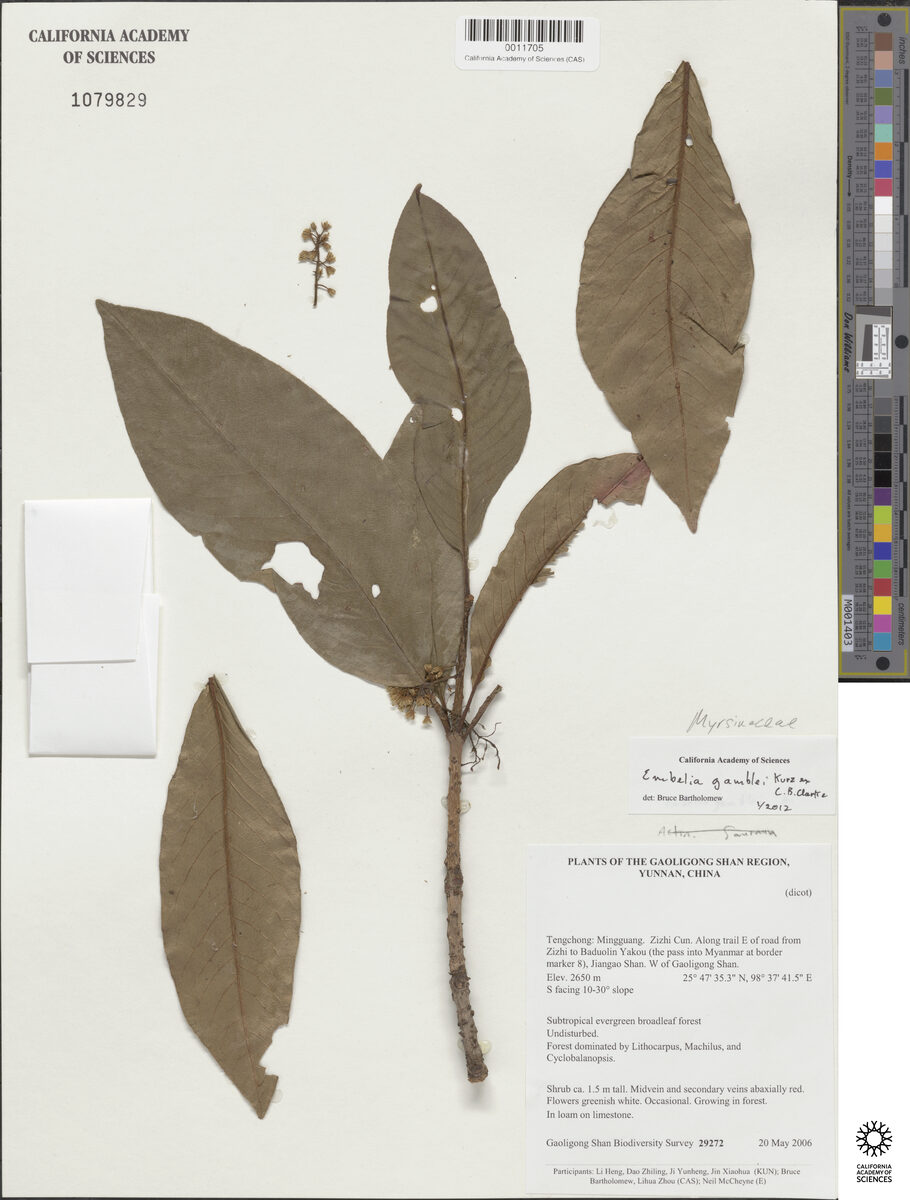
Myrsine guianensis
(Aubl.) Kuntze
iNaturalist· cc-by
(c) Nicolás Baresch Uribe, some rights reserved (CC BY), uploaded by Nicolás Baresch Uribe
iNaturalist· cc-by
(c) Fabrício Mil Homens Riella, some rights reserved (CC BY)
iNaturalist· cc-by
(c) Fabrício Mil Homens Riella, some rights reserved (CC BY)
Description
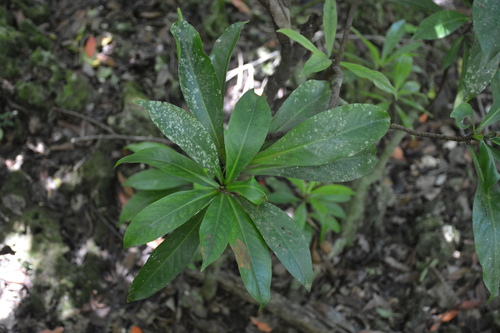
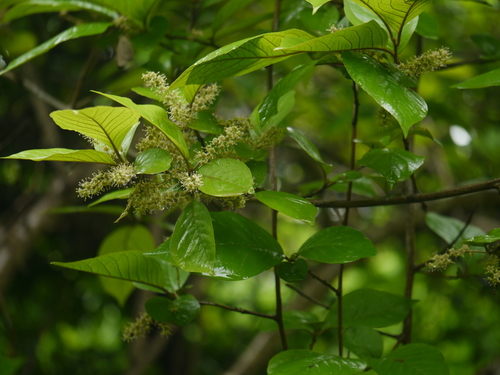
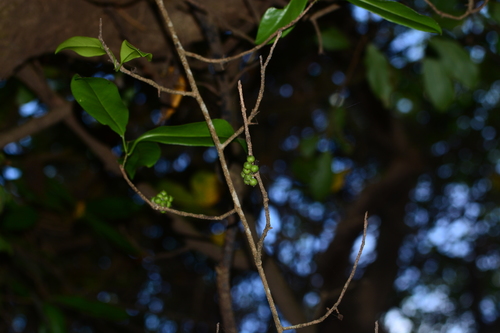
A tropical shrub growing 5-7 m tall with shiny black berries.
This description is brief — help expand it
Edible Uses
The fruit is edible.
Distribution
It is a tropical plant.
Where It Grows
Argentina, Bolivia, Brazil, Central America, Colombia, Ecuador, Guyanas, Mexico, Panama, South America, Trinidad,
Cultivation
Prefers a position with partial to dense shade. Tolerant of a wide range of soils from sandy to clay; from moderately acid to moderately alkaline; and also somewhat saline. Established plants are very drought tolerant and can also tolerate short periods of waterlogging. Usually a dioecious species, though bisexual flowers are sometimes found. Generally, both male and female forms need to be grown if fruit and seed are required.
Other Uses
The light brown wood is hard and strong. It is used chiefly for posts. Plants can be trimmed to form a hedge.
Notes
Also put in the family Myrsinaceae.
Synonyms
Also Known As
Jomirim
References (1)
- Kermath, B. M., et al, 2014, Food Plants in the Americas: A survey of the domesticated, cultivated and wild plants used for Human food in North, Central and South America and the Caribbean. On line draft. p 738 (As Rapanea ovalifolia)