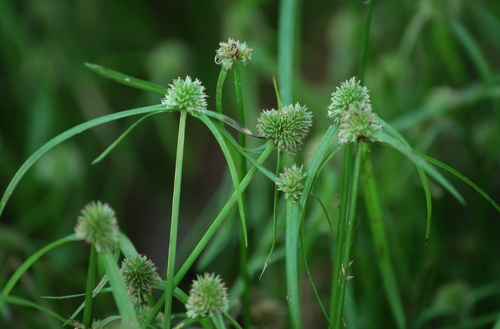
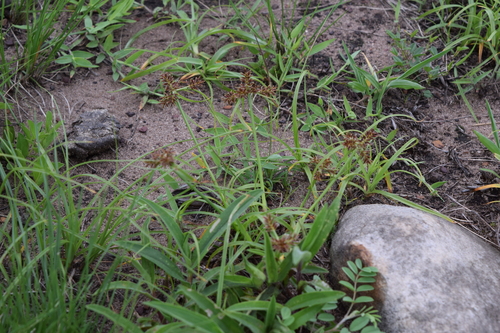
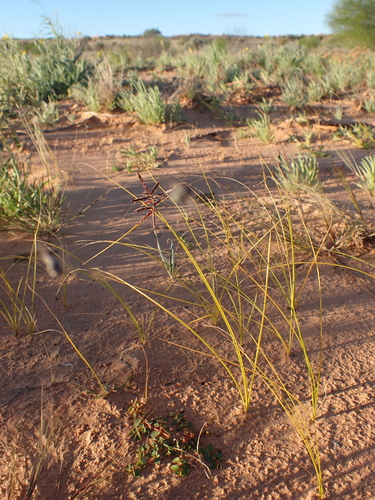
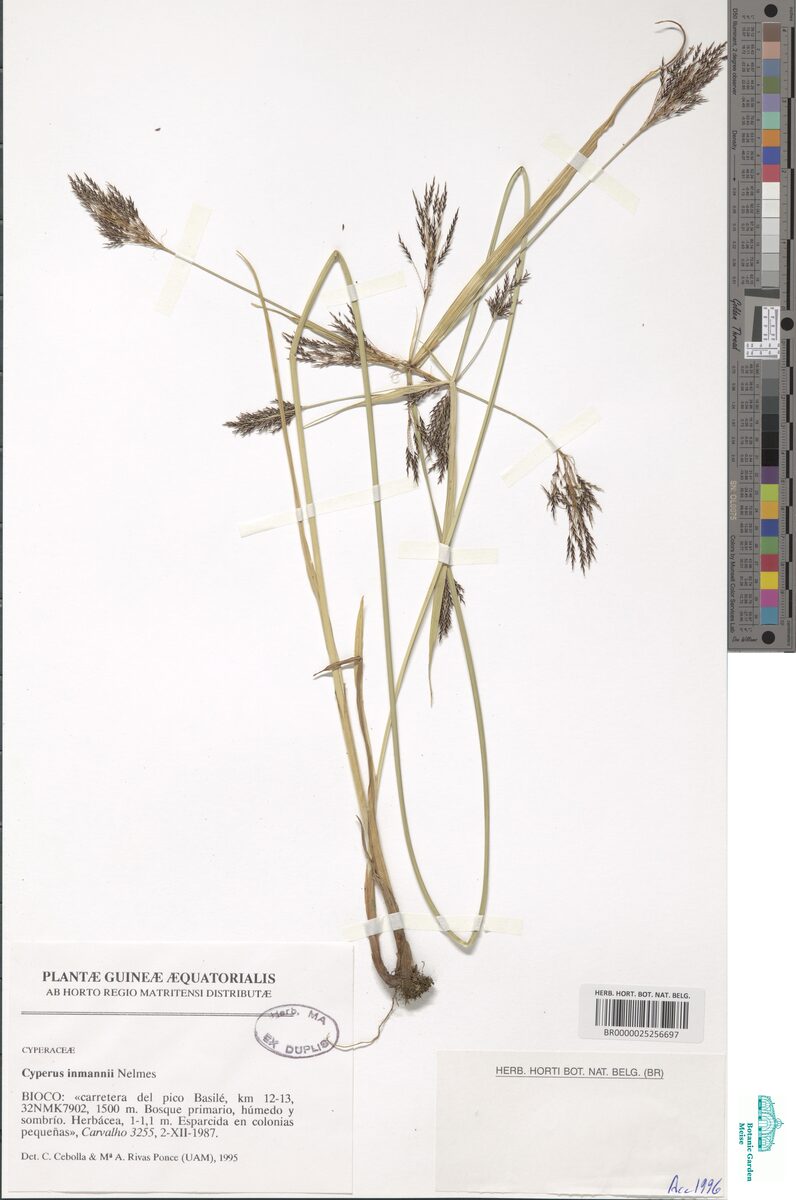
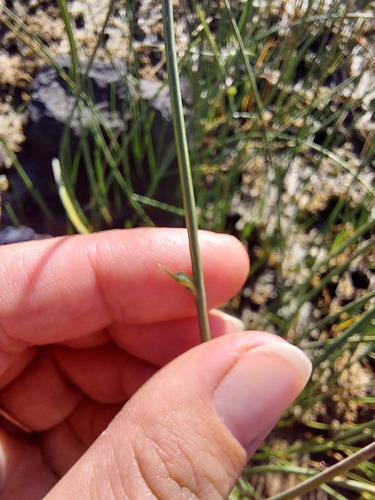
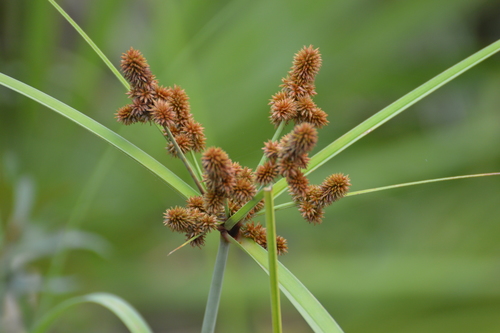
Cyperus grandibulbosus
C. B. Clarke
gbif· cc-by-sa
Susan Brown
gbif· cc-by-sa
Susan Brown
gbif· cc-by-sa
Susan Brown
Summary
Source: WikipediaCyperus grandibulbosus is a species of sedge that is endemic to parts of eastern Africa. The species was first formally described by the botanist Charles Baron Clarke in 1901.
Description
A sedge of the Cyperaceae family found in tropical arid regions. It is used as a famine food.
This description is brief — help expand it
Edible Uses
Rhizome - raw or cooked as a vegetable. Mainly seen as a food for times when nothing better is available. (As Cyperus giolii) We have no specific information for this species, but it is said that the inner base of the young stems of all species in this genus can be eaten raw, and make an excellent survival food in times of need.
Traditional Uses
The root tuber or bulb is eaten as a vegetable.
This uses section is brief — help expand it
Distribution
It is a tropical plant. It can grow in arid places.
Where It Grows
Africa, East Africa, Kenya, Somalia,
Cultivation
Often found on seasonally wet, sandy soils in the wild.
Other Information
It is a famine food.
Synonyms
References (2)
- Royal Botanic Gardens, Kew (1999). Survey of Economic Plants for Arid and Semi-Arid Lands (SEPASAL) database. Published on the Internet; http://www.rbgkew.org.uk/ceb/sepasal/internet [Accessed 16th April 2011]
- World Checklist of Useful Plant Species 2020. Royal Botanic Gardens, Kew