Cyperus exaltatus
Retz.
iNaturalist· cc-by-nc-sa
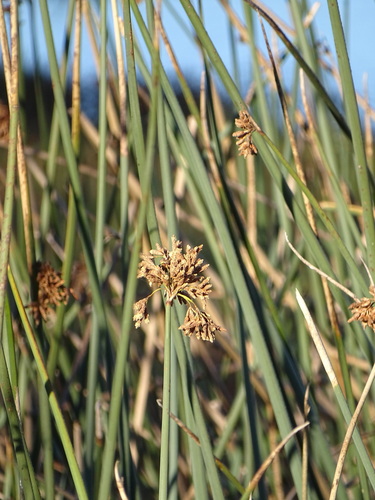
(c) Tony Rodd, some rights reserved (CC BY-NC-SA)
iNaturalist· cc-by
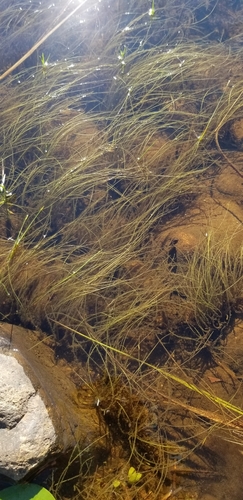
(c) John Tann, some rights reserved (CC BY)
iNaturalist· cc-by-nc-nd
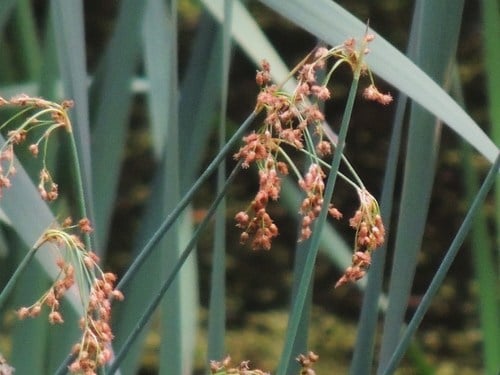
(c) eyeweed, some rights reserved (CC BY-NC-ND)
Summary
Source: WikipediaCyperus exaltatus is a species of sedge that is native to parts of the Africa, Asia, Argentina and Australia. It was first described in 1788 by Anders Jahan Retzius. It grows in shallow water and the edges of streams and lakes.
Description
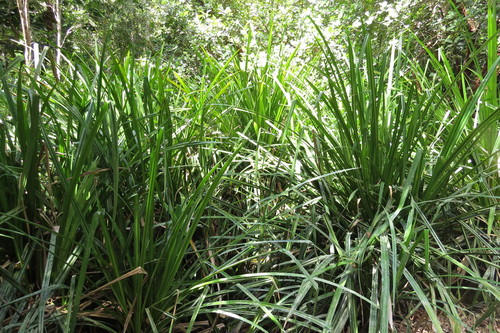
A sedge. It keeps growing from year to year. It has short rhizomes. The stems are 1-1.5 m tall. They are stout and 3 angled. The leaves are 6-10 mm wide.
Edible Uses
In Korea, it is known as Wanggol (왕골) and is grown and has been grown as a crop in all regions. It is cultivated in rice fields. The inside of the stem is made up of colorless cells with large spaces between them, making the stem very elastic. The stems are split and dried to make seats, cushions, and hats, while the inside is dried to make shoes, baskets, and ropes. The leaves are also used for making paper.
Medicinal Uses
The rhizome is grated and eaten, and also applied in dressings to scarifications over the spleen, in the treatment of cases of chronic malaria. The rhizome is grated to make a poultice that is applied to whitlow and to swollen buboes in cases of blood poisoning in order to draw and maturate the pus. Combined with the stem of sugar cane (Saccharum officinarum), it is applied to swollen breasts in order to promote milk-flow.
Distribution
It grows throughout the tropics. It grows in wet or swampy places.
Where It Grows
Africa, Asia, Australia, Bangladesh, Burkina Faso, Central Africa, Chad, China, East Africa, Himalayas, India, Indochina, Indonesia, Japan, Kenya, Korea, Malaysia, Myanmar, Nepal, Pakistan, Papua New Guinea, PNG, Sao Tome and Principe, SE Asia, Sri Lanka, Taiwan, Tanzania, Thailand, Vietnam,
Other Uses
The culms are used for thatching. The strong culms are used in hut-building, and are split to weave into reed-mats. They are used as toy spears by young boys.