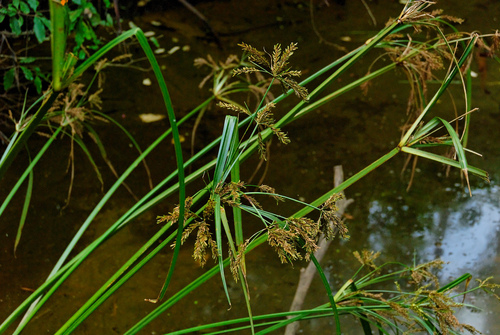
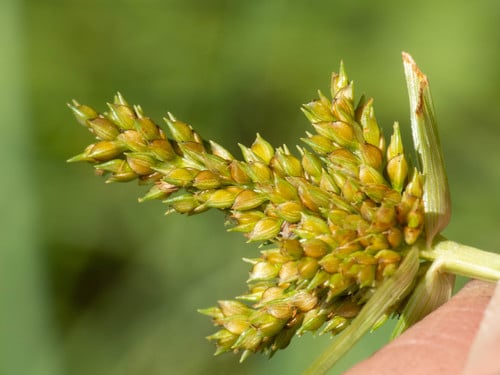
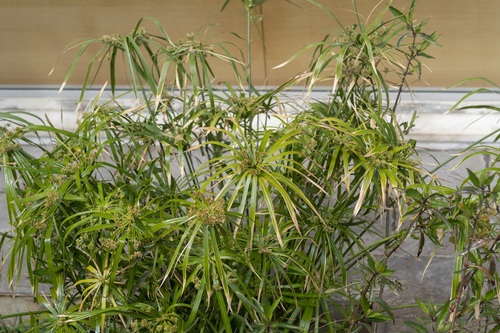
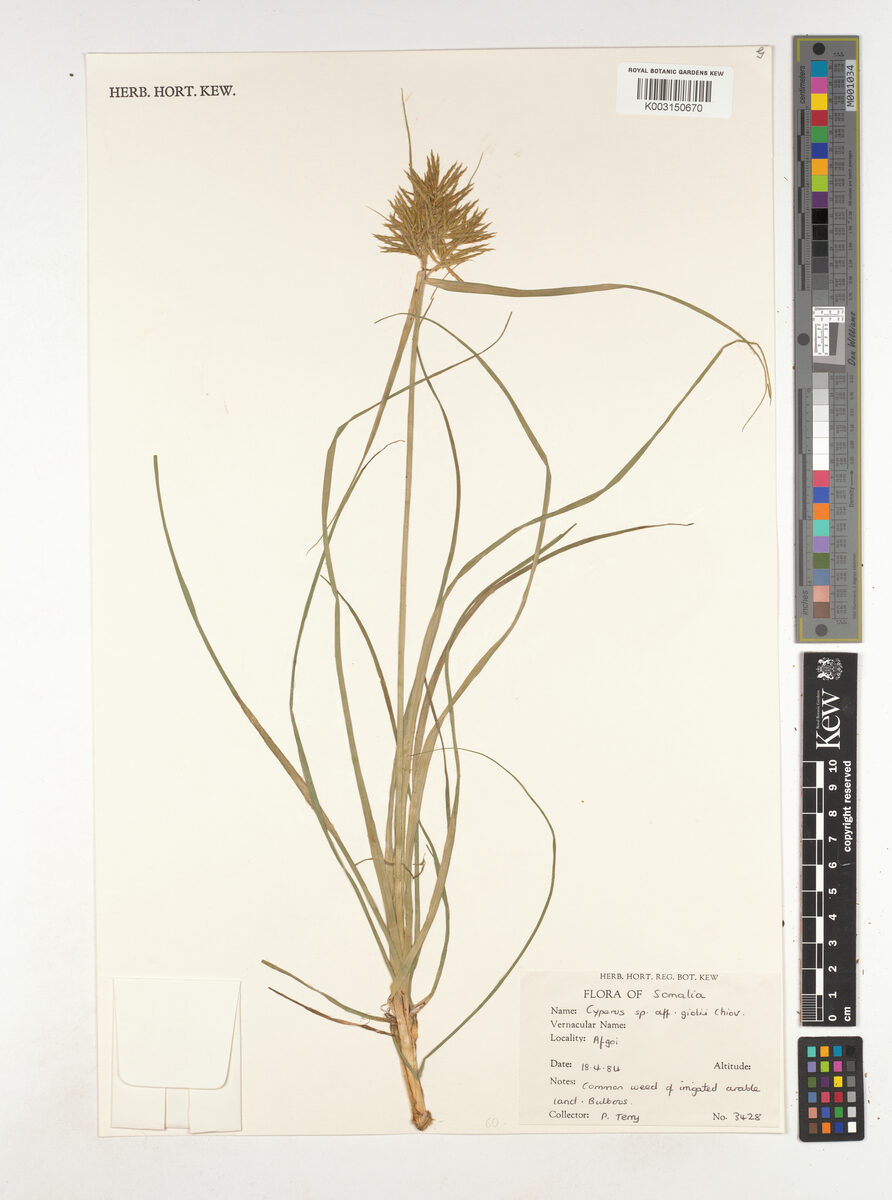
Cyperus fulgens
C. B. Clarke
Umbrella sedge
iNaturalist· cc-by-nc
(c) Jan-Hendrik Keet, some rights reserved (CC BY-NC), uploaded by Jan-Hendrik Keet
iNaturalist· cc-by-nc-sa
(c) David Hoare, some rights reserved (CC BY-NC-SA), uploaded by David Hoare
iNaturalist· cc-by-nc
(c) Nick Helme, some rights reserved (CC BY-NC), uploaded by Nick Helme
Description
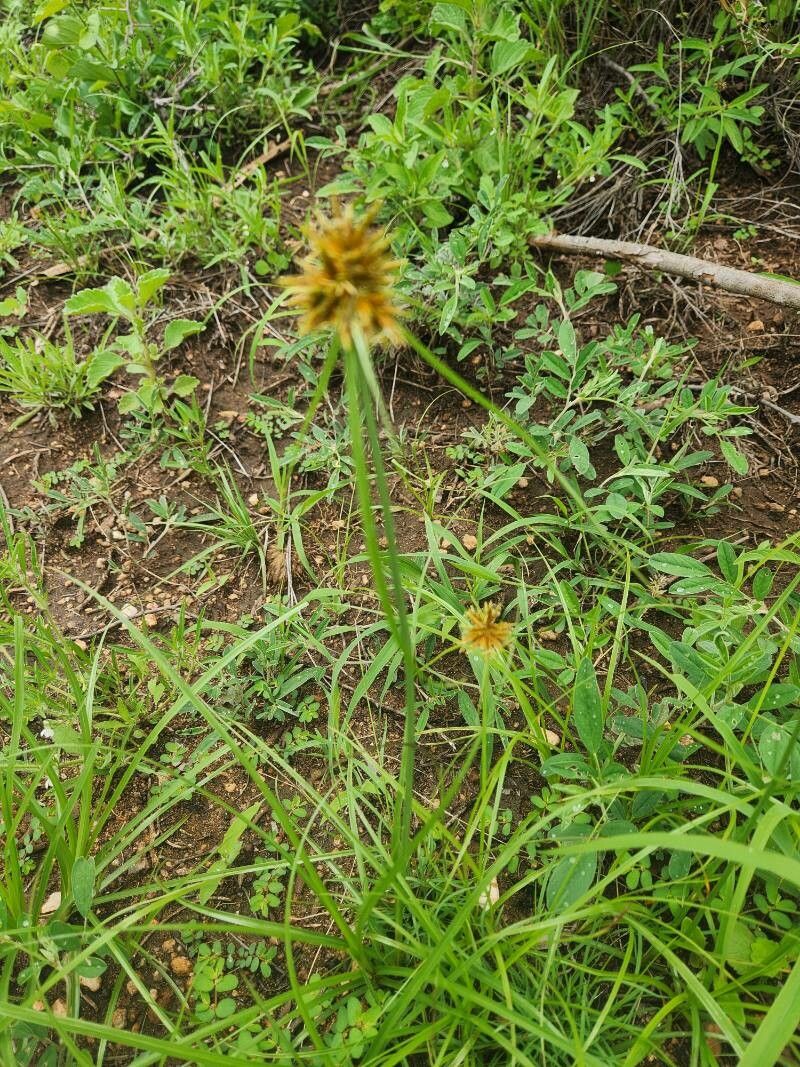
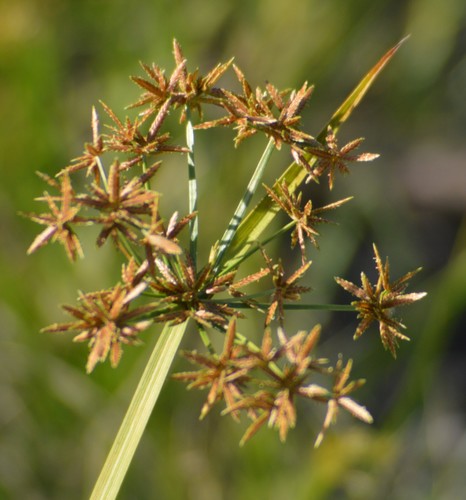
A sedge. These grow in clumps and have grass like leaves and solid stalks. The leaves are shiny and bright green. The flowers are in a loose spikelet. The bracts around the flowers are reddish-brown. The bulbs are about 12 mm across. They have papery scales. The corms are shallow and easily gathered.
Edible Uses
The tubers are eaten raw or cooked, with a naturally sweet taste. They are traditionally roasted in hot ashes and boiled in milk. They are an important food in some parts of Africa.
Traditional Uses
The tubers are eaten raw or cooked. They have a sweet taste. They are roasted in hot ashes and boiled in milk.
This uses section is brief — help expand it
Distribution
It grows in tropical and subtropical subsaharan Africa. It grows in seasonally wet grasslands. It can grow in arid places.
Where It Grows
Africa, Botswana, East Africa, Namibia, South Africa, Southern Africa, Tanzania, Zambia, Zimbabwe,
Cultivation
Unlike most other members of this genus, this species does not require a moist to wet soil.
Other Information
It is an important food in some parts of Africa.
Notes
There are 550 Cyperus species.
Nutrition
| Part | Moisture | kJ | kcal | Protein | Vit A | Vit C | Iron | Zinc |
|---|---|---|---|---|---|---|---|---|
| Bulb | 64.6 | 569 | 136 | 1.4 | — | 7.5 | 0.7 | 0.6 |
Synonyms
Also Known As
Boesmanuintjie, Monakaladi, Oseu, Uintjie
References (14)
- Fox, F. W. & Young, M. E. N., 1982, Food from the Veld. Delta Books. p 179 (As Mariscus fulgens)
- Grivetti, L. E., 1980, Agricultural development: present and potential role of edible wild plants. Part 2: Sub-Saharan Africa, Report to the Department of State Agency for International Development. p 73
- Leger, S., 1997, A Description of Today's Use of Plants in West Bushmanland (Namibia). German Development Service. PO Box 220035, 14061 Berlin, Germany. http://www.sigridleger.de/book/
- Long, C., 2005, Swaziland's Flora - siSwati names and Uses http://www.sntc.org.sz/flora/ (As Mariscus fulgens)
- Neudeck, L. et al, 2012, The Contribution of Edible Wild Plants to Food Security, Dietary Diversity and Income of Households in Shorobe Village, Northern Botswana. Ethnobotany Research & Applications 10:449-462
Show all 14 references Hide references
- Royal Botanic Gardens, Kew (1999). Survey of Economic Plants for Arid and Semi-Arid Lands (SEPASAL) database. Published on the Internet; http://www.rbgkew.org.uk/ceb/sepasal/internet [Accessed 16th April 2011]
- Ruiters-Welcome, A. K., 2019, Food plants of southern Africa. Ph.D. thesis. Univ. of Johannesburg p 51
- Simpson, D. A. & Inglis, C. A., 2001, Cyperaceae of Economic, Ethnobotanical and Horticultural Importance: A checklist. Kew Bulletin Vol. 56, No. 2 (2001), pp. 257-360
- van Wyk, Be., & Gericke, N., 2007, People's plants. A Guide to Useful Plants of Southern Africa. Briza. p 86
- van Wyk, B-E., 2011, The potential of South African plants in the development of new food and beverage products. South African Journal of Botany 77 (2011) 857–868
- Wehmeyer, A. S, 1986, Edible Wild Plants of Southern Africa. Data on the Nutrient Contents of over 300 species
- Welcome, A. K. & Van Wyk, B.-E., 2019, An inventory and analysis of the food plants of southern Africa. South African Journal of Botany 122 (2019) 136–179
- World Checklist of Useful Plant Species 2020. Royal Botanic Gardens, Kew
- Youngblood, D., 2004, Identification and Quantification of Edible Plant Foods in the Upper (Nama) Karoo, South Africa. Economic Botany 58 (Supplement) :S43-S65