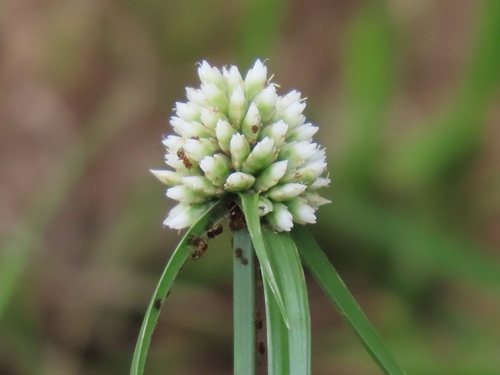
Carex arenaria
L.
Sand sedge
iNaturalist· cc-by-nc
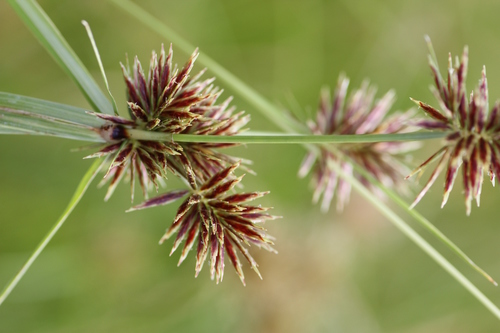
(c) Frederik V. Holsbeeck, some rights reserved (CC BY-NC)
iNaturalist· cc-by-nc
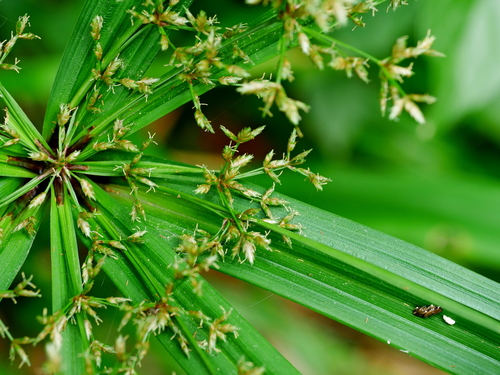
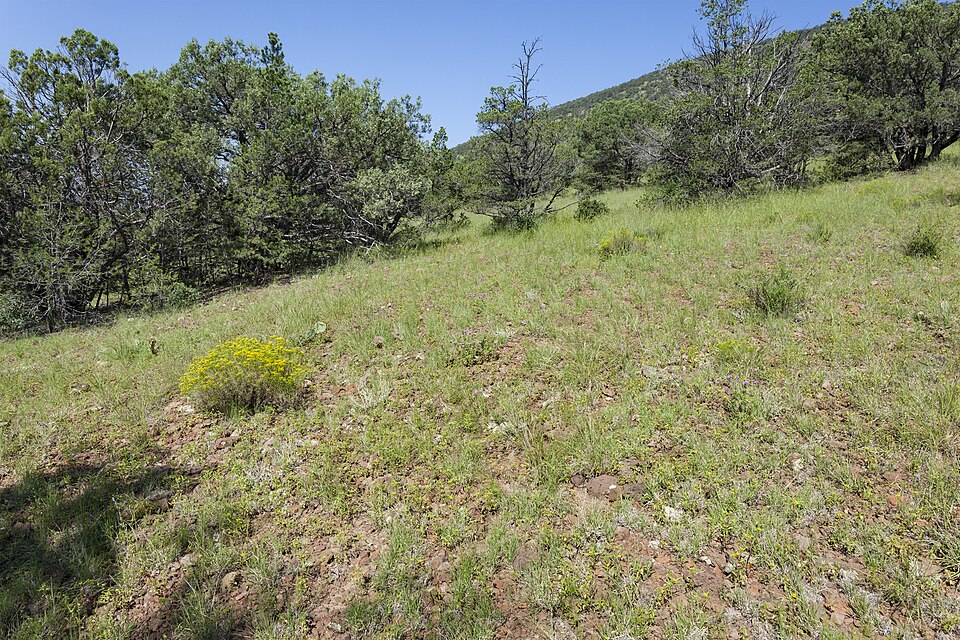
(c) rsrm, some rights reserved (CC BY-NC)
iNaturalist· cc-by-nc
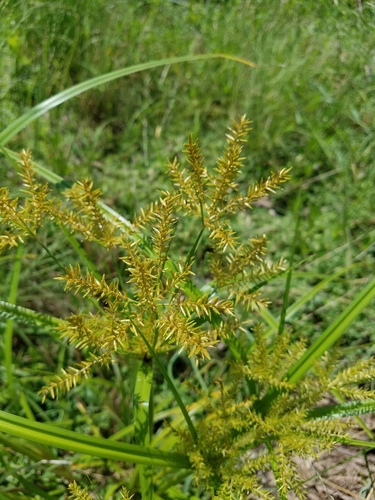
(c) Jackson Corzato, some rights reserved (CC BY-NC)
Summary
Source: WikipediaCarex arenaria, or sand sedge, is a species of perennial sedge of the genus Carex which is commonly found growing in dunes and other sandy habitats, as the species epithet suggests (Latin arenarius, "sandy"). It grows by long stolons under the soil surface.
Description
A perennial sedge growing to 0.5 m tall with a fast-spreading habit reaching 2 m wide. Monoecious, wind-pollinated flowers appear June to July with seeds ripening July to August. Tolerates light sandy and medium loamy soils, including nutritionally poor soil, across mildly acidic to basic pH. Grows in semi-shade or full sun, prefers dry or moist soil, and tolerates maritime exposure. Hardy to UK zone 7.
Edible Uses
The root can be eaten cooked, and the seed is also edible, though it is small and fiddly to work with.
Medicinal Uses
The root is diaphoretic and diuretic. An infusion has been used to treat bronchitis and catarrhs, abdominal and stomach disorders, liver complaints, arthritis and rheumatism, and skin conditions such as eczema and pruritus. It has also been used as a substitute for the tropical plant sarsaparilla. The root is harvested in spring and dried for later use.
Distribution
It grows in coastal sandy areas. It suits river banks. It needs moist sandy soil in an open sunny position.
Where It Grows
Australia, Britain, Europe, North America, Siberia, Turkey, Türkiye,
Cultivation
Plants can be grown by seeds or division of the rhizome.
Propagation
Sow seed in situ in spring in moist soil in light shade. If seed is scarce, sow in a cold frame and plant out in summer. Seed typically germinates in 2–6 weeks at 15°C. Divide in spring — larger clumps can go directly into permanent positions, but smaller clumps are best potted up and grown on in a cold frame until rooting well, then planted out in summer or the following spring.
Other Uses
The long creeping rootstock is valuable for binding sandy soils and stabilizing dunes.
Notes
There are about 2000 Carex species. There are 200 species in tropical America.
Synonyms
References (4)
- Bodkin, F., 1991, Encyclopedia Botanica. Cornstalk publishing, p 214
- Plants for a Future database, The Field, Penpol, Lostwithiel, Cornwall, PL22 0NG, UK. http://www.scs.leeds.ac.uk/pfaf/
- Sp. pl. 2:973. 1753
- Simpson, D. A. & Inglis, C. A., 2001, Cyperaceae of Economic, Ethnobotanical and Horticultural Importance: A checklist. Kew Bulletin Vol. 56, No. 2 (2001), pp. 257-360