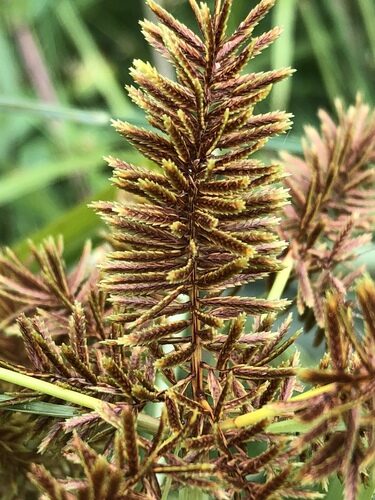
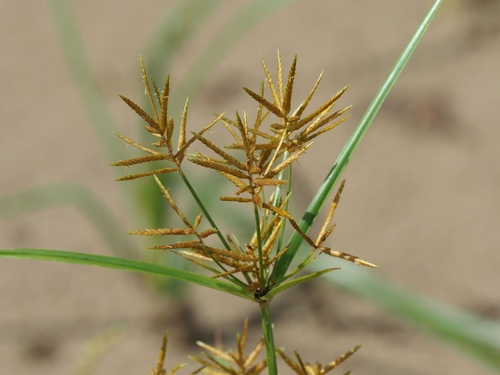
Scirpodendron ghaeri
(Gaertn.) Merrill
iNaturalist· cc-by
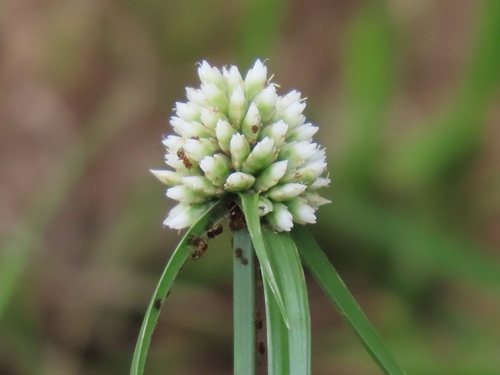
(c) coenobita, some rights reserved (CC BY), uploaded by coenobita
iNaturalist· cc-by
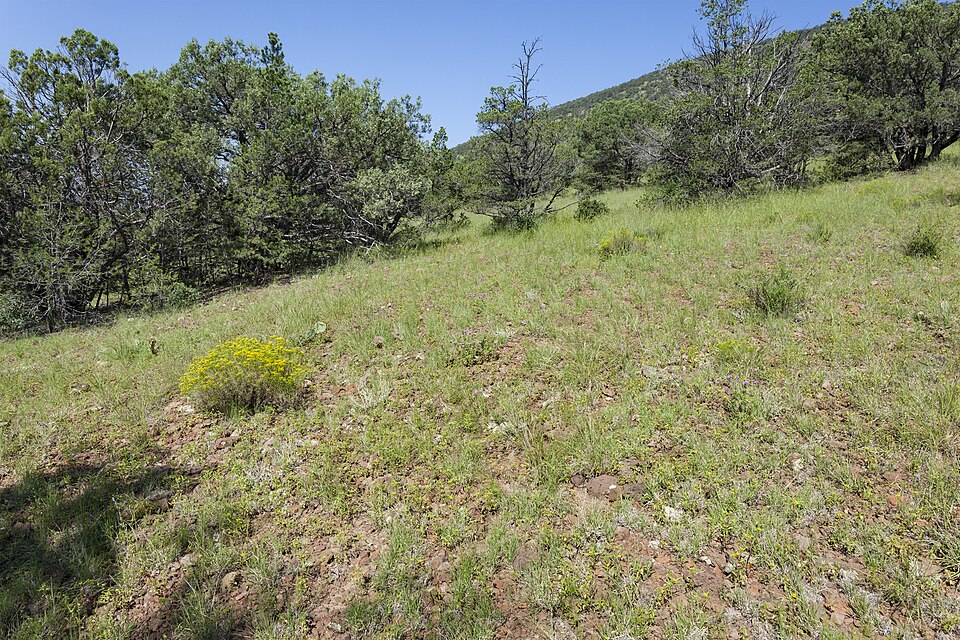
(c) Julien Renoult, some rights reserved (CC BY), uploaded by Julien Renoult
iNaturalist· cc-by-nc-sa
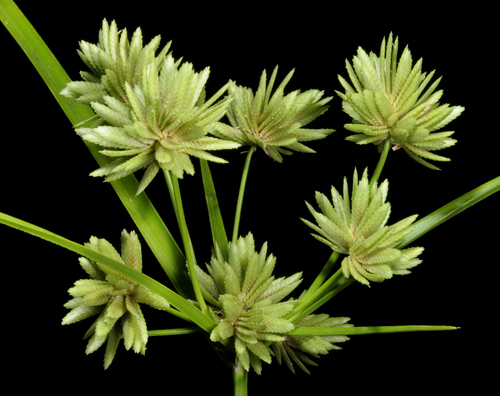
(c) Smithsonian Institution, National Museum of Natural History, Department of Botany, some rights reserved (CC BY-NC-SA)
Summary
Source: WikipediaScirpodendron ghaeri is a plant in the family Cyperaceae native to areas from India through southeast Asia to the western Pacific. It is a tall sedge with a woody rhizome producing 3 m (9.8 ft) long leaves in dense clumps; the leaves have sharp edges and the plant forms impenetrable barriers. It was first described as Chionanthus ghaeri by Joseph Gaertner in 1788, and transferred to the genus Scirpodendron by Elmer Drew Merrill in 1914. It usually grows in coastal swamp forest, but may be found in rainforest and gallery forest
Description
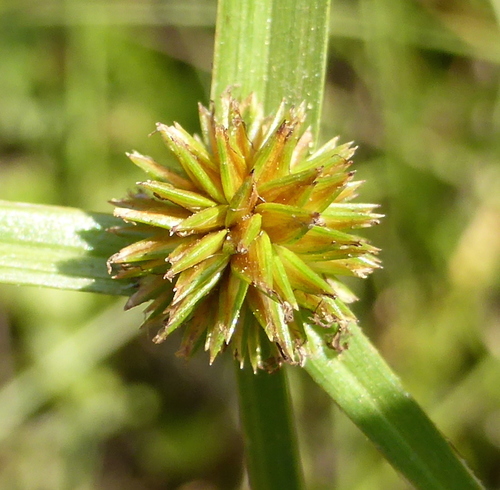
A herb or sedge. It keeps growing from year to year. It is coarse and has a woody rhizome. It grows 25-35 cm tall. The leaves are near the base and are like Pandanus leaves. These can be 100-230 cm long and 2-5 cm wide. They have teeth along the edge. The flower group are oval and 6-15 cm long by 3-5 cm wide. The fruit are 8-16 mm long and 6-11 mm wide. They are oval and angular and fleshy.
Edible Uses
Fruit. The fruits have a succulent flesh which becomes corky when it dries. They are up to 15mm long by 10mm wide.
Traditional Uses
The succulent layer of the fruit is eaten.
This uses section is brief — help expand it
Known Hazards
The plant grows in clumps and has cutting, pandan-like leaves. Larger creatures avoid trying to pass through these clumps, which often form almost impenetrable, pure stands.
Distribution
It is a tropical plant. It grows on the edges of marshes from sea level to 150 m altitude.
Where It Grows
American Samoa, Asia, Australia, Fiji, India, Indonesia, Micronesia, Pacific, Palau, Philippines, Pohnpei, Rotuma, Samoa, SE Asia, Sri Lanka, Vanuatu,
Cultivation
A plant of mainly coastal areas being found at elevations up to 150 metres, exceptionally to 300 metres. The mature fruits have a corky exterior which enables them to float and thus travel to new sites at which to germinate.
Other Uses
The leaves are up to 3 metres long. They are used for weaving into mats, hats etc. The leaves are used for thatching.
Other Information
It is cultivated.
Synonyms
Also Known As
Lau 'ie'ie, Pwoaki, Rau mena
References (4)
- Ambasta S.P. (Ed.), 2000, The Useful Plants of India. CSIR India. p 559
- Parham, B. E. V., 1972, Plants of Samoa. New Zealand Department of Scientific and Industrial Research. Information Series. No. 85 p 55 (As Scirpodendron costatum)
- Simpson, D. A. & Inglis, C. A., 2001, Cyperaceae of Economic, Ethnobotanical and Horticultural Importance: A checklist. Kew Bulletin Vol. 56, No. 2 (2001), p. 338
- Smith, A.C., 1979, Flora Vitiensis Nova, Lawaii, Kuai, Hawaii, Volume 1 p 222