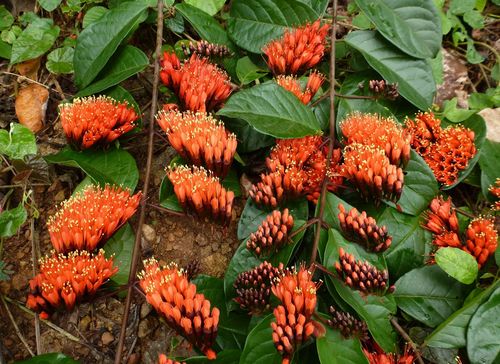
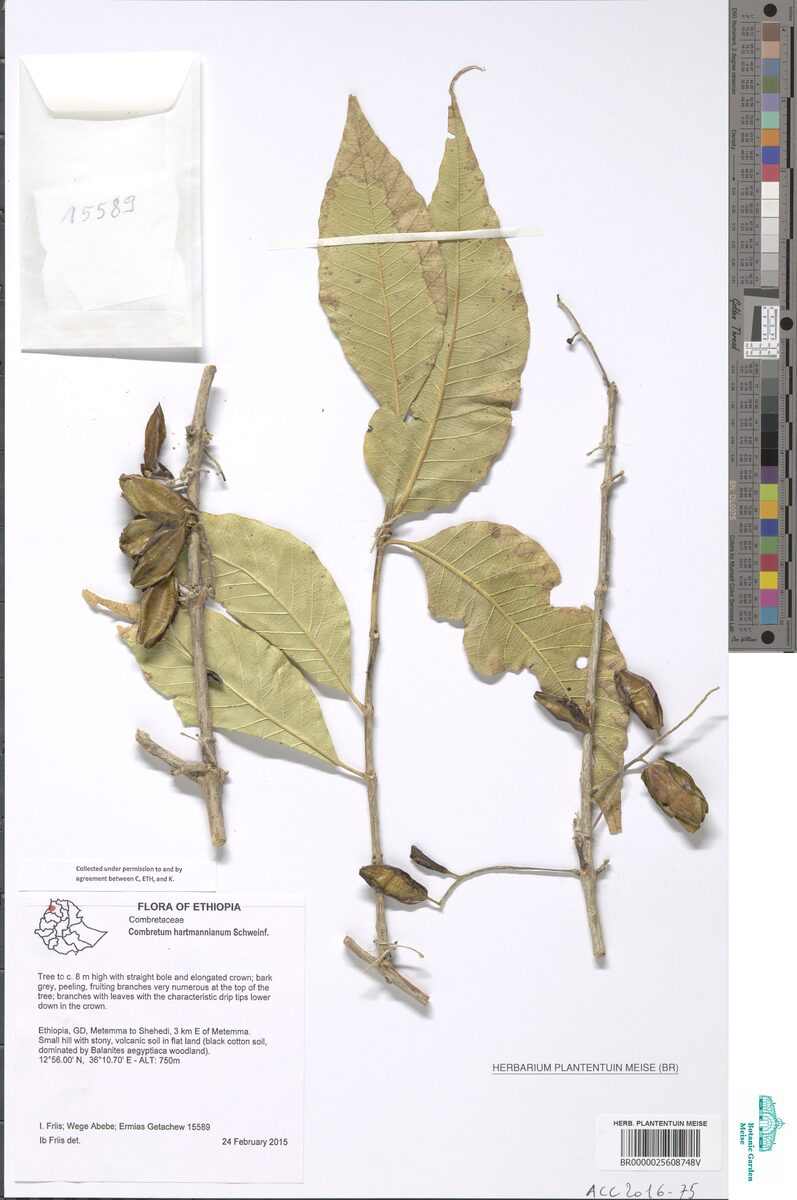
Combretum fragrans
F. Hoffm.
iNaturalist· cc-by-nc
(c) Troos van der Merwe, some rights reserved (CC BY-NC)
iNaturalist· cc-by-nc
(c) Troos van der Merwe, some rights reserved (CC BY-NC)
iNaturalist· cc-by-nc
(c) Troos van der Merwe, some rights reserved (CC BY-NC)
Description
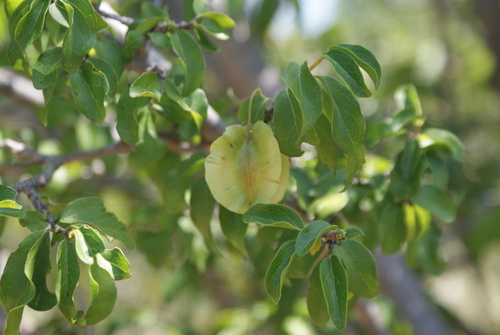
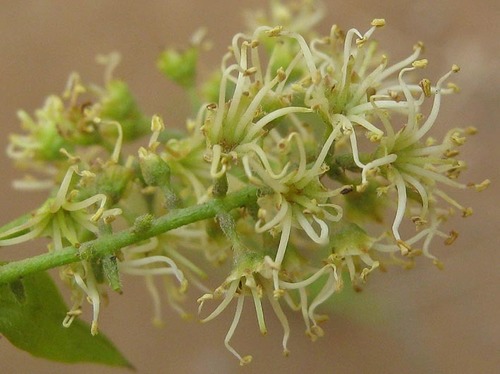
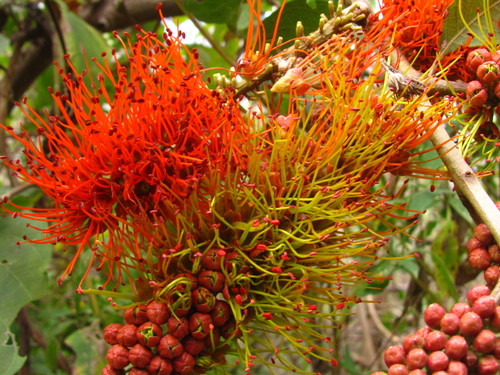
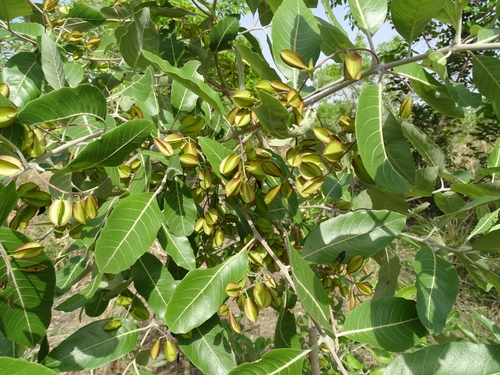
A shrub. It loses its leaves during the year. It can grow up to 12 m tall. The leaves are opposite and oval. They are 7-18 cm long. They are scaly and sticky underneath when young. The flowers have a scent. They appear before the leaves. They are small and in spikes 7 cm long. The fruit are rounded and yellow-brown. They are 3 cm long and have 4 wings. Young fruit are red and sticky.
Edible Uses
The leaves, fruit, and gum are all edible portions.
Distribution
It is a tropical plant. It can grow in seasonally waterlogged soils. It is often in shallow and stony soils. It can grow in woodland and semi-desert. It grows between 50-1,700 m above sea level. It can grow in arid places.
Where It Grows
Africa, Benin, Botswana, Burkina Faso, Central Africa, Central African Republic, CAR, Congo, Côte d'Ivoire, East Africa, Eritrea, Ethiopia, Ghana, Guinea, Guinée, Guinea-Bissau, Ivory Coast, Kenya, Malawi, Mali, Mozambique, Niger, Nigeria, Sahel, Senegal, Sierra Leone, Southern Africa, Sudan, Tanzania, Togo, Uganda, West Africa, Zambia, Zimbabwe,
Cultivation
Plants are grown from fresh seeds. The wings are rubbed off. It can be cut back and will re-grow.
Production
Plants grow slowly.
Notes
Probably now Combretum adenogonium;
Synonyms
Also Known As
Buski, Gulmema, Hajef, Merhad, Shaf, Shuf, Tenkeleba
References (3)
- Burkill, H. M., 1985, The useful plants of west tropical Africa. Vol. 1.
- Le Houerou, H. N., (Ed.), 1980, Browse in Africa. The current state of knowledge. International Livestock Centre for Africa, Ethiopia. p 162
- Royal Botanic Gardens, Kew (1999). Survey of Economic Plants for Arid and Semi-Arid Lands (SEPASAL) database. Published on the Internet; http://www.rbgkew.org.uk/ceb/sepasal/internet [Accessed 10th April 2011]