Elaeodendron matabelicum
Loes.
Condiment cassine
iNaturalist· cc-by-nc
(c) robburrett, some rights reserved (CC BY-NC)
iNaturalist· cc-by-nc
(c) robburrett, some rights reserved (CC BY-NC)
iNaturalist· cc-by-nc
(c) robburrett, some rights reserved (CC BY-NC)
Description
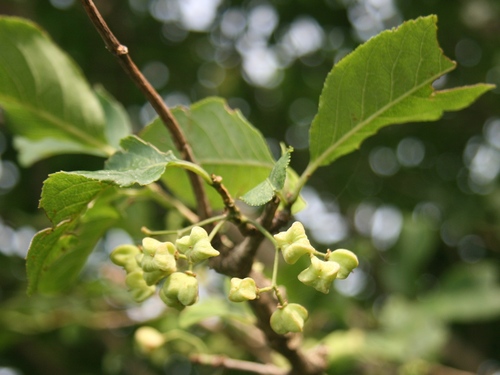
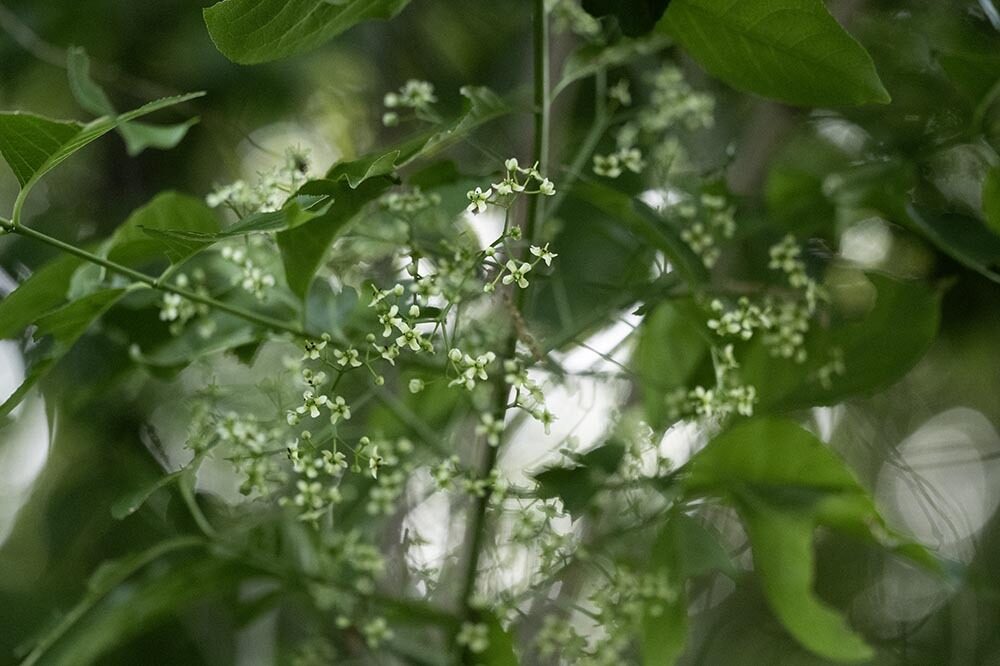
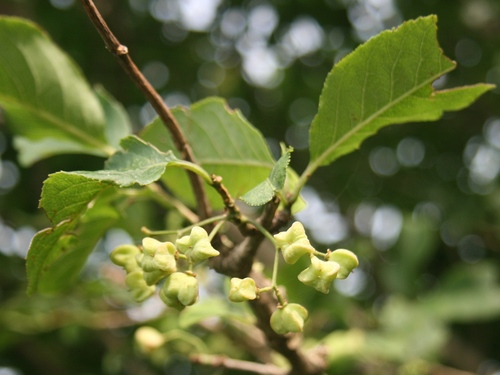
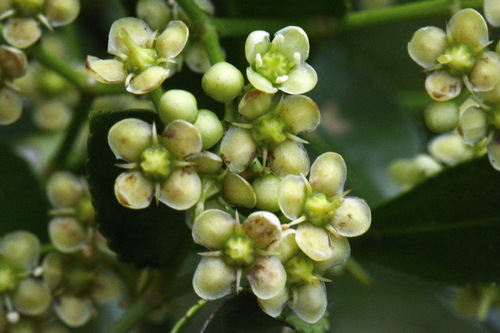
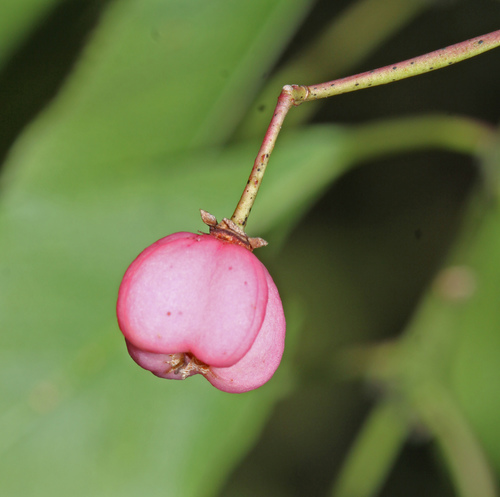
A shrub or tree. It grows to 12 m high. The bark is grey and peels off in irregular scales. The branches have 4 lines. The leaf blades are dark green above and greyish green underneath. They are 4-10 cm long and 2-4 cm wide. There are several flowers in a group in the axils of leaves. They are green to yellow. The fruit is fleshy and yellow. It is oval and 13-18 mm long. There is one seed.
Edible Uses
The fruit is eaten.
Medicinal Uses
Bark and root infusions or decoctions are taken to treat excessive uterine bleeding, bloody diarrhoea and pains, and as aphrodisiac.
Distribution
It is a tropical plant. It grows in dry soils. It grows between 425-1,525 m altitude. It can grow in arid places. It grows in woodland and wooded grassland.
Where It Grows
Africa, Botswana, East Africa, Malawi, Mozambique*, Southern Africa, Zambia, Zimbabwe,
Cultivation
Some forms of this plant grow on coastal dunes and so should be tolerant of maritime winds.
Other Uses
The roots produce a yellow dye. The wood is used for carving utensils such as spoons.
Synonyms
References (2)
- Royal Botanic Gardens, Kew (1999). Survey of Economic Plants for Arid and Semi-Arid Lands (SEPASAL) database. Published on the Internet; http://www.rbgkew.org.uk/ceb/sepasal/internet [Accessed 7th April 2011]
- World Checklist of Useful Plant Species 2020. Royal Botanic Gardens, Kew