Capparis hereroensis
Schinz
iNaturalist· cc-by-sa
(c) Tony Rebelo, some rights reserved (CC BY-SA), uploaded by Tony Rebelo
iNaturalist· cc-by-nc
(c) Nick Helme, some rights reserved (CC BY-NC), uploaded by Nick Helme
iNaturalist· cc-by-sa
(c) Tony Rebelo, some rights reserved (CC BY-SA), uploaded by Tony Rebelo
Description
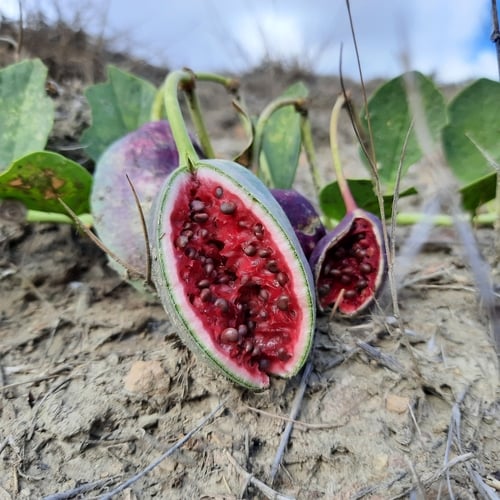
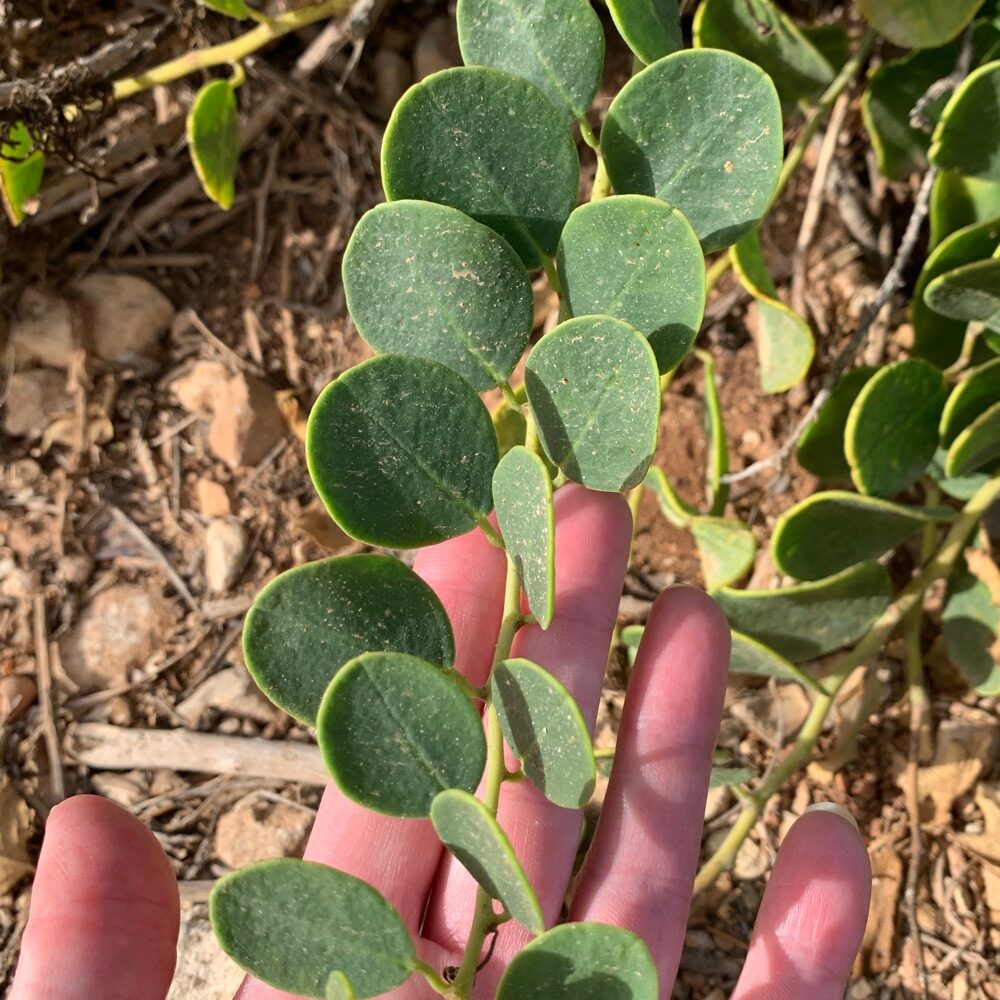
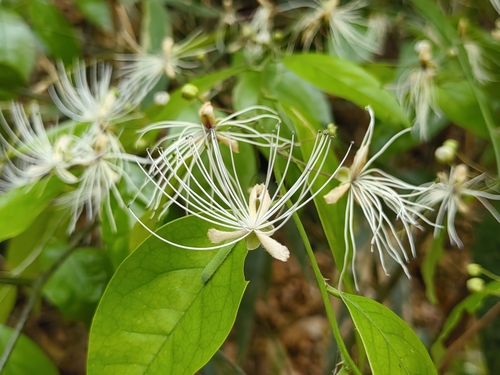
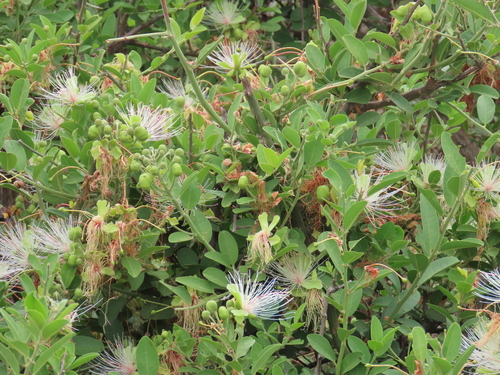
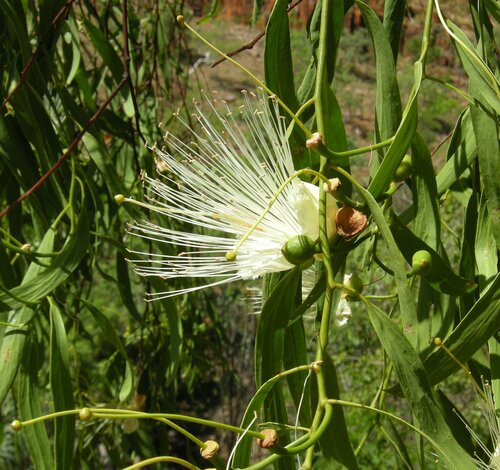
A thorny shrub. It grows up to 2 m high. The leaf stalks are long. The leaves are alternate and narrowly oval. They have a spine at the tip. The leaves are 3-6 cm long and 1-3 cm wide. They are leathery and hairy. The flowers are cream and turn red. They occur singly in the axils of leaves. They are 3-4 cm across. The fruit are berries. They are 4 cm long. They have dark green lines on the surface.
Edible Uses
The fruit are eaten raw.
Traditional Uses
The fruit are eaten raw.
This uses section is brief — help expand it
Distribution
It is a subtropical plant. It suits hot arid places. It can grow in areas with a rainfall less than 50 mm per year. It grows in sandy soils. It grows between 4-30 m above sea level. It grows along the coast. It can grow in arid places. It traps wind blown sand and form hummocks.
Where It Grows
Africa, Namibia, Southern Africa,
Also Known As
Mudyangwe, Sirub
References (6)
- Royal Botanic Gardens, Kew (1999). Survey of Economic Plants for Arid and Semi-Arid Lands (SEPASAL) database. Published on the Internet; http://www.rbgkew.org.uk/ceb/sepasal/internet [Accessed 7th April 2011]
- Ruiters-Welcome, A. K., 2019, Food plants of southern Africa. Ph.D. thesis. Univ. of Johannesburg p 41
- Sullivan, S., 1998, People plants and practice in drylands: Socio-political and ecological dimensions of resource-use by Damara farmers in north-west Namibia. Ph.D. Univ. College London. p 28
- Van Damme, P et al, 1922, Plant Uses by the Topnaar of the Kuiseb Valley Namib Desert. Afrika Focus Vol. 8(3-4):223-252
- Welcome, A. K. & Van Wyk, B.-E., 2019, An inventory and analysis of the food plants of southern Africa. South African Journal of Botany 122 (2019) 136–179
Show all 6 references Hide references
- World Checklist of Useful Plant Species 2020. Royal Botanic Gardens, Kew