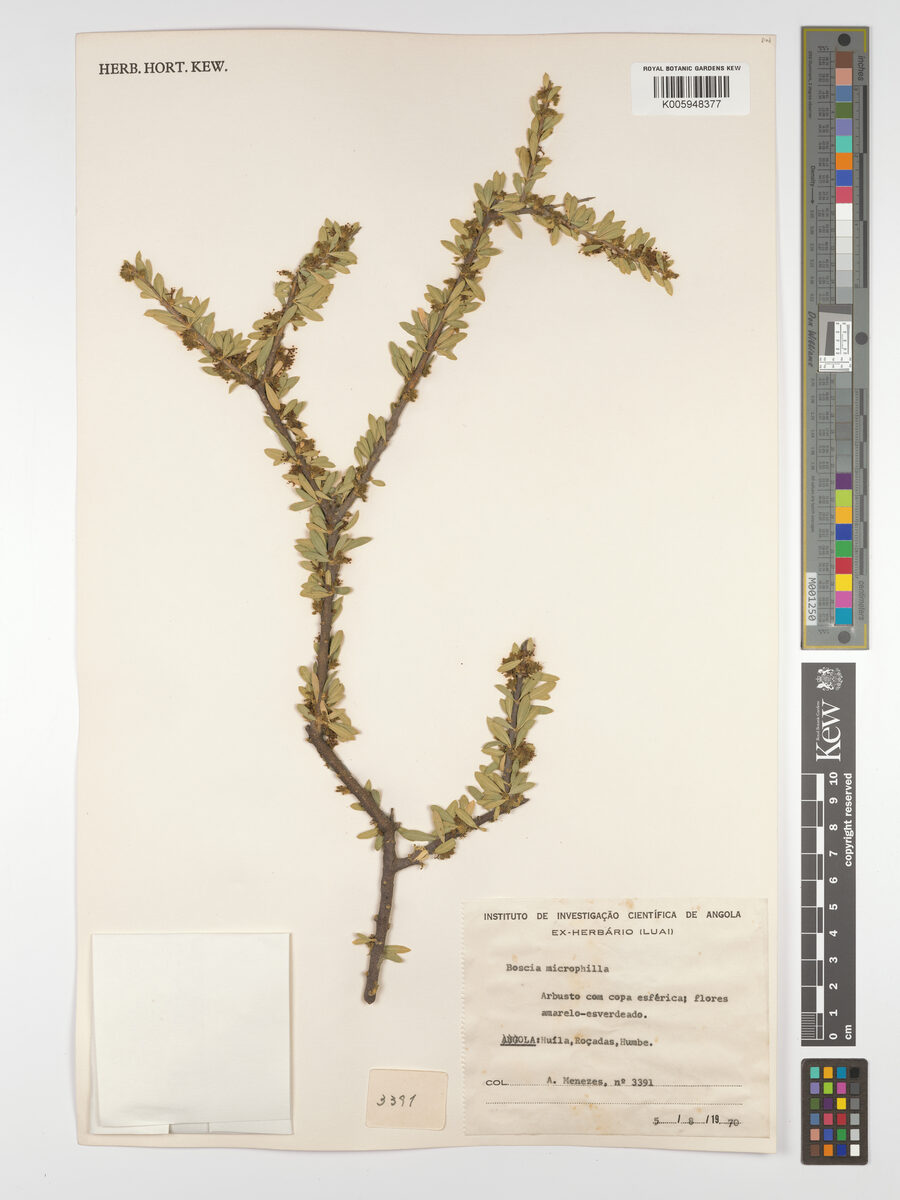
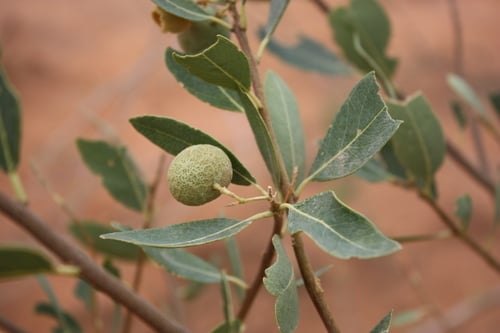
Capparis lasiantha
R.Br. ex DC.
Bush Caper
iNaturalist· cc-by-nc
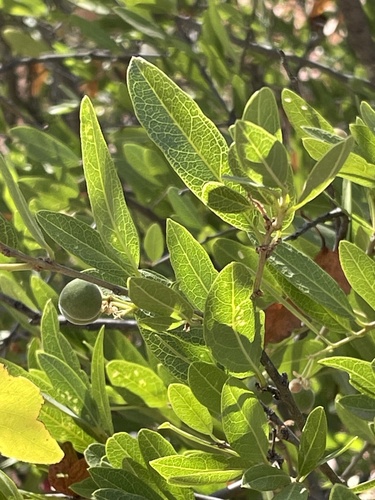
(c) Martin Bennett, some rights reserved (CC BY-NC), uploaded by Martin Bennett
iNaturalist· cc-by-nc
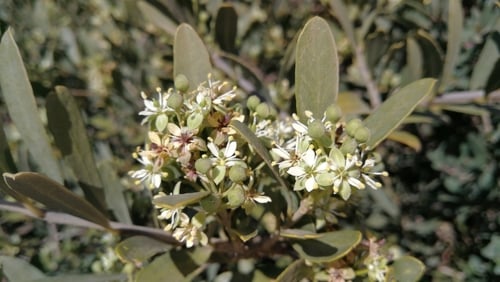
(c) overlander (Gerald Krygsman), some rights reserved (CC BY-NC), uploaded by overlander (Gerald Krygsman)
iNaturalist· cc-by-nc
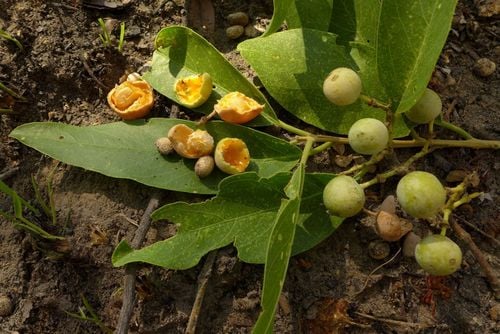
(c) Geoffrey Sinclair, some rights reserved (CC BY-NC), uploaded by Geoffrey Sinclair
Summary
Source: WikipediaCapparis lasiantha is an endemic Australian plant with a range that extends from the Kimberley region through the Northern Territory and Queensland to northern New South Wales, primarily in drier inland areas although the species extends to the coast in Central Queensland. Common names are numerous and include wyjeelah, nepine, split jack, nipang creeper, nipan, native orange and bush caper.
Description
A small shrub. It grows 1-2 m tall. It scrambles over other plants. The stems are zigzag in shape. There are a pair of backward curving spines at each angle along the stem. The leaves are oblong and blunt. They are thick and leathery. They are 2-5 cm long by 1-1.5 cm wide. The flowers are white or cream and fluffy. The flowers are 1.5-2 cm across. The occur either singly or in pairs in the axils of leaves. They have a sweet smell. The fruit is an orange berry 3-4 cm long. It is oval shaped and contains many seeds. It is edible.
Edible Uses
Both the fruit and flowers are edible.
Distribution
A tropical plant. It grows in inland areas in Australia. It is very drought resistant. It can also grow in monsoon forest. In tropical Queensland it grows from sea level to 600 m altitude. It can grow in arid places.
Where It Grows
Australia*,
Cultivation
Plants can be grown from seed or cuttings.
Notes
There are about 250 Capparis species. There are about 50 Capparis species in tropical America.
Nutrition
| Part | Moisture | kJ | kcal | Protein | Vit A | Vit C | Iron | Zinc |
|---|---|---|---|---|---|---|---|---|
| Fruit | 54.1 | 655 | 157 | 10.1 | — | 6 | 1.2 | 0.9 |
| Flowers | — | — | — | — | — | — | — | — |
Synonyms
Also Known As
Alurra, Babingi, Barigan, Guwiibirr, Jilpukarri, Nepine, Ngaybaan, Nipand, Pampilyi, Split-jack, Thulla-kurbin, Wild Orange, Wait-a-while, Wyjeelah
References (34)
- Altschul, S.V.R., 1973, Drugs and Foods from Little-known Plants. Notes in Harvard University Herbaria. Harvard Univ. Press. Massachusetts. no. 1359
- Anon., 2003, Native Plants for the Fitzroy basin. Society for Growing Australian Plants Inc. (Rockhampton Branch)
- Bailey, F. M., 1913, Comprehensive Catalogue of Queensland Plants. Queensland Government. p 36
- Bindon, P., 1996, Useful Bush Plants. Western Australian Museum. p 69
- Bodkin, F., 1991, Encyclopedia Botanica. Cornstalk publishing, p 211
Show all 34 references Hide references
- Cancilla, D., 2018, Ethnobotanical and Ethnozoological Values Desktop Assessment - Eliwana Project. p 10
- Cherikoff V. & Isaacs, J., The Bush Food Handbook. How to gather, grow, process and cook Australian Wild Foods. Ti Tree Press, Australia p 189
- Cooper, W. and Cooper, W., 2004, Fruits of the Australian Tropical Rainforest. Nokomis Editions, Victoria, Australia. p 110
- Eddie, C., 2007, Field Guide to Trees and Shrubs of Eastern Queensland Oil and Gas Fields. Santos p 252
- Elliot, W.R., & Jones, D.L., 1982, Encyclopedia of Australian Plants suitable for cultivation. Vol 2. Lothian. p 459
- Flora of Australia, Volume 8, Lecythidales to Batales, Australian Government Publishing Service, Canberra (1982) p 212
- Hardwick, G., 2001, Economically Useful Plants for Northern Australia: Master Species List. Crusader eBooks.
- Hunter, J., 2012, Vegetation and Floristics of Gilwarny and Wingadee Nature Reserves. A Report to the New South Wales National Parks and Wildlife Service p 111
- Isaacs, J., 1987, Bush Food, Aboriginal Food and Herbal Medicine. Weldons. p 69
- INFOODS:FAO/INFOODS Databases
- Kenneally, K.E., Edinger, D. C., and Willing T., 1996, Broome and Beyond, Plants and People of the Dampier Peninsula, Kimberley, Western Australia. Department of Conservation and Land Management. p 80
- Latz, P.K., 1996, Bushfires and Bushtucker: Aboriginal plant use in Central Australia. IAD Press Alice Springs p 138
- Lazarides, M. & Hince, B., 1993, Handbook of Economic Plants of Australia, CSIRO. p 47
- Low, T., 1991, Wild Food Plants of Australia. Australian Nature FieldGuide, Angus & Robertson. p 174
- McKerney, M. & White, H., 2011, Bush Tucker, Boomerangs & Bandages. Border River-Gwyder Catchment Management Authority p 97
- Melzer, R. & Plumb, J., 2011, Plants of Capricornia. Belgamba, Rockhampton. p 360
- Milson. J., 2000, Trees and Shrubs of north-west Queensland. DPI p 36
- Morley, B.D., & Toelken, H.R., (Eds), 1983, Flowering Plants in Australia. Rigby. p 102
- Paczkowska, G. & Chapman, A.R., 2000, The Western Australian Flora. A Descriptive Catalogue. Western Australian Herbarium. p 194
- Smith, N. M., 1991, Ethnobotanical Field Notes from the Northern Territory, Australia, J. Adelaide Bot. Gard. 14(1): 1-65
- Smith, Nicholas et al. 1993, Ngarinyman Ethnobotany: Aboriginal Plant Use from the Victoria River Area Northern Australia. Northern Territory Botanical Bulletin No 16. Parks and Wildlife Commission of the Northern Territory. p 14
- Steenbeeke, Greg as part of the Plants Directory project. List of plant species from northern NSW that may be used as food plants p 15
- Townsend, K., 1994, Across the Top. Gardening with Australian Plants in the tropics. Society for Growing Australian Plants, Townsville Branch Inc. p 120
- Townsend, K., 1999, Field Guide to Plants of the Dry Tropics. Society for Growing Australian Plants, Townsville Branch Inc. p 104
- Wheeler, J.R.(ed.), 1992, Flora of the Kimberley Region. CALM, Western Australian Herbarium, p 258
- Wightman, Glenn et al. 1992. Mudburra Ethnobotany: Aboriginal Plant Use from Kulumindini (Elliott) Northern Australia. Northern Territory Botanical Bulletin No 14. Parks and Wildlife Commission of the Northern Territory. p 11
- Wightman, Glenn et al. 1992, Mangarrayi Ethnobotany: Aboriginal Plant Use from the Elsey Area Northern Australia. Northern Territory Botanical Bulletin No 15. Parks and Wildlife Commission of the Northern Territory. p 12
- Wightman, Glenn et al. 1994, Gurindji Ethnobotany: Aboriginal Plant Use from Daguragu Northern Australia. Northern Territory Botanical Bulletin No 18. Parks and Wildlife Commission of the Northern Territory. p. 14
- Williams, K.A.W., 1999, Native Plants of Queensland Volume 4. Keith A.W. Williams North Ipswich, Australia. p 94