Capparis loranthifolia
Lindley
Narrow-leaf Bumble tree
iNaturalist· cc-by
(c) coenobita, some rights reserved (CC BY), uploaded by coenobita
iNaturalist· cc-by-nc
(c) Darren Fielder, some rights reserved (CC BY-NC)
Summary
Source: WikipediaCapparis loranthifolia, also known as the narrowleaf bumble or narrow-leaved bumble tree, is a shrub or small tree in the caper family. It is endemic to the arid and semi-arid interior of northern and eastern Australia from Western Australia to New South Wales.
Description
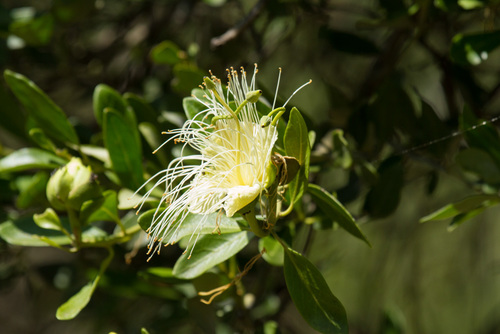
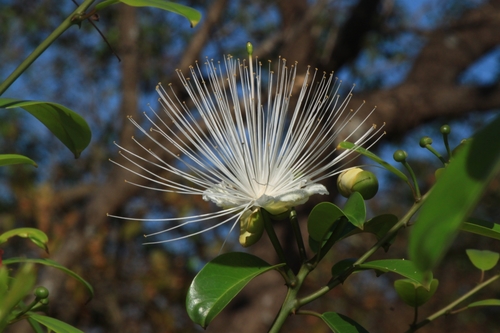
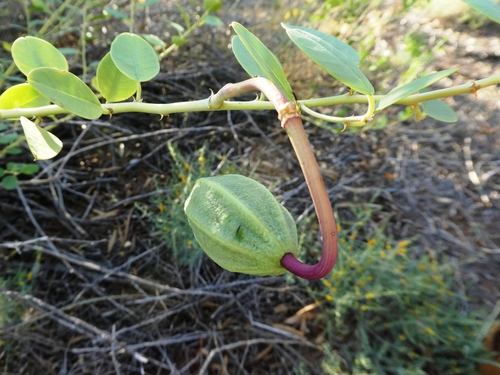
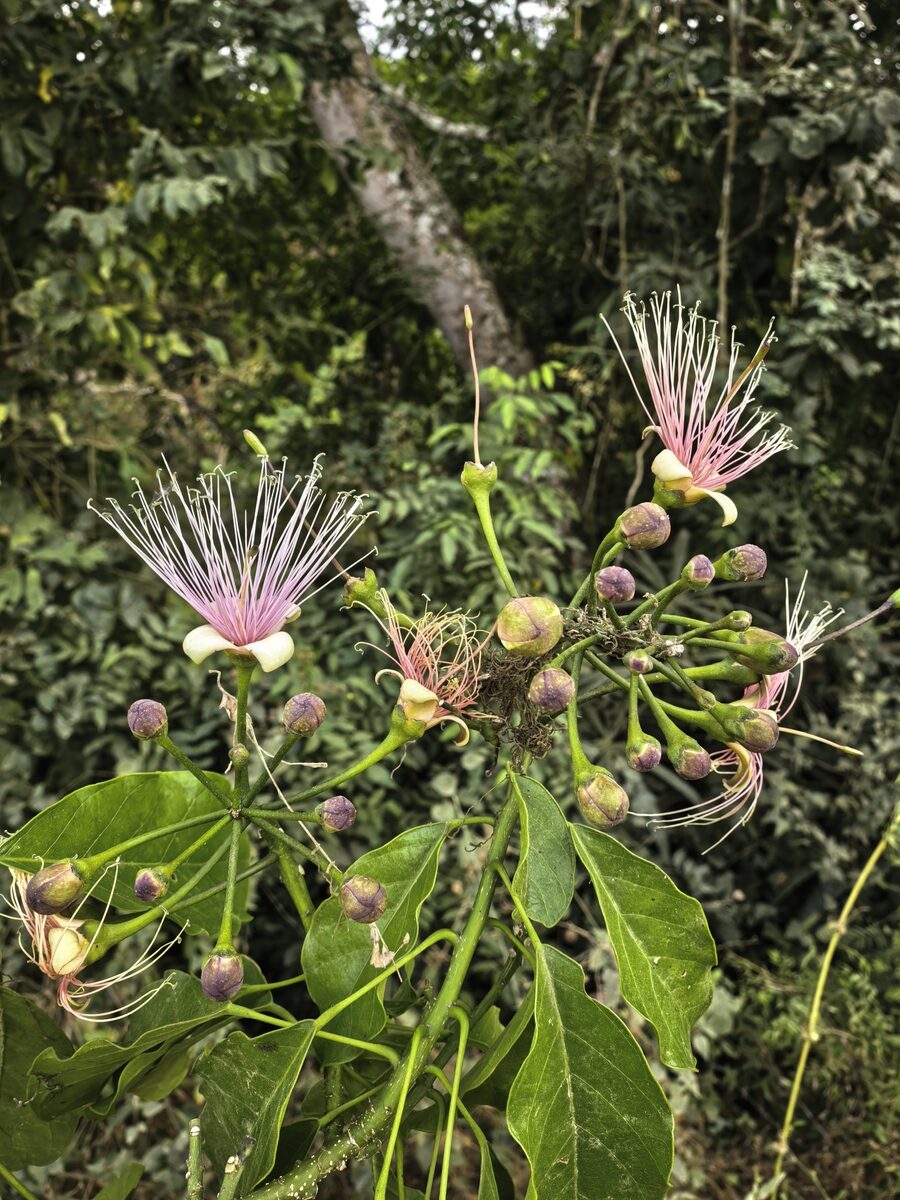
A tall shrub. The bark is dark grey and deeply cracked. The stems are thorny. The leaves are 2-4 cm long by 0.8-1.5 cm wide. They are sword shaped and thick and leathery. They are dark green. The flowers are in clusters of 1-5 at the ends of branches. The flowers are 2.5 cm across. They are white. They have many spreading stamens. The fruit is a berry with is 2-4 cm across. It is yellowish and mostly smooth.
Edible Uses
The fruit are eaten.
Traditional Uses
The fruit are eaten.
This uses section is brief — help expand it
Distribution
It grows in subtropical locations. It occurs in inland Queensland and New South Wales in Australia.
Where It Grows
Australia*,
Cultivation
Plants can be grown from fresh seed or cuttings.
Notes
There are about 250 Capparis species. There are about 50 Capparis species in tropical America.
Nutrition
| Part | Moisture | kJ | kcal | Protein | Vit A | Vit C | Iron | Zinc |
|---|---|---|---|---|---|---|---|---|
| Fruit | 42 | 647 | 155 | 3.7 | — | 11 | 2.9 | 2.2 |
Synonyms
Also Known As
Dharrday, Native mandarin
References (7)
- Cherikoff V. & Isaacs, J., The Bush Food Handbook. How to gather, grow, process and cook Australian Wild Foods. Ti Tree Press, Australia p 189
- Flora of Australia, Volume 8, Lecythidales to Batales, Australian Government Publishing Service, Canberra (1982) p 216
- Hall, N. et al, 1972, The Use of Trees and Shrubs in the Dry Country of Australia, AGPS, Canberra. p 357
- Lazarides, M. & Hince, B., 1993, Handbook of Economic Plants of Australia, CSIRO. p 47
- Low, T., 1991, Wild Food Plants of Australia. Australian Nature FieldGuide, Angus & Robertson. p 172
Show all 7 references Hide references
- McKerney, M. & White, H., 2011, Bush Tucker, Boomerangs & Bandages. Border River-Gwyder Catchment Management Authority p 99
- Melzer, R. & Plumb, J., 2011, Plants of Capricornia. Belgamba, Rockhampton. p 88 (As var. bancroftii)