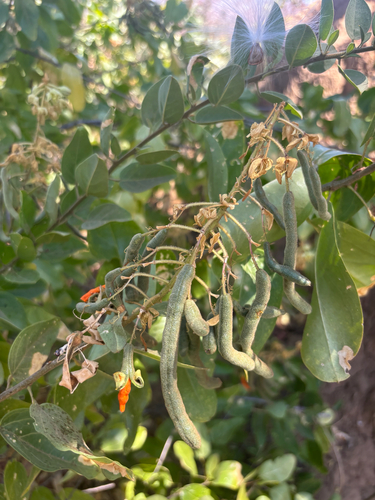
Capparis himalayensis
Jafri
wikimedia· cc-by
Wikimedia Commons - Ge S-X, Hu S-J, Shi H-L, Han F-Y, Li M-J, Ren L-L (2021) The first record of the genus Belenois (Lepidoptera: Pieridae) from China. Biodiversity Data Journal 9: e61332.
Description
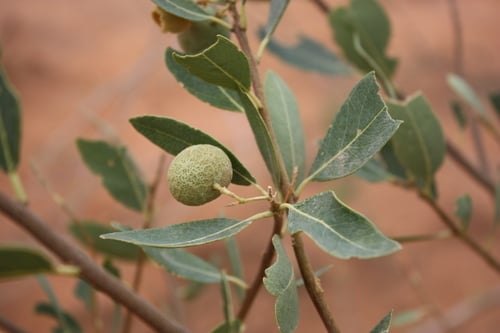
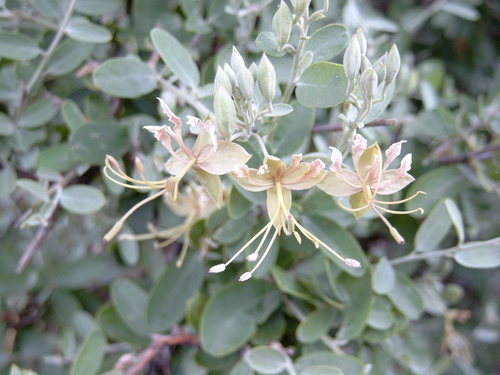
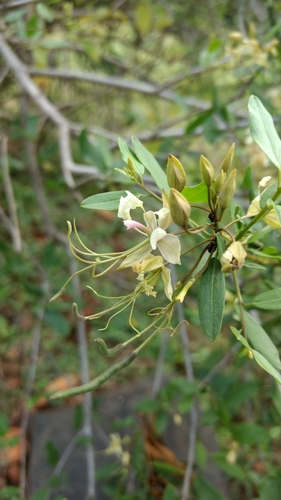
A shrub. It can be lying flat or hanging. It grows 50-80 cm tall. The new branches have white hairs. The leaves are oval or almost round. They are 1-3 cm long by 1-2 cm wide. The fruit are 3 cm long by 1.8 cm wide. There are 40-60 seeds in a fruit.
Edible Uses
The fruit are eaten fresh, cooked, or pickled. The leaves are eaten as a vegetable. The flower buds are used as a spice. Ripe fruit are eaten by children.
Traditional Uses
It is eaten fresh, cooked or used in pickles.
This uses section is brief — help expand it
Distribution
It grows in cold desert in north India. It grows between 2,500-3,000 m above sea level in India. In western China plants grow on desert flats below 1,100 m above sea level.
Where It Grows
Asia, Central Asia, China, Georgia, Himalayas, India, Northeastern India, Pakistan, Tajikistan,
Production
In western China plants flower in June and July and fruit in August and September.
Other Information
The ripe fruit are eaten by children.
Synonyms
Also Known As
Bauri, Kabra, Kiari, Rohtokpa
References (5)
- Ballabh, B., et al, 2007, Raw edible plants of cold desert Ladakh. Indian Journal of Traditional Knowledge. 6(1) pp 182-184 (As Capparis spinosa var. himalayensis)
- Negi, P. S. & Subramani, S. P., 2015, Wild Edible Plant Genetic Resources for Sustainable Food Security and Livelihood of Kinnaur District, Himachal Pradesh, India, International Journal of Conservation Science. 6 (4): 657-668
- Rana, J.C. et al, 2011, Genetic resources of wild edible plants and their uses among tribal communities of cold arid regions of India. Genetic Resources and Crop Evolution. 59:135-149
- Seidemann J., 2005, World Spice Plants. Economic Usage, Botany, Taxonomy. Springer. p 80 (Synonyms confused)
- Singh, V. B., et al, (Ed.) Horticulture for Sustainable Income and Environmental Protection. Vol. 1 p 214 (As Capparis spinosa var. himalayensis)