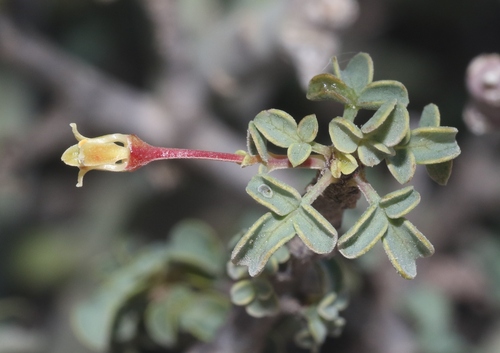
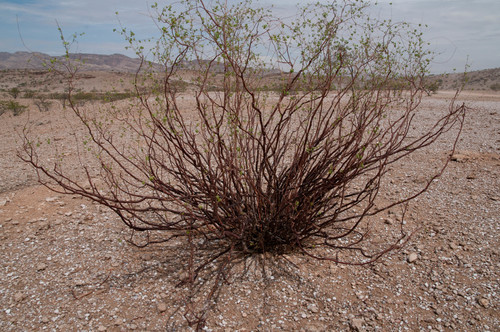
Commiphora edulis subsp. boiviniana
(Klotzsch) Engl., (Engl.) J. B. Gillett
gbif· cc-by
Royal Botanic Gardens, Kew
gbif· cc-by-nc-sa
MBG
gbif· cc-by-nc-sa
MBG
Description
A tropical shrub or tree found in woody shrubland between 2-1,400 m altitude in semi-arid regions receiving 350-900 mm annual rainfall.
This description is brief — help expand it
Edible Uses
The fruits are eaten cooked (boiled) or dried. The seeds and shoots are also consumed.
Traditional Uses
The fruit are cooked (boiled) and eaten. They are also dried.
This uses section is brief — help expand it
Distribution
It is a tropical plant. It grows between 2-1,400 m above sea level. It grows in woody shrubland. It grows in places where the rainfall is between 350-900 mm per year. It can grow in arid places.
Where It Grows
Africa, East Africa, Ethiopia, Kenya, Somalia, Tanzania, Uganda,
Synonyms
Also Known As
Elawa, Laiyamai, Masian
References (8)
- Asfaw, Z. and Tadesse, M., 2001, Prospects for Sustainable Use and Development of Wild Food Plants in Ethiopia. Economic Botany, Vol. 55, No. 1, pp. 47-62 (As Commiphora boiviana)
- East African Herbarium notes, 1981, (As Commiphora boiviana)
- Ichikawa, M., 1980, The Utilization of Wild Food Plants by the Suiei Dorobo in Northern Kenya. J. Anthrop. Soc. Nippon. 88(1): 25-48 (As Commiphora boiviniana)
- Lulekal, E., et al, 2011, Wild edible plants in Ethiopia: a review on their potential to combat food insecurity. Afrika Focus - Vol. 24, No 2. pp 71-121 (As Commiphora boiviana)
- Mutie, F. M., et al, 2023, Important Medicinal and Food Taxa (Orders and Families) in Kenya, Based on Three Quantitative Approaches. Plants 2023, 12, 1145
Show all 8 references Hide references
- Peters, C. R., O'Brien, E. M., and Drummond, R.B., 1992, Edible Wild plants of Sub-saharan Africa. Kew. p 72 (As Commiphora boiviana)
- Royal Botanic Gardens, Kew (1999). Survey of Economic Plants for Arid and Semi-Arid Lands (SEPASAL) database. Published on the Internet; http://www.rbgkew.org.uk/ceb/sepasal/internet [Accessed 4th April 2011]
- Termote, C., et al, 2014, Assessing the potential of wild foods to reduce the cost of a nutritionally adequate diet: An example from eastern Baringo District, Kenya. Food and Nutrition Bulletin, vol. 35, no. 4 (As Commiphora boiviniana)