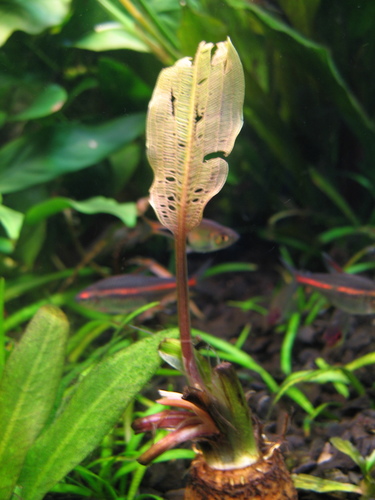
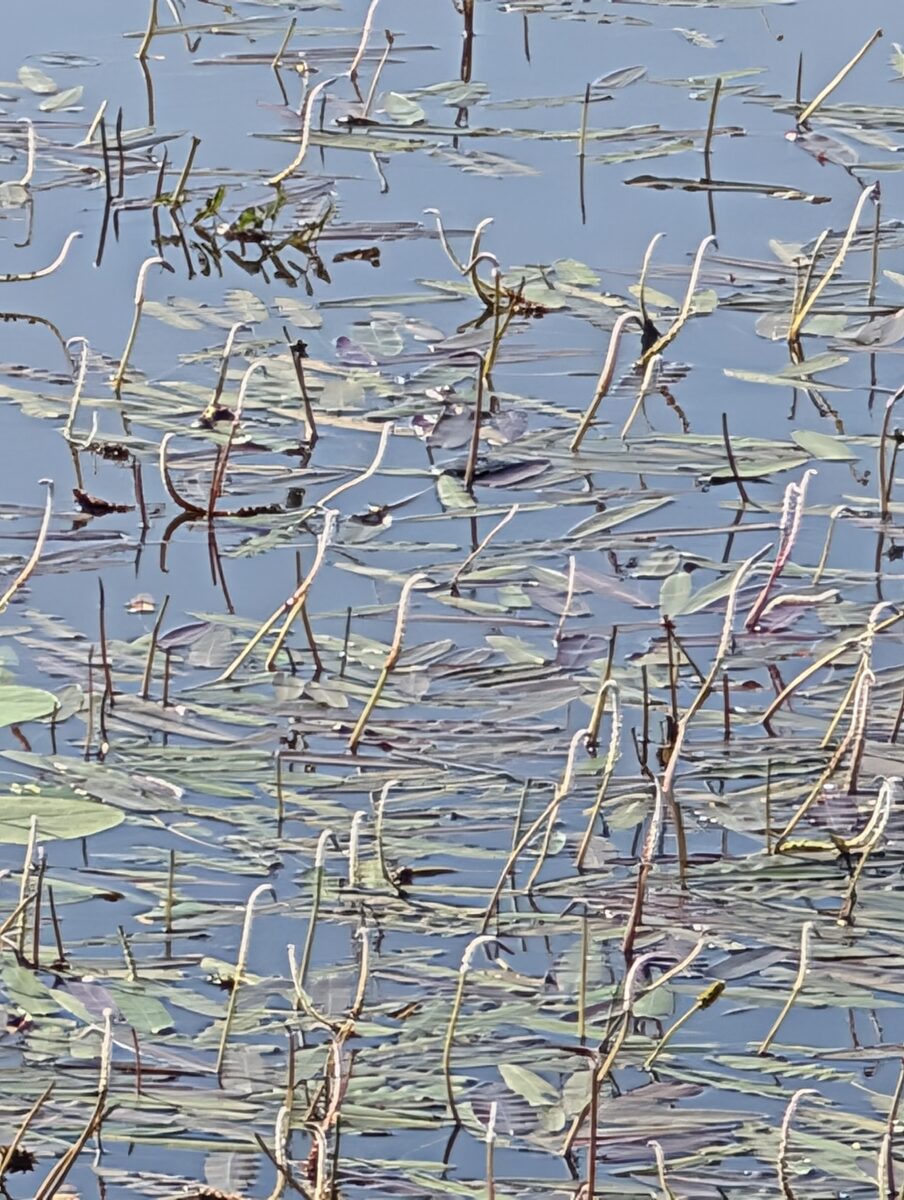
Aponogeton rehmannii
Oliv.
Pond weed
iNaturalist· cc-by-nc
(c) jokbrocks, some rights reserved (CC BY-NC)
iNaturalist· cc-by-nc
(c) jokbrocks, some rights reserved (CC BY-NC)
Description
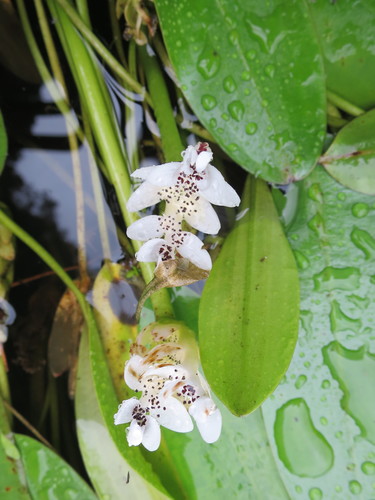
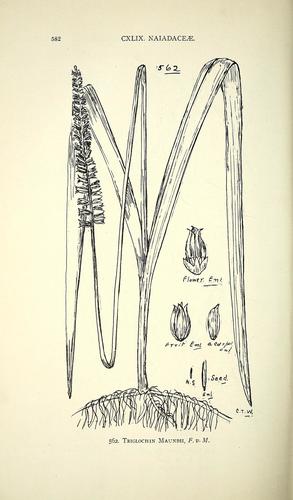
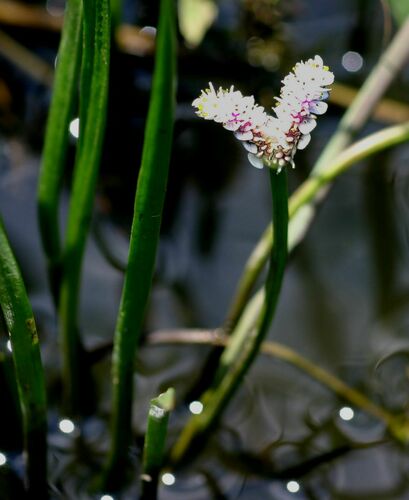
A herb. It grows in water. It has a corm or bulb. Plants are separately male and female. It grows 2 cm high. The leaves float on water. The fruit are 5 mm long by 2.5 mm wide. It has a long beak at the end. The flowers are in a divided spike 20-30 mm long. It has 2 bracts around it. The fruit contains 1-8 long seeds. The root tubers are 3 cm across.
Edible Uses
The root tubers are eaten raw or roasted. The leaves, flowers, bulbs, tubers, and roots are all edible parts of the plant.
Traditional Uses
The tubers are eaten raw as well as roasted.
This uses section is brief — help expand it
Distribution
It is a subtropical plant. It grows in hot dry places. It grows in places with a long dry season of 6-11 months. In Southern Africa is grows between 825-1,300 m above sea level. It can grow in arid places.
Where It Grows
Africa, Botswana, East Africa, Eswatini, Kenya, Lesotho, Mozambique, Namibia, South Africa, Southern Africa, Swaziland, Zambia, Zimbabwe,
Synonyms
Also Known As
Oghnapa, Wateruintjie
References (4)
- Royal Botanic Gardens, Kew (1999). Survey of Economic Plants for Arid and Semi-Arid Lands (SEPASAL) database. Published on the Internet; http://www.rbgkew.org.uk/ceb/sepasal/internet [Accessed 28th March 2011]
- Ruiters-Welcome, A. K., 2019, Food plants of southern Africa. Ph.D. thesis. Univ. of Johannesburg p 28
- Welcome, A. K. & Van Wyk, B.-E., 2019, An inventory and analysis of the food plants of southern Africa. South African Journal of Botany 122 (2019) 136–179
- World Checklist of Useful Plant Species 2020. Royal Botanic Gardens, Kew