Searsia engleri
(Britten) Moffatt
Velvet karee
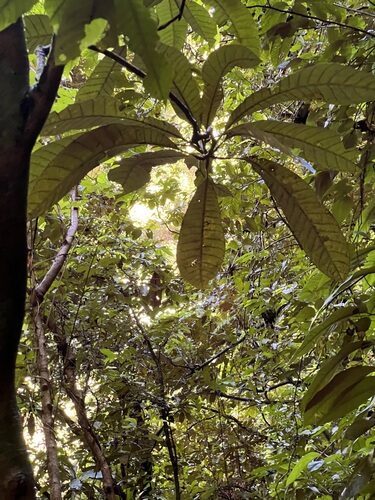
iNaturalist· cc-by-sa
(c) Antoinette Eyssell Knox, some rights reserved (CC BY-SA), uploaded by Antoinette Eyssell Knox
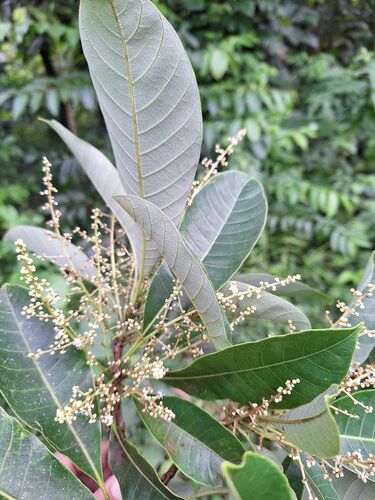
iNaturalist· cc-by-nc
(c) Troos van der Merwe, some rights reserved (CC BY-NC), uploaded by Troos van der Merwe
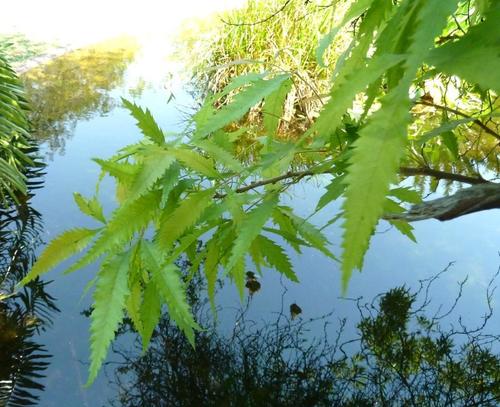
iNaturalist· cc-by-nc
(c) Troos van der Merwe, some rights reserved (CC BY-NC)
Description
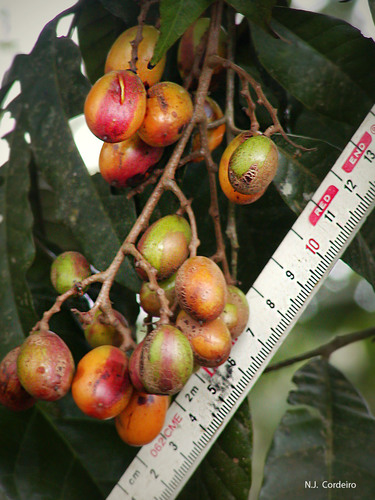
A spiny shrub. It has many branches. The leaves have leaflets that do not have stalks. They are dull green above and have white hairs underneath. The fruit are brown and flattened.
Edible Uses
The fruits are eaten raw after being rubbed between the hands to remove the dry outer skin.
Traditional Uses
The fruit are eaten raw. They are rubbed between the hands to removed the dry skin.
This uses section is brief — help expand it
Distribution
It is a subtropical plant. It can grow in arid places.
Where It Grows
Africa, South Africa, Southern Africa,
Synonyms
Also Known As
Fluweelkaree, Makutla, Mbulula, Moholethi, Mothathaathaa
References (6)
- Fox, F. W. & Young, M. E. N., 1982, Food from the Veld. Delta Books. p 77 (As Rhus engleri)
- Moffett, R. O., 2007, Name changes in the Old World Rhus and recognition of Searsia (Anacardiaceae). Bothalia 37,2: 165-175 (2007)
- Royal Botanic Gardens, Kew (1999). Survey of Economic Plants for Arid and Semi-Arid Lands (SEPASAL) database. Published on the Internet; http://www.rbgkew.org.uk/ceb/sepasal/internet [Accessed 28th March 2011] (As Rhus engleri)
- Ruiters-Welcome, A. K., 2019, Food plants of southern Africa. Ph.D. thesis. Univ. of Johannesburg p 15
- Welcome, A. K. & Van Wyk, B.-E., 2019, An inventory and analysis of the food plants of southern Africa. South African Journal of Botany 122 (2019) 136–179
Show all 6 references Hide references
- World Checklist of Useful Plant Species 2020. Royal Botanic Gardens, Kew