Maclura africana
(Bureau) Corner
African asage-orange, Thorny mulberry
iNaturalist· cc-by
(c) rcoliveira84, some rights reserved (CC BY)
iNaturalist· cc-by-nc
(c) Liam Huber, some rights reserved (CC BY-NC)
iNaturalist· cc-by-nc
(c) Nick Helme, some rights reserved (CC BY-NC)
Description
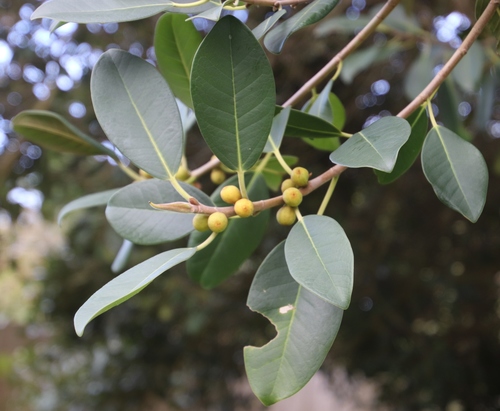
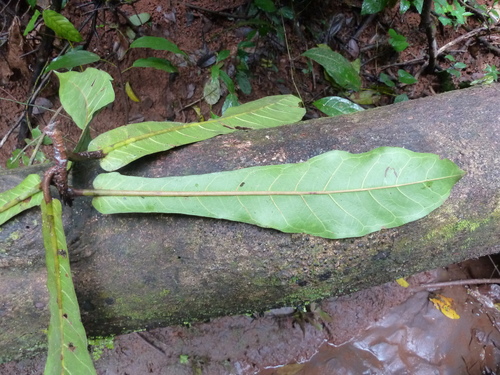
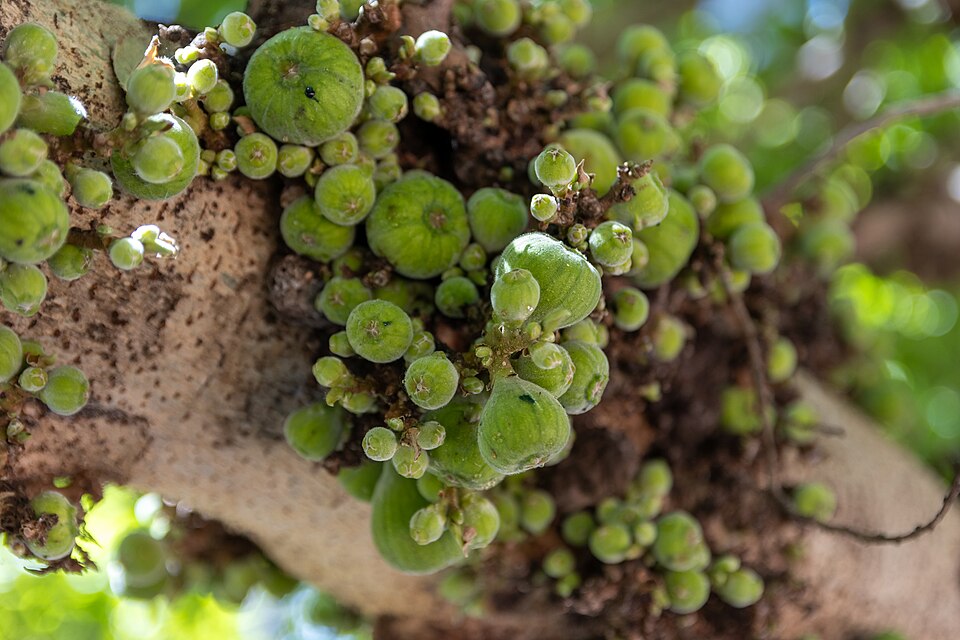
A spiny shrub. It can be a scrambler or a small tree up to 8 m high. The bark is creamy-brown. The side branches have spines at the end. The leaves are simple and alternate. They are oval and 3-9 cm long by 2-4 cm wide. They are dark green. They can taper towards each end. The edges roll slightly under. The male and female flowers occur on separate trees. They are white and have a sweet scent. They occur in small dense heads. These are about 1.5 cm across. The fruit is a head of small nutlets. They have a soft edible pulp.
Edible Uses
The fruiting heads are eaten as a snack.
Traditional Uses
The fruit are eaten as a snack.
This uses section is brief — help expand it
Distribution
A tropical plant. It grows in hot, dry, low-lying areas or coastal sand dunes.
Where It Grows
Africa, East Africa, Eswatini, Kenya, Madagascar, Malawi, Mozambique, South Africa, Southern Africa, Swaziland, Tanzania, Zimbabwe,
Other Uses
A yellow dye is obtained from the wood.
Synonyms
Also Known As
Afrikasoetlemoen, Doa, Mupulumbu, Popwe, Pumbulo, Rengue
References (7)
- Dc. Prodr. 17:233. 1873
- Jardin, C., 1970, List of Foods Used In Africa, FAO Nutrition Information Document Series No 2.p 124
- Magwede, K., van Wyk, B.-E., & van Wyk, A. E., 2019, An inventory of Vhavenḓa useful plants. South African Journal of Botany 122 (2019) 57–89
- Palgrave, K.C., 1996, Trees of Southern Africa. Struik Publishers. p 100
- Ruiters-Welcome, A. K., 2019, Food plants of southern Africa. Ph.D. thesis. Univ. of Johannesburg p 80
Show all 7 references Hide references
- Schmidt, E., Lotter, M., & McCleland, W., 2007, Trees and shrubs of Mpumalanga and Kruger National Park. Jacana Media p 86
- Welcome, A. K. & Van Wyk, B.-E., 2019, An inventory and analysis of the food plants of southern Africa. South African Journal of Botany 122 (2019) 136–179