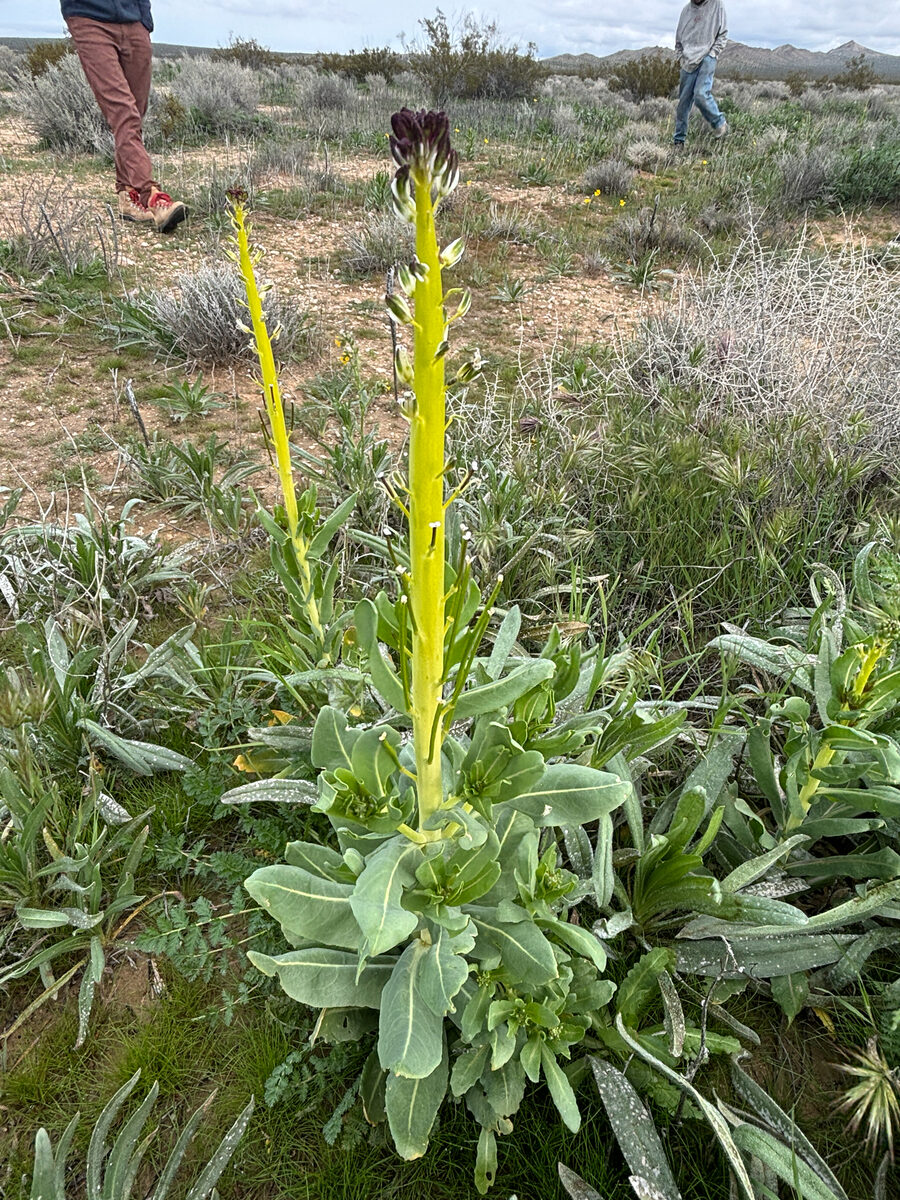
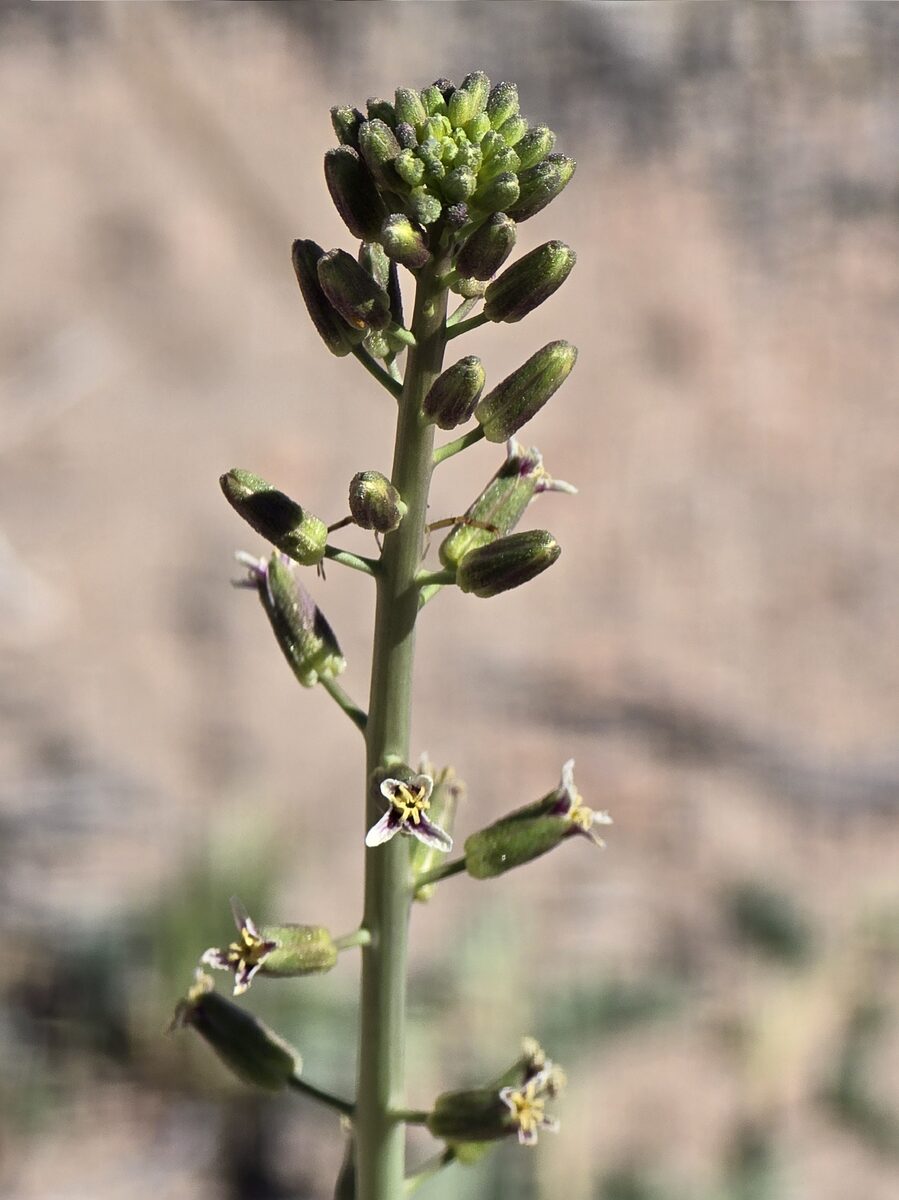
Cardamine hirsuta
L.
Hairy bittercress
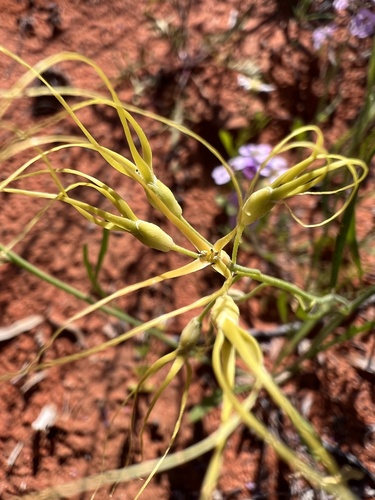
iNaturalist· cc-by-nc-sa
(c) Beth Katz, some rights reserved (CC BY-NC-SA), uploaded by Beth Katz
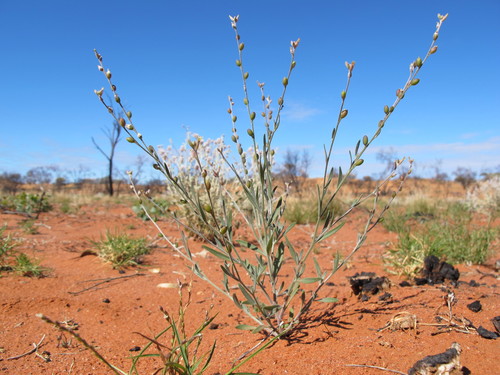
iNaturalist· cc-by-nc
(c) James Bailey, some rights reserved (CC BY-NC)
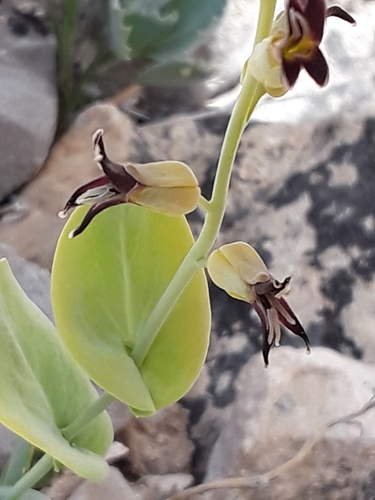
iNaturalist· cc-by-nc
(c) James Bailey, some rights reserved (CC BY-NC)
Summary
Source: WikipediaCardamine hirsuta, commonly called hairy bittercress, popping cress, common bittercress, hoary bittercress, hairy wood-cress, small bittercress, pepperweed, shotweed, or snapweed, is an annual or biennial species of plant in the family Brassicaceae, and is edible as a salad green. It is common in moist areas around the world.
Description
A cabbage family herb. It is an annual or perennial plant. It forms a rosette or ring of leaves. It grows to a height of 50 cm and spreads to 30 cm. The stem is erect and the leaves are green and sword shaped. They usually have 3-7 pairs of leaflets. The flowers are pale mauve and small. They have 4 petals. They occur in clusters at the ends of branches. The fruit are 15-25 mm long pods, which are narrow and erect. They are about 1 mm thick. The seed are brown and with a smooth coat. They are about 1 mm long.
Edible Uses
The leaves and flowers can be eaten raw or cooked. They have a hot, cress-like flavour and are mainly used as a garnish or flavouring in salads, though they are also sometimes used as a potherb. Because the plant germinates most freely in autumn, fresh leaves are usually available throughout winter.
Traditional Uses
The leaves are peppery. The young leaves and flowers can be used in salads. They can also be cooked like spinach. The young roots are also eaten raw with vinegar and soy sauce.
Medicinal Uses
None known.
Distribution
It is a temperate plant. It does best in humus rich, damp soils. It is frost resistant. It is drought tender. It grows in shady places. It grows in temperate and tropical zones. It grows on mountain slopes, roadsides, fields, clearings, wastelands, damp places, grassy areas; near sea level to 3000 m altitude in China. In Haiti it grows at about 1500 m. In Argentina it grows up to 2,000 m above sea level. Tasmania Herbarium.
Where It Grows
Africa, Argentina, Asia, Australia, Balkans, Brazil, Britain, Bulgaria, Caucasus, Central Asia, Chile, China, Cuba, Dominican Republic, East Africa, Europe*, Falklands, Finland, Georgia, Haiti, Hawaii, Himalayas, India, Indochina, Indonesia, Ireland, Israel, Italy, Jamaica, Japan, Laos, Libya, Luxembourg, Malaysia, Mediterranean, Mexico, Middle East, Myanmar, New Guinea, New Zealand, Norfolk Island, North America, Northeastern India, Pacific, Pakistan, Papua New Guinea, PNG, Philippines, Scandinavia, SE Asia, Sicily, Sikkim, South America, Sri Lanka, St Helena, Tasmania, Thailand, Tibet, Turkey, Türkiye, Turkmenistan, Uruguay, USA, Vietnam, West Africa, SW Asia, S Africa, North and South America, West Indies, Zambia,
Cultivation
Prefers a moist humus rich soil in shade or semi-shade but it succeeds in most soils and positions. A common garden weed, it can be in flower all year round if the weather is mild. It will usually self-sow very freely in cultivated soil and is found especially in pot-grown plants.
Propagation
Sow seed in spring or autumn directly in situ. This species needs very little encouragement and will readily self-sow, sometimes too freely.
Other Uses
The tiny flowers attract a number of early butterflies, including the spring azure (Celastrina ladon) and falcate orange-tip (Anthocharis midea) in the United States.
Other Information
Leaves are sold in local markets.
Notes
There are about 160 Cardamine species. They are mostly in damp places in temperate regions.
Synonyms
Also Known As
Aruculicedda sarvaggia, Chantruk mana, Chantruk-maan, Common bittercress, Goj ao, Hairy wood cress, Kosanini, Lamb's cress, Mastuerzo cimarron, Monnyin, Oram-petsik, Serampeti, Serampidi, Splitting Jenny, Sui mi qi, Tosanini vu, Tsitsmat'ura, Veluri, Vlaknesta gorva, Wang ye gai, Yangs-chung
References (63)
- Ambasta S.P. (Ed.), 2000, The Useful Plants of India. CSIR India. p 104 (var. sylvatica)
- Angami, A., et al, 2006, Status and potential of wild edible plants of Arunachal Pradesh. Indian Journal of Traditional Knowledge 5(4) October 2006, pp 541-550
- Bianchini, F., Corbetta, F., and Pistoia, M., 1975, Fruits of the Earth. Cassell. p 72
- Bircher, A. G. & Bircher, W. H., 2000, Encyclopedia of Fruit Trees and Edible Flowering Plants in Egypt and the Subtropics. AUC Press. p 82
- Bodkin, F., 1991, Encyclopedia Botanica. Cornstalk publishing, p 213
Show all 63 references Hide references
- Bremness, L., 1994, Herbs. Collins Eyewitness Handbooks. Harper Collins. p 238
- Brown, D., 2002, The Royal Horticultural Society encyclopedia of Herbs and their uses. DK Books. p 155
- Bussman, R. W., et al, 2016, A comparative ethnobotany of Khevsureti, Samtskhe-Javakheti, Tusheti, Svaneti, and Racha-Lechkhumi, Republic of Georgia (Sakartvelo), Caucasus. Journal of Ethnobiology and Ethnomedicine (2016) 12:4
- Bussman, R. W., et al, 2021, Unity in diversity—food plants and fungi of Sakartvelo (Republic of Georgia), Caucasus. Journal of Ethnobiology and Ethnomedicine (2021) 17:72 p 7
- Cao, Y., et al, 2020, Ethnobotanical study on wild edible plants used by three trans-boundary ethnic groups in Jiangcheng County, Pu’er, Southwest China. Journal of Ethnobiology and Ethnomedicine (2020) 16:66
- Crowe, A., 1997, A Field Guide to the Native Edible Plants of New Zealand. Penguin. p 71
- Cribb, A.B. & J.W., 1976, Wild Food in Australia, Fontana. p 117
- Curtis, W.M., 1956, The Students Flora of Tasmania Vol 1 p 35
- Dashorst, G.R.M., and Jessop, J.P., 1998, Plants of the Adelaide Plains & Hills. Botanic Gardens of Adelaide and State Herbarium. p 68
- Ding, X., 2021, Collection calendar: the diversity and local knowledge of wild edible plants used by Chenthang Sherpa people to treat seasonal food shortages in Tibet, China. Journal of Ethnobiology and Ethnomedicine 17:40
- Duke, J.A., 1992, Handbook of Edible Weeds. CRC Press. p 58
- Ekman Herbarium records Haiti
- Ertug, F, Yenen Bitkiler. Resimli Türkiye Florası -I- Flora of Turkey - Ethnobotany supplement
- Facciola, S., 1998, Cornucopia 2: a Source Book of Edible Plants. Kampong Publications, p 57
- Flora of China @ efloras.org Volume 8
- Flora of Australia, Volume 8, Lecythidales to Batales, Australian Government Publishing Service, Canberra (1982) p 311
- Flora of Australia Volume 49, Oceanic Islands 1, Australian Government Publishing Service, Canberra. (1994) p 141
- Gangwar, A. K. & Ramakrishnan, P. S., 1990, Ethnobotanical Notes on Some Tribes of Arunachal Pradesh, Northeastern India. Economic Botany, Vol. 44, No. 1 pp. 94-105
- Geraci, A., et al, 2018, The wild taxa utilized as vegetables in Sicily (Italy): a traditional component of the Mediterranean diet. Journal of Ethnobiology and Ethnomedicine (2018) 14:14
- Hedrick, U.P., 1919, (Ed.), Sturtevant's edible plants of the world. p 161
- Henty, E.E., & Pritchard, G.S., 1973, Weeds of New Guinea and their control. Botany Bulletin No 7, Division of Botany, Lae, PNG. p 96
- Hussey, B.M.J., Keighery, G.J., Cousens, R.D., Dodd, J., Lloyd, S.G., 1997, Western Weeds. A guide to the weeds of Western Australia. Plant Protection Society of Western Australia. p 116
- Hu, Shiu-ying, 2005, Food Plants of China. The Chinese University Press. p 415 (As Cardamine regeliana)
- Irving, M., 2009, The Forager Handbook, A Guide to the Edible Plants of Britain. Ebury Press p 86
- Jain et al, 2011, Dietary Use and Conservation Concern of Edible Wetland Plants at Indo-Burma Hotspot: A Case Study from Northeast India. Journal of Ethnobiology and Ethnomedicine 7:29 p 6
- Kang, Y., et al, 2012, Wild food plants and wild edible fungi in two valleys on the Qinling Mountains (Shaanxi, central China) Journal of Ethnobiology and Ethnomedicine; 9:26
- Kizilarslan, C. & Ozhatay, N., 2012, An ethnobotanical study of the useful and edible plants of İzmit. Marmara Pharmaceutical Journal 16: 134-140, 2012.
- Konsam, S., et al, 2016, Assessment of wild leafy vegetables traditionally consumed by the ethnic communities of Manipur, northeast India. Journal of Ethnobiology and Ethnomedicine, 12:9
- Lazarides, M. & Hince, B., 1993, Handbook of Economic Plants of Australia, CSIRO. p 47
- Low, T., 1991, Wild Herbs of Australia and New Zealand. Angus & Robertson. p 59 (Drawing)
- Lokho, K. & Narasimhan, D., 2013, Ethnobotany of Mao-Naga Tribe of Manipur, India. Pleione 7(2): 314-324
- Luczaj, L. et al, 2017, Comfrey and Buttercup Eaters: Wild Vegetables of the Imereti Region in Western Georgia, Caucasus. Economic Botany, 71(2), 2017, pp. 188–193
- Mabey, R., 1973, Food for Free. A Guide to the edible wild plants of Britain, Collins. p 77
- Mahklouf, M. H., 2019, Ethnobotanical Study of Edible Wild Plants in Libya. European Journal of Ecology. 5(2): 30-40
- Maiden, J. H., 1889, The Useful Native Plants of Australia (including Tasmania). The Technology Museum of NSW, Sydney. p 13
- Malaisse, F., 1997, Se nourrir en floret claire africaine. Approche ecologique et nutritionnelle. CTA., p 59 (var. pilosa)
- Malaisse, F., 2010, How to live and survive in Zambezian open forest (Miombo Ecoregion). Les Presses Agronomiques de Gembloux. (var. pilosa)
- Malezas Comestibles del Cono Sur, INTA, 2009, Buernos Aires
- Martin, F.W. & Ruberte, R.M., 1979, Edible Leaves of the Tropics. Antillian College Press, Mayaguez, Puerto Rico. p 188
- Murtem, G. & Chaudhrey, P., 2016, An ethnobotanical note on wild edible plants of Upper Eastern Himalaya, India. Brazilian Journal of Biological Sciences, 2016, v. 3, no. 5, p. 63-81.
- Nedelcheva A., 2013, An ethnobotanical study of wild edible plants in Bulgaria. EurAsian Journal of BioSciences 7, 77-94
- Paczkowska, G. & Chapman, A.R., 2000, The Western Australian Flora. A Descriptive Catalogue. Western Australian Herbarium. p 185
- Paoletti, M.G., Dreon, A.L., and Lorenzoni, G.G., 1995, Pistic, Traditional Food from Western Friuli, NE Italy. Economic Botany 49(1) pp 26-30
- Pasta, S., et al, 2020, An Updated Checklist of the Sicilian Native Edible Plants: Preserving the Traditional Ecological Knowledge of Century-Old Agro-Pastoral Landscapes. Frontiers in Plant Science. Volume 11|Article 388
- Pfoze, N. L., et al, 2012, Survey and assessment of floral diversity on wild edible plants from Senapati district of Manipur, Northeast India. Journal or Biodiversity and Environmental Sciences. 1(6):50-52
- Pham-Hoang Ho, 1999, An Illustrated Flora of Vietnam. Nha Xuat Ban Tre. p 606
- Plants for a Future database, The Field, Penpol, Lostwithiel, Cornwall, PL22 0NG, UK. http://www.scs.leeds.ac.uk/pfaf/
- Plants of Haiti Smithsonian Institute http://botany.si.edu
- Singh, H.B., Arora R.K.,1978, Wild edible Plants of India. Indian Council of Agricultural Research, New Delhi. p18
- Steenbeeke, Greg as part of the Plants Directory project. List of plant species from northern NSW that may be used as food plants p 15
- Taram, M., et al, 2018, Wild Food Plant Resources of Komkar Adi Tribe of Upper Siang District in Arunachal Pradesh, India. Bulletin of Arunachal Forest Research, Vol. 33(2), 27-35
- Tasmanian Herbarium Vascular Plants list p 16
- Tozer, F., 2007, The Uses of Wild Plants. Green Man Publishing. p 55
- Tsering, J., et al, 2017, Ethnobotanical appraisal on wild edible plants used by the Monpa community of Arunchal Pradesh. Indian Journal of Traditional Knowledge. Vol 16(4), October 2017, pp 626-637
- Upson, R., & Lewis R., 2014, Updated Vascular Plant Checklist and Atlas for the Falkland Islands. Falklands Conservation and Kew.
- Wiriadinata, H., Ethnobotany of Economic Plants in the Baliem Valley, Jayawijaya, Irian Jaya, Indonesian Institute of Science, Bogor, Indonesia
- World Checklist of Useful Plant Species 2020. Royal Botanic Gardens, Kew
- Zhou Taiyan, Lu Lianli, Yang Guang; Ihsan A. Al-Shehbaz, BRASSICACEAE (CRUCIFERAE), Flora of China.