Rapistrum rugosum
(L.) All.
Turnip Weed, Short-fruited wild turnip
iNaturalist· cc-by-nc
(c) Johan October, some rights reserved (CC BY-NC)
iNaturalist· cc-by-nc
(c) Johan October, some rights reserved (CC BY-NC)
iNaturalist· cc-by-nc
(c) Johan October, some rights reserved (CC BY-NC)
Summary
Source: WikipediaRapistrum rugosum is a species of flowering plant in the mustard family commonly known as bastard cabbage or annual bastard cabbage, as well as "common giant mustard", "turnipweed", "ball mustard", "wild turnip", "wild rape", or "tall mustard-weed". It is native to parts of Eurasia and Africa, but is present throughout the world as an introduced species and a common weed. It is an invasive species in many areas. It is an annual herb producing an erect stem reaching up to about a meter tall. The leaves are variable in shape and size and the proximal blades are generally cut into lobes or divided into leaflets. The herbage is coated in rough hairs. The inflorescence is a raceme of flowers with dark-veined yellow petals that are each under a centimeter long. The fruit is a knoblike spherical ribbed silique borne on a long pedicel with a widened area where it joins the fruit. It grows mainly in temperate areas. It is used as animal food, as a poison, for medicine, and for food.
Description
A cabbage family herb. It is a plant which re-grows each year from seed or can take 2 years to complete its life cycle. It grows about 1 m high. The plant is branched. It has stiff hairs. The leaves near the base form a ring and have leaf stalks. These leaves are lobed and have irregular teeth along the edge. The flowers are yellow. The petals have easy to see dark veins. The fruit have 2 segments. One is thin and the other is rounded. There is a beak at the end.
Edible Uses
The leaves are eaten raw in salads, cooked in stews, added to tomato sauces as a pasta seasoning, and cooked with egg as an omelette. The stems are peeled and eaten raw.
Traditional Uses
CAUTION: The plant in some places has a glycoside which causes goitre. The leaves are eaten raw in salads and also cooked in stews. They are also added to tomato sauces as a pasta seasoning. They are also cooked with egg as an omelette. The stems are peeled and eaten raw.
Known Hazards
In some places, the plant contains a glycoside which causes goitre.
Distribution
It grows in tropical and warm temperate places. It can grow in arid places. In Argentina it grows from sea level to 2,000 m above sea level. Tasmania Herbarium.
Where It Grows
Africa, Albania, Argentina, Australia, Austria, Azores, Balkans, Belgium, Brazil, Bulgaria, Canada, Canary Islands, Central Asia, Chile, Cyprus, Czech Republic, Easter Island, Ethiopia, Europe, France, Georgia, Germany, Greece, Hawaii, Hungary, Iran, Iraq, Israel, Italy, Korea, Mediterranean, Middle East, Netherlands, Norfolk Island, North Africa, North America, Pacific, Pakistan, Paraguay, Poland, Portugal, Romania, Russia, Saudi Arabia, Scandinavia, Sicily, Slovakia, Slovenia, South Africa, Southern Africa, South America, Spain, Sweden, Switzerland, Tajikistan, Tasmania, Turkey, Türkiye, Ukraine, Uruguay, USA, Yemen, Yugoslavia,
Notes
There are about 3 Rapistrum species.
Synonyms
Also Known As
Bolok'a, Cima, Hardala otu, Isiqwashumbe, Kucuk yabani turp, Mostacilla, Ravaniza, Sinapa spagnola, Turpenk, Turp otu
References (33)
- Biscotti, N. et al, 2018, The traditional food use of wild vegetables in Apulia (Italy) in the light of Italian ethnobotanical literature. Italian Botanist 5:1-24
- Blanco-Salas, J., et al, 2019, Wild Plants Potentially Used in Human Food in the Protected Area “Sierra Grande de Hornachos” of Extremadura (Spain). Sustainability 2019, 11, 456
- Bodkin, F., 1991, Encyclopedia Botanica. Cornstalk publishing, p 871
- Bussman, R. W., et al, 2021, Unity in diversity—food plants and fungi of Sakartvelo (Republic of Georgia), Caucasus. Journal of Ethnobiology and Ethnomedicine (2021) 17:72 p 8
- Cakir, E. A., 2017, Traditional knowledge of wild edible plants of Iğdır Province (East Anatolia, Turkey). Acta Soc Bot Pol. 2017;86(4):3568
Show all 33 references Hide references
- Curtis, W.M., 1956, The Students Flora of Tasmania Vol 1 p 47
- Dashorst, G.R.M., and Jessop, J.P., 1998, Plants of the Adelaide Plains & Hills. Botanic Gardens of Adelaide and State Herbarium. p 68
- Dogan, Y., 2012, Traditionally used wild edible greens in the Aegean Region of Turkey. Acta Societatis Botanicorum Poloniae 81(4): 329-342
- Ertug, F, Yenen Bitkiler. Resimli Türkiye Florası -I- Flora of Turkey - Ethnobotany supplement
- Flora of Australia, Volume 8, Lecythidales to Batales, Australian Government Publishing Service, Canberra (1982) p 250
- Flora of Australia Volume 49, Oceanic Islands 1, Australian Government Publishing Service, Canberra. (1994) p 136
- Fl. pedem. 1:257. 1785
- Fox, F. W. & Young, M. E. N., 1982, Food from the Veld. Delta Books. p 136
- Geraci, A., et al, 2018, The wild taxa utilized as vegetables in Sicily (Italy): a traditional component of the Mediterranean diet. Journal of Ethnobiology and Ethnomedicine (2018) 14:14
- Hermandez Bermejo, J.E., and Leon, J. (Eds.), 1994, Neglected Crops. 1492 from a different perspective. FAO Plant Production and Protection Series No 26. FAO, Rome. p 263
- http://www.botanic-gardens-ljubljana.com/en/plants
- Kargioglu, M. et al, 2010, Traditional Uses of Wild Plants in the Middle Aegean Region. Human Ecology 38:429-450
- Lamp, C & Collet F., 1989, Field Guide to Weeds in Australia. Inkata Press. p 234
- Lazarides, M. & Hince, B., 1993, Handbook of Economic Plants of Australia, CSIRO. p 204
- Lentini, F. and Venza, F., 2007, Wild food plants of popular use in Sicily. J Ethnobiol Ethnomedicine. 3: 15
- Martin, F.W. & Ruberte, R.M., 1979, Edible Leaves of the Tropics. Antillian College Press, Mayaguez, Puerto Rico. p 188
- Özdemir, E. and Kültür, S., 2017, Wild Edible Plants of Savaştepe District (Balıkesir, Turkey), Marmara Pharm J 21/3: 578-589
- Paczkowska, G. & Chapman, A.R., 2000, The Western Australian Flora. A Descriptive Catalogue. Western Australian Herbarium. p 188
- Palmeiri, V. S., & Geisa, M. G., 2019, Las plantas comestibles empleadas por las comunidades comechingonas de San Marcos Sierras (Córdoba, Argentina). Primeras aproximaciones. Bol. Soc. Argent. Bot. 54: 295-309.
- Pasta, S., et al, 2020, An Updated Checklist of the Sicilian Native Edible Plants: Preserving the Traditional Ecological Knowledge of Century-Old Agro-Pastoral Landscapes. Frontiers in Plant Science. Volume 11|Article 388
- Royal Botanic Gardens, Kew (1999). Survey of Economic Plants for Arid and Semi-Arid Lands (SEPASAL) database. Published on the Internet; http://www.rbgkew.org.uk/ceb/sepasal/internet [Accessed 15th April 2011]
- Ruiters-Welcome, A. K., 2019, Food plants of southern Africa. Ph.D. thesis. Univ. of Johannesburg p 40
- Shava, S., 2000, The Use of Indigenous Plants as Food by a Rural Community in the Eastern Cape: an Educational Exploration. Masters Thesis Rhodes University. p 66
- Tasmanian Herbarium Vascular Plants list p 18
- Tardio, J., et al, Ethnobotanical review of wild edible plants in Spain. Botanical J. Linnean Soc. 152 (2006), 27-71
- Welcome, A. K. & Van Wyk, B.-E., 2019, An inventory and analysis of the food plants of southern Africa. South African Journal of Botany 122 (2019) 136–179
- World Checklist of Useful Plant Species 2020. Royal Botanic Gardens, Kew
- Zizka, G., 1991, Flowering Plants of Easter Island. Palmarum Hortus Francofurtensis
More from Brassicaceae
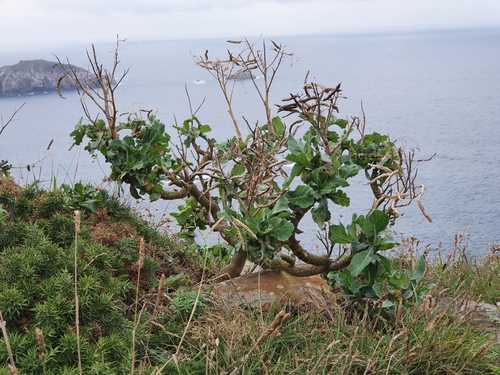
Brassica oleracea var. botrytis var. asparagoides
Nine star perennial broccoli
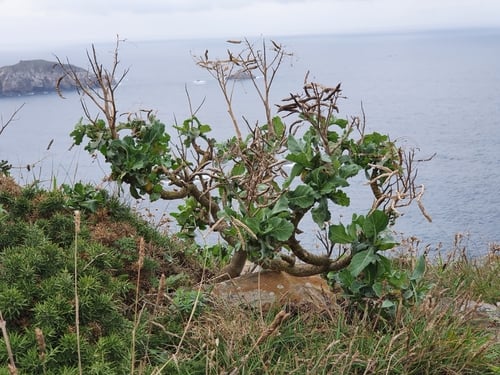
Brassica oleracea var. capitata
Cabbage
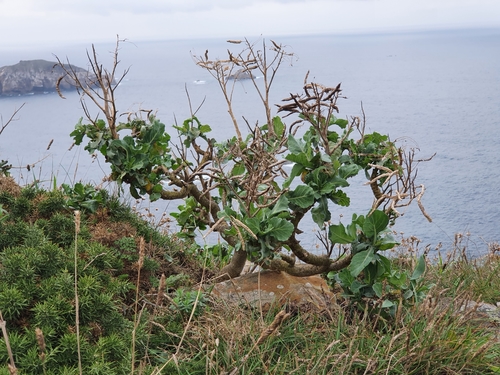
Brassica oleracea var. fruticosa
Thousand-headed kale
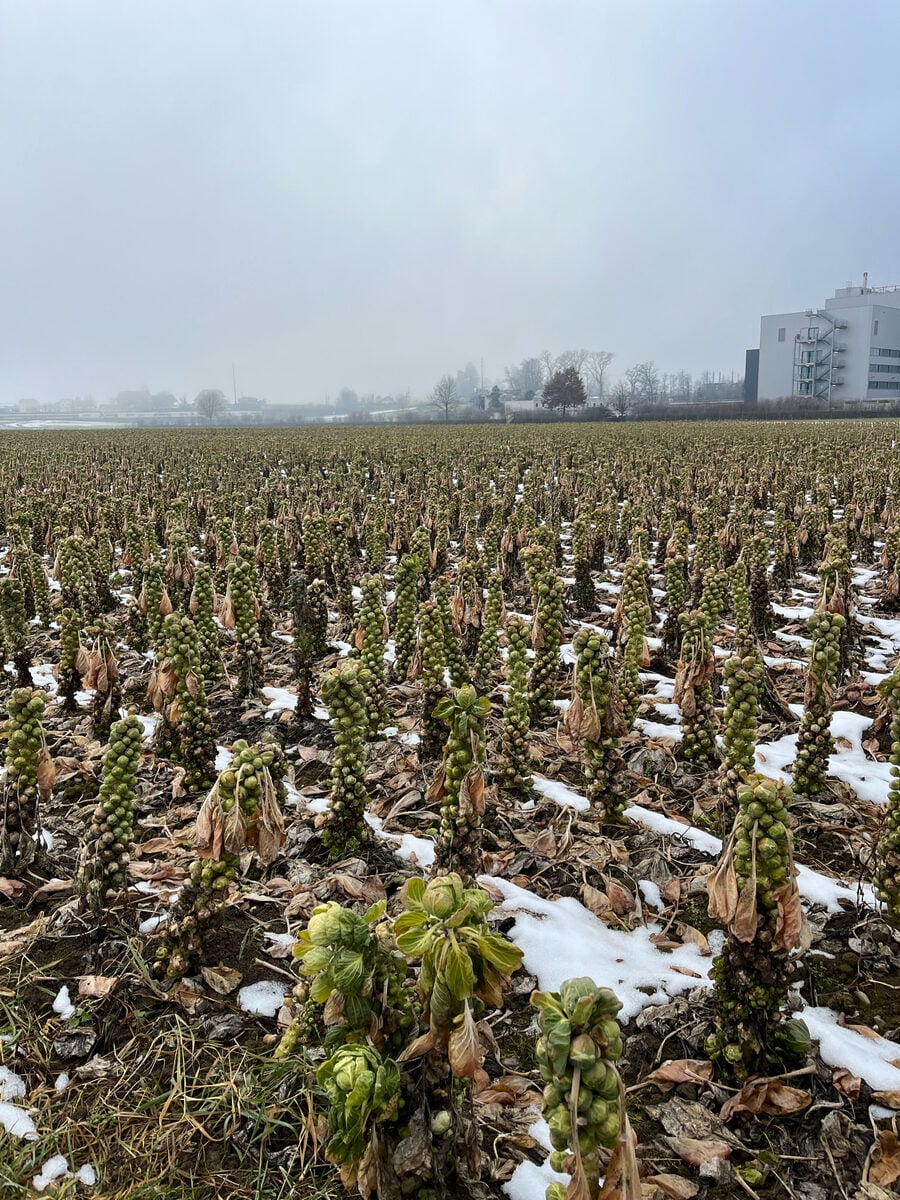
Brassica oleracea var. gemmifera
Brussels sprouts
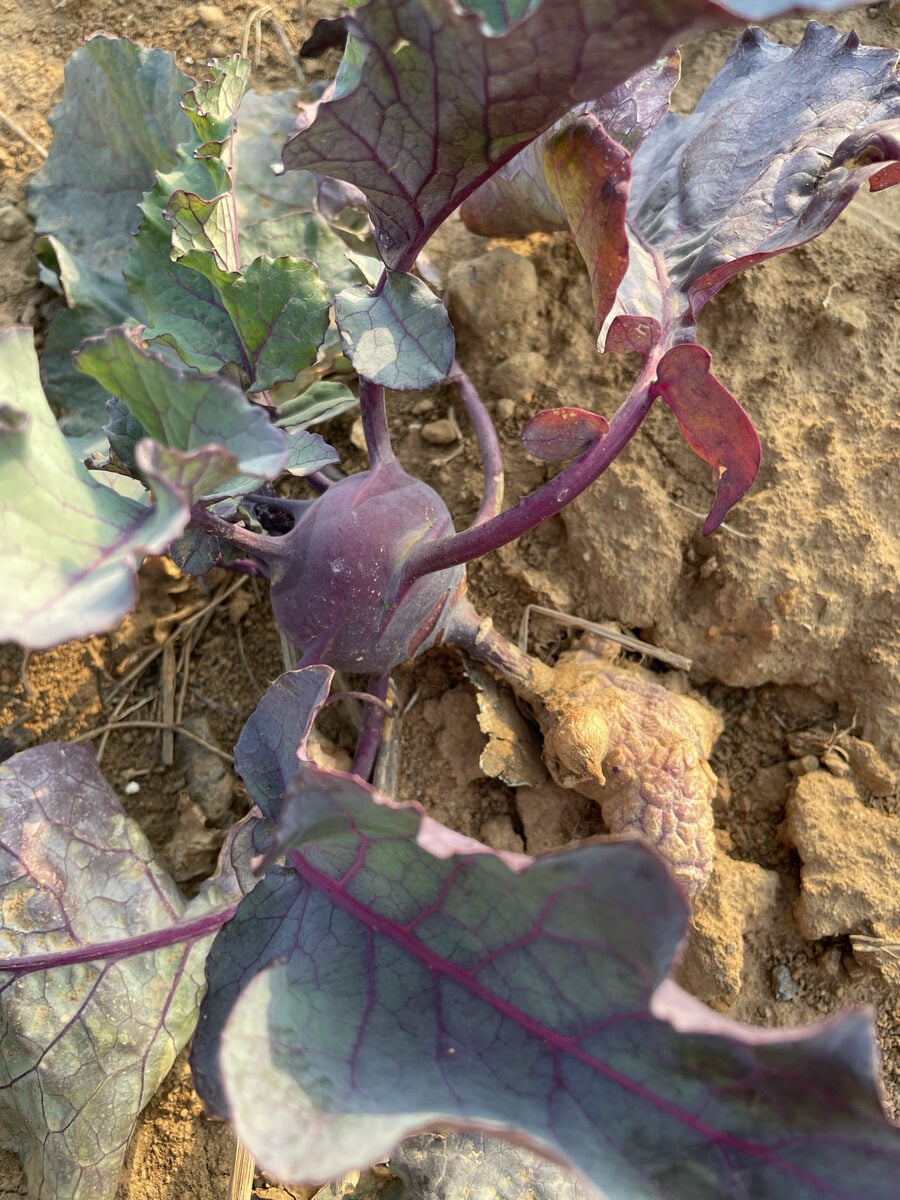
Brassica oleracea var. gongylodes
Kohl rabi
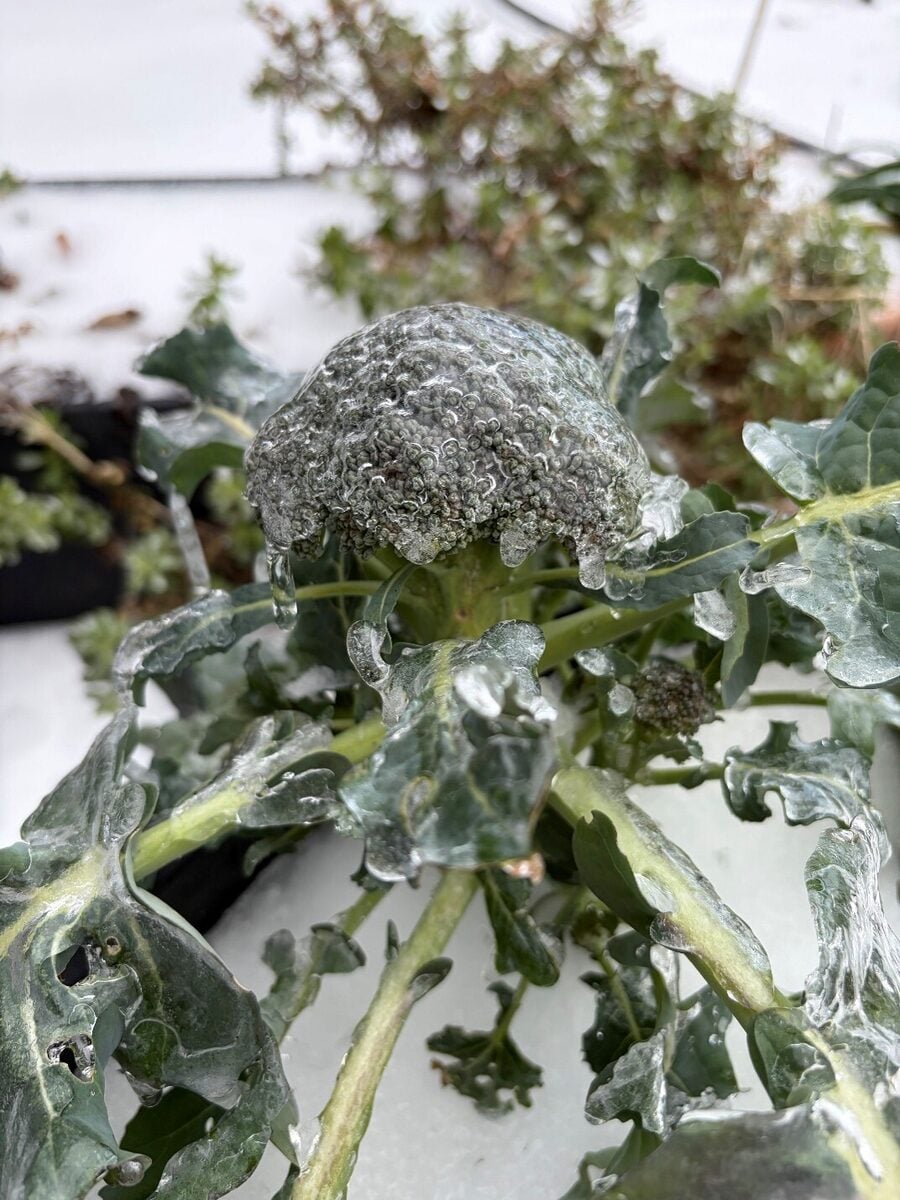
Brassica oleracea var. italica
Broccoli