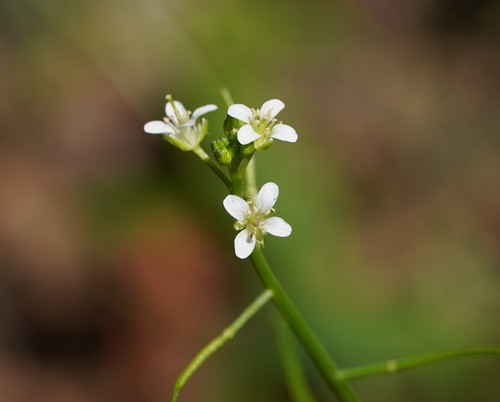
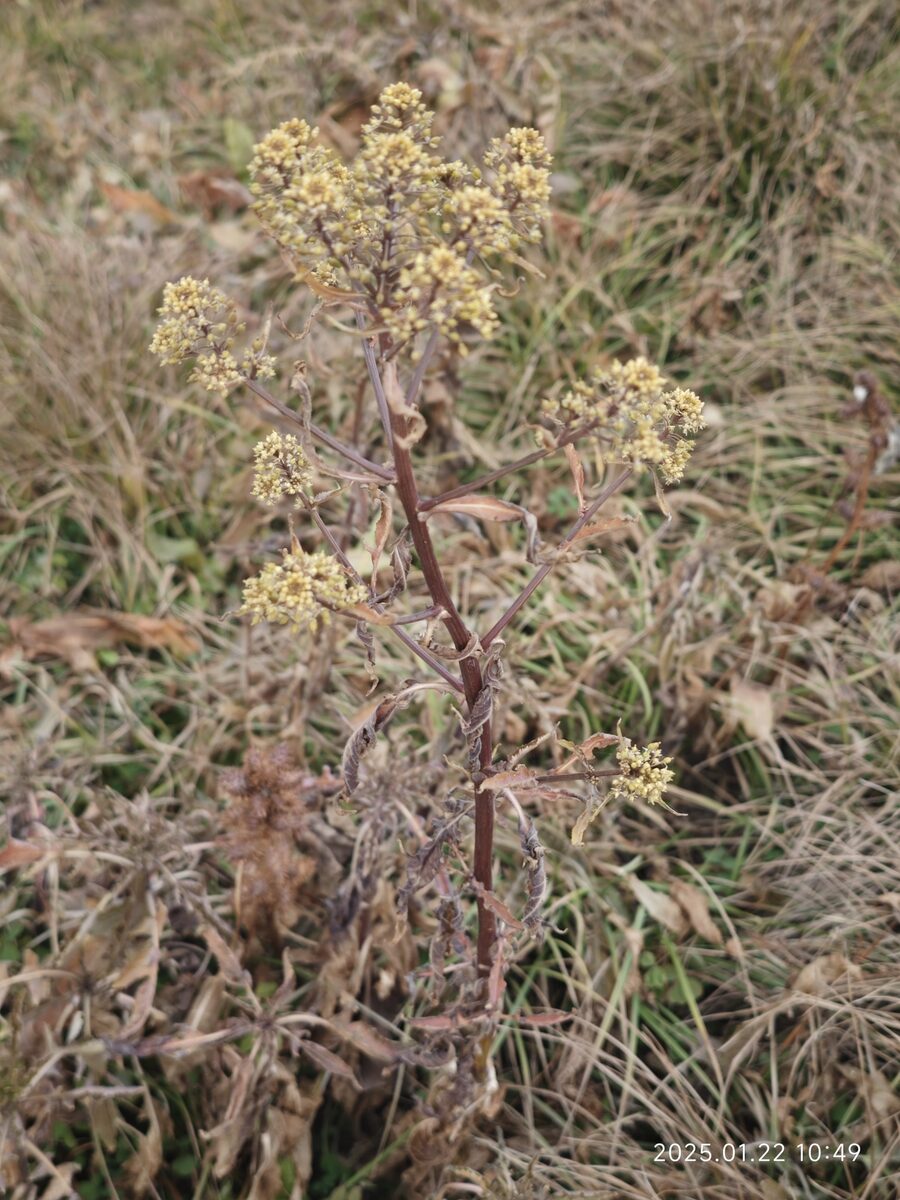
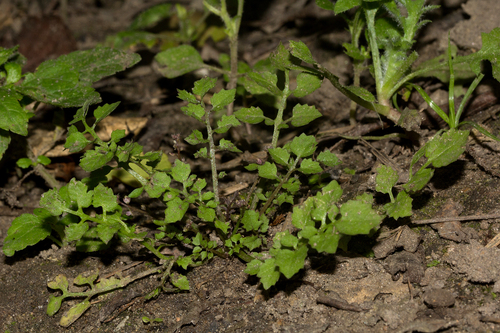
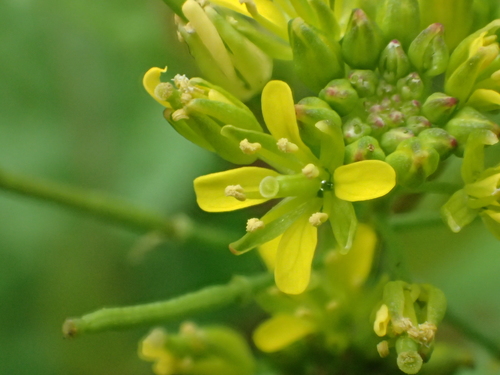
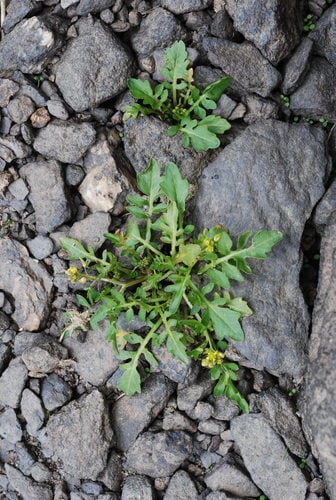
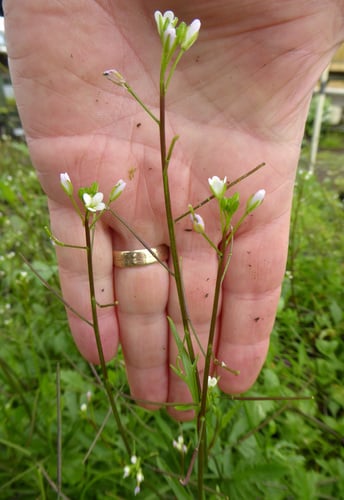
Cardamine bonariensis
Juss. ex Pers.
iNaturalist· cc-by
(c) Paúl Gonzáles, some rights reserved (CC BY)
iNaturalist· cc-by
(c) Paúl Gonzáles, some rights reserved (CC BY)
iNaturalist· cc-by
(c) Paúl Gonzáles, some rights reserved (CC BY)
Summary
Cardamine bonariensis is an annual herb. Hermaphroditic and insect-pollinated. Tolerates light sandy, medium loamy, and heavy clay soils across mildly acid to mildly alkaline pH. Grows in semi-shade or full sun and prefers moist soil.
Description
A cabbage family herb. It keeps growing from year to year. It grows 7-35 cm tall. The leaves are 2-8 cm long. The fruit are 2-3 cm long and 1 mm wide.
Edible Uses
The leaves can be eaten raw.
Traditional Uses
The leaves are added to salads.
This uses section is brief — help expand it
Medicinal Uses
None known.
Distribution
It is a tropical plant. In Argentina it grows from sea level to 4,500 m above sea level.
Where It Grows
Argentina, Brazil, Chile, Ecuador, Paraguay, South America, Uruguay,
Cultivation
We have very little information on this species and do not know if it will be hardy in Britain, though judging by its native range it could succeed outdoors in many parts of this country. The following notes are based on the general needs of the genus. Prefers a moist humus rich soil in shade or semi-shade but succeeds in most soils that are not dry.
Propagation
Sow seed outdoors in situ in a shady position in April.
Other Uses
None known.
Other Information
It is cultivated.
Notes
There are about 160 Cardamine species. They are mostly in damp places in temperate regions. All bittercresses are edible.
Also Known As
Agriao-amargo, Agriaozinho, Berro, Berro blanco
References (6)
- Kermath, B. M., et al, 2014, Food Plants in the Americas: A survey of the domesticated, cultivated and wild plants used for Human food in North, Central and South America and the Caribbean. On line draft. p 182
- Leon-Lobos, P., et al, 2022, Patterns of Traditional and Modern Uses of Wild Edible Native Plants of Chile: Challenges and Future Perspectives. Plants (Basel) v 11 (6) Table S1
- Plants for a Future database, The Field, Penpol, Lostwithiel, Cornwall, PL22 0NG, UK. http://www.scs.leeds.ac.uk/pfaf/
- Syn. pl. 2:195. 1807
- Torre, de la, L., et al, 2008, Enciclopedia de las Plantas Útiles del Ecuador. Herbario QCA. Pontificia Universidad Católica del Ecuador. p 256
Show all 6 references Hide references
- www.theplantlist.org