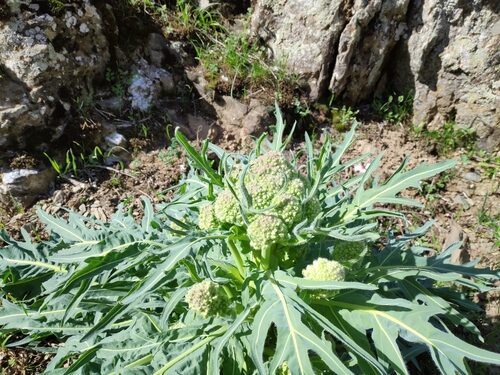
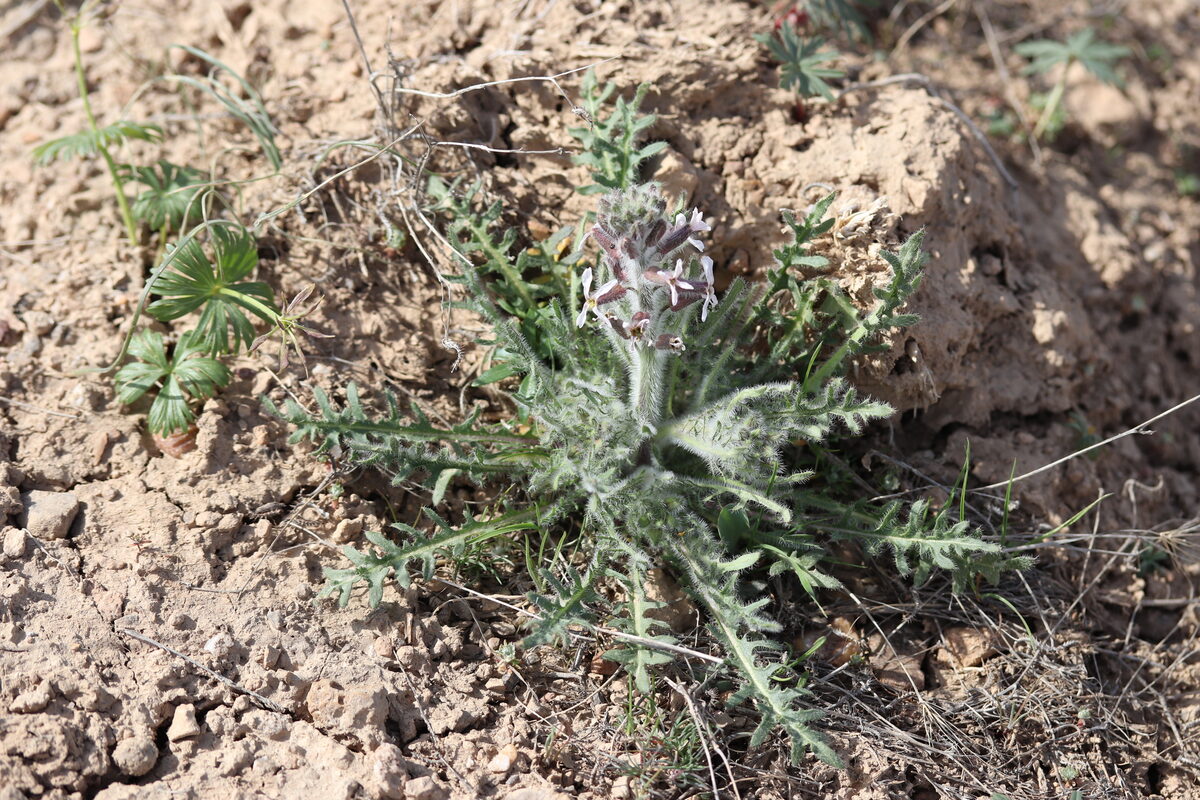
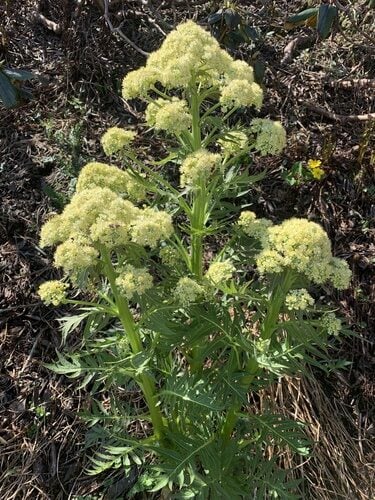
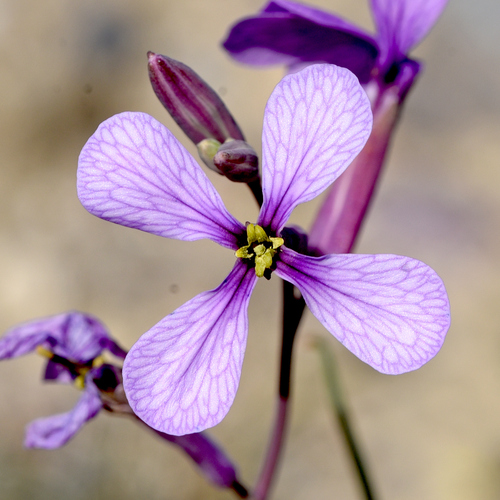
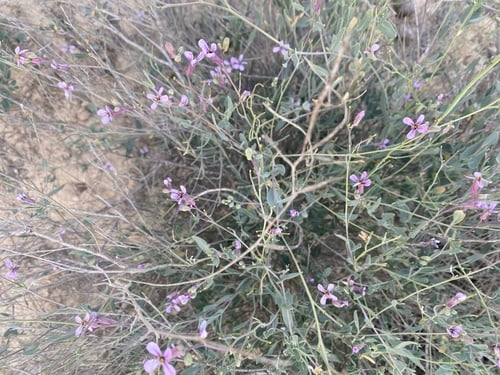
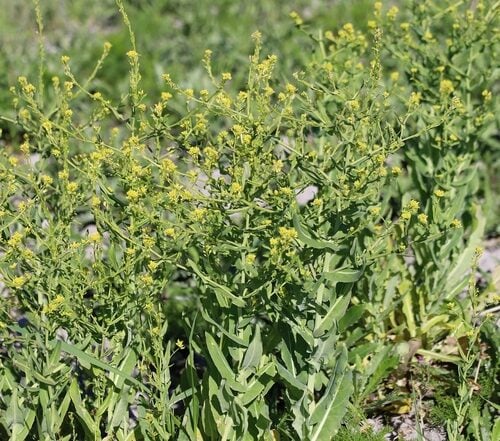
Stanleya elata
Jones
Panamint Prince's-plume
iNaturalist· cc-by
(c) Jim Morefield, some rights reserved (CC BY), uploaded by Jim Morefield
iNaturalist· cc-by
(c) Jim Morefield, some rights reserved (CC BY)
Summary
Source: WikipediaStanleya elata is a species of flowering plant in the family Brassicaceae known by the common name Panamint princesplume. It is native to the desert mountains of eastern California and western Nevada, where it grows in rocky and scrubby habitat types. It may also occur in Arizona. It is a perennial herb producing one or more erect stems reaching about 1.5 meters in maximum height. They are hairless and often waxy in texture. The thick, leathery leaves have lance-shaped or oblong blades with smooth or toothed edges measuring up to 15 centimeters long. They are borne on petioles. The top of the stem is occupied by a long inflorescence which is a dense, snaking raceme of many flowers. Each flower has four narrow, threadlike yellow or whitish petals each about a centimeter long and a millimeter wide. The fruit is a long, thin, wormlike silique which may be 10 centimeters in length. It contains tiny seeds.
Description
A perennial herb reaching 1.5 m tall, hardy to UK zone 7. It flowers in June with hermaphrodite blooms pollinated by insects. Thrives in light sandy or medium loamy, well-drained soils across mildly acidic to mildly alkaline pH ranges. Requires full sun and tolerates both dry and moist conditions with good drought resistance.
Edible Uses
Seeds are cooked and used as a piñole. Young leaves and stems are cooked but have a rather bitter flavour; they are washed repeatedly with cold and boiling water several times before eating to reduce bitterness, though this process also removes many vitamins and minerals.
Medicinal Uses
None known
Distribution
It is a temperate plant.
Where It Grows
North America, USA,
Cultivation
Requires a perfectly drained soil in full sun. Plants resent root disturbance and so should be put out into their permanent positions whilst small.
Propagation
Sow seed in spring in a greenhouse; germination should occur within 3 weeks. Pot seedlings into individual pots as soon as they are large enough to handle, to protect the root system, then plant out in summer. Division in spring may also be possible.
Other Uses
None known
References (4)
- Beckstrom-Sternberg, Stephen M., and James A. Duke. "The Foodplant Database." http://probe.nalusda.gov:8300/cgi-bin/browse/foodplantdb.(ACEDB version 4.0 - data version July 1994)
- Kermath, B. M., et al, 2014, Food Plants in the Americas: A survey of the domesticated, cultivated and wild plants used for Human food in North, Central and South America and the Caribbean. On line draft. p 837
- Plants for a Future database, The Field, Penpol, Lostwithiel, Cornwall, PL22 0NG, UK. http://www.scs.leeds.ac.uk/pfaf/
- World Checklist of Useful Plant Species 2020. Royal Botanic Gardens, Kew