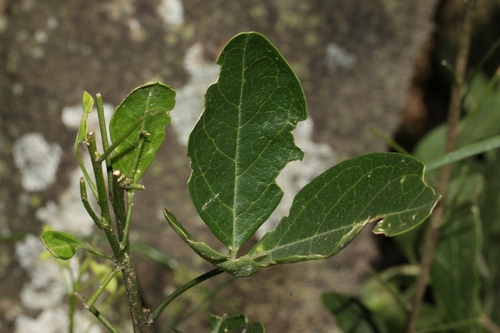
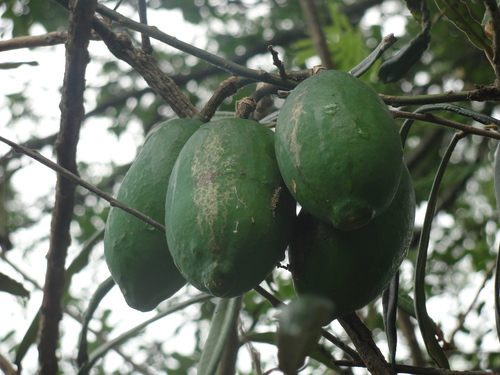
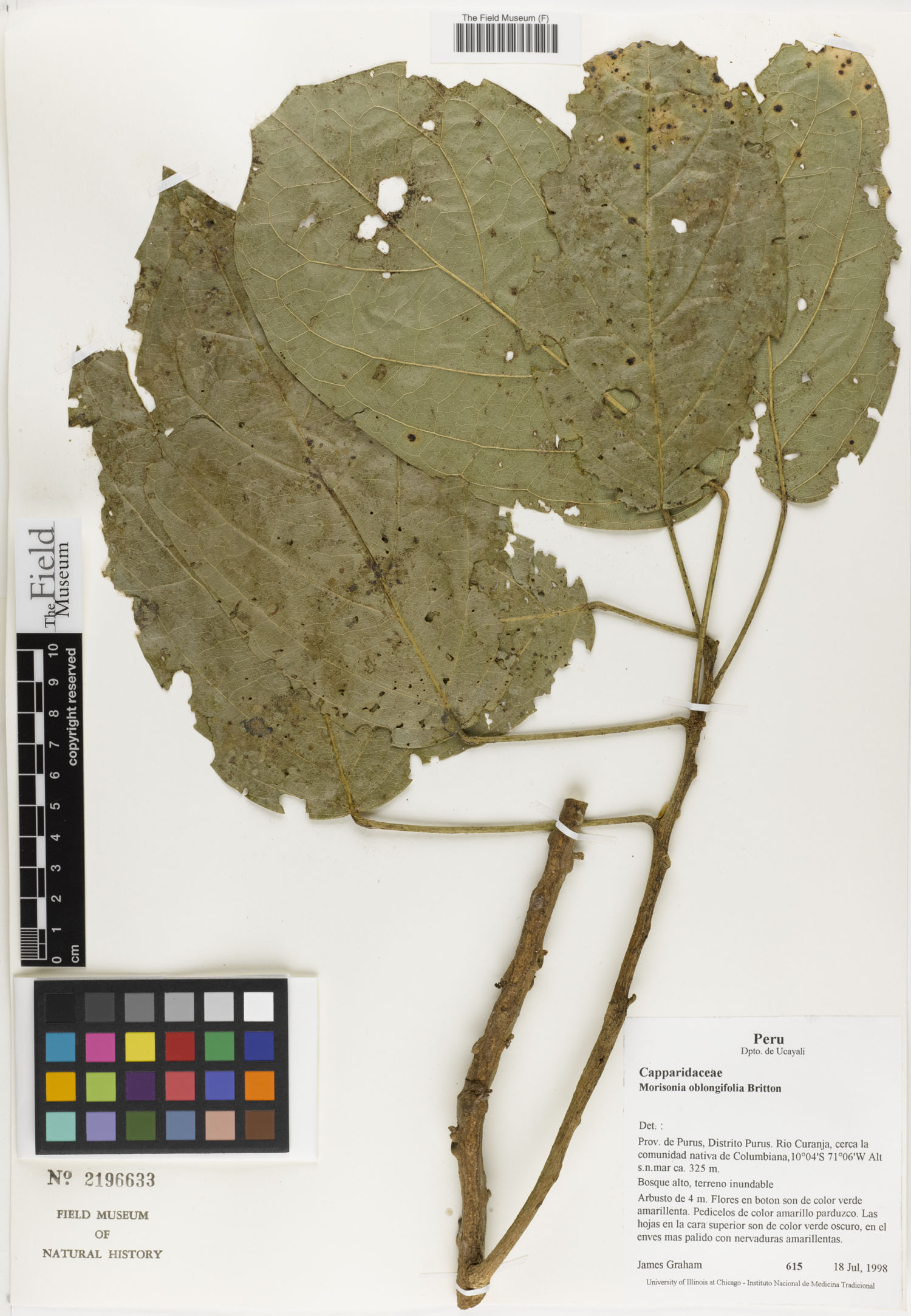
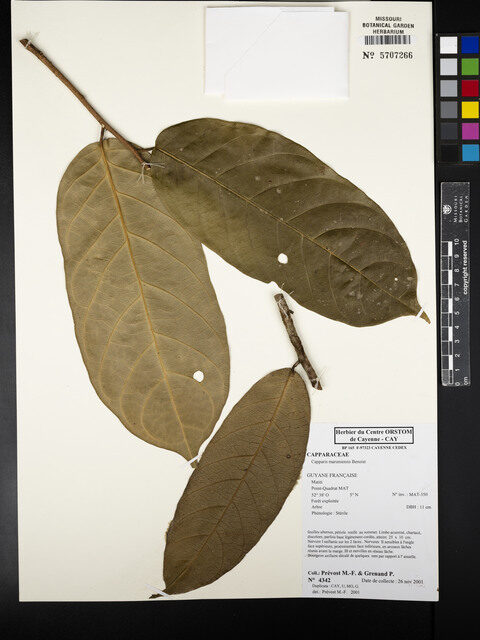
Boscia mossambicensis
Klotzsch
Broad-leaved shepherd's tree
iNaturalist· cc-by-sa
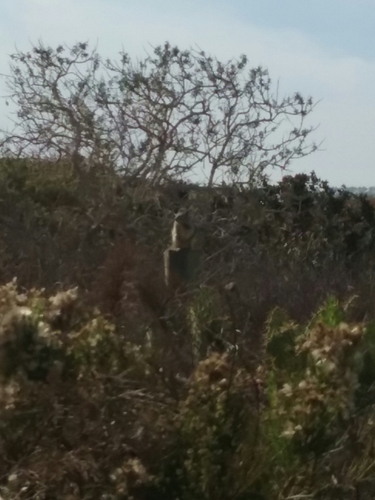
(c) Tony Eales, some rights reserved (CC BY-SA), uploaded by Tony Eales
iNaturalist· cc-by-nc
(c) Ricky Taylor, some rights reserved (CC BY-NC), uploaded by Ricky Taylor
iNaturalist· cc-by
(c) i_c_riddell, some rights reserved (CC BY), uploaded by i_c_riddell
Summary
Source: WikipediaBoscia mossambicensis is a species of plant in family Capparaceae, which is native to East and southern Africa, where it occurs at lower elevations.
Description
A much branched shrub or small tree. It grows 6 m tall. The young branches are smooth and yellow. The older bark is grey brown. The leaf blade is 3-8 cm long by 1.5-3.5 cm wide. It is leathery and oval. It is rounded at the base. The flowers are at the ends of branches in dense clusters. There are 20 flowers on short side stalks. Flowers are green. The fruit are round and 2 cm across. They are yellow. There is one seed. It is 7-8 mm across.
Edible Uses
The fruit are edible.
Distribution
It is a tropical plant. It grows in the lowlands and the highlands. It grows in dry woodland at lower altitudes. It grows in areas with a rainfall below 100 mm per year. It grows between 200-1,500 m above sea level. It can grow in arid places.
Where It Grows
Africa, Botswana, Central Africa, Congo, East Africa, Eswatini, Ethiopia, Kenya, Malawi, Mozambique, Namibia, Somalia, South Africa, Southern Africa, Swaziland, Tanzania, Zambia, Zimbabwe,
Other Information
It is not an attractive fruit.
Synonyms
Also Known As
Canungonungo, Cibanze, Chimapa, Chinamina, Muhwisa, Munhanja, Munheza, Mutumba, Muwisa, Napane, Naschandi
References (8)
- East African Herbarium records, 1981,
- Fowler, D. G., 2007, Zambian Plants: Their Vernacular Names and Uses. Kew. p 16
- Newman, 1970,
- Peters, C. R., O'Brien, E. M., and Drummond, R.B., 1992, Edible Wild plants of Sub-saharan Africa. Kew. p 75
- Roodt, V., 1998, Trees & Shrubs of the Okavango Delta. Medicinal Uses and Nutritional value. The Shell Field Guide Series: Part 1. Shell Botswana. p 33
Show all 8 references Hide references
- Royal Botanic Gardens, Kew (1999). Survey of Economic Plants for Arid and Semi-Arid Lands (SEPASAL) database. Published on the Internet; http://www.rbgkew.org.uk/ceb/sepasal/internet [Accessed 7th April 2011]
- Swaziland's Flora Database http://www.sntc.org.sz/flora
- World Checklist of Useful Plant Species 2020. Royal Botanic Gardens, Kew