Capparis erythrocarpos
Isert
Ong'ono, Apana
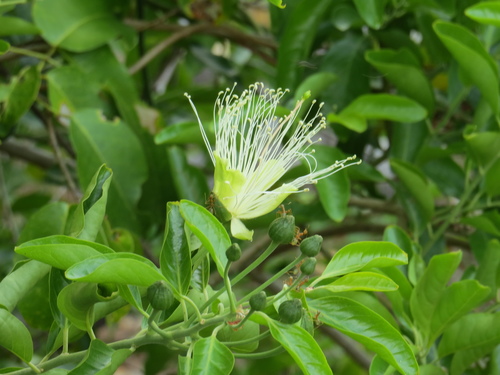
iNaturalist· cc-by
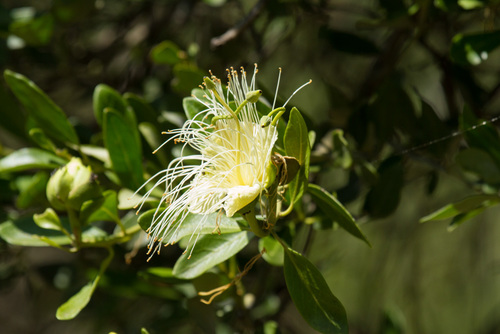
(c) Vijay Barve, some rights reserved (CC BY), uploaded by Vijay Barve
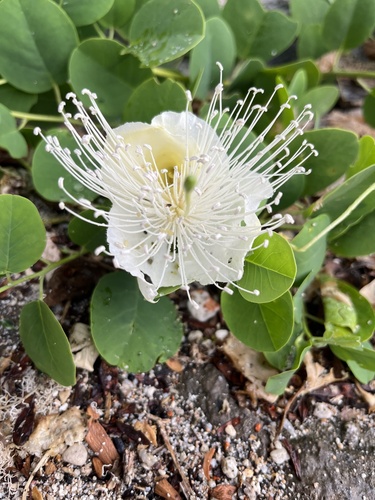
iNaturalist· cc-by-nc-nd
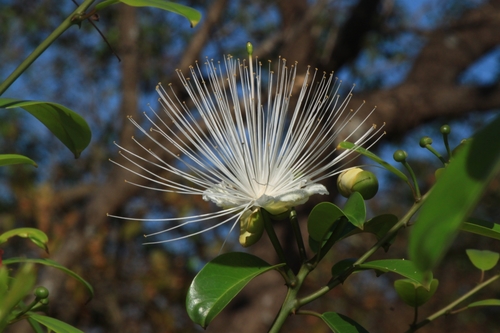
(c) ONG ODDB, some rights reserved (CC BY-NC-ND), uploaded by ONG ODDB
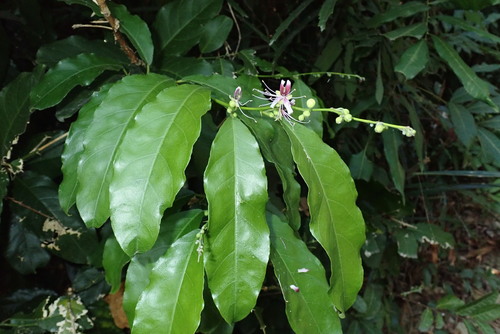
iNaturalist· cc-by-nc
(c) Graeme White, some rights reserved (CC BY-NC), uploaded by Graeme White
Description
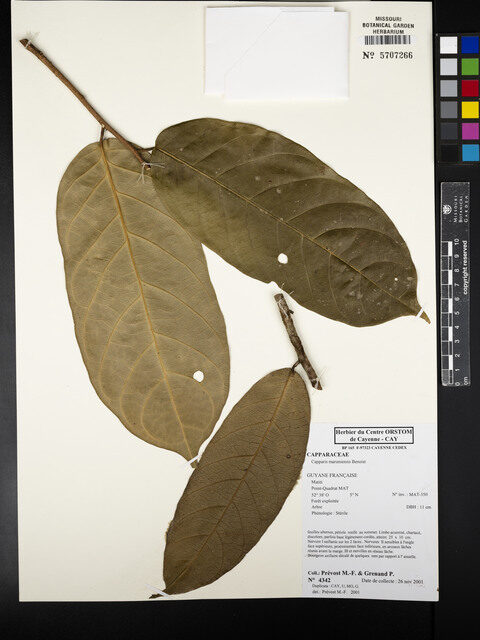
An evergreen scrambling shrub. It grows 3 m of more high. The stems are dark green. They have small hooked thorns. The leaves are oval and 8 cm long. They are glossy and dark green. They taper to the tip. The flower petals are light green. The stamens are white but red at the base. The fruit are narrowly oval and red. They are 5 cm long by 3 cm wide. They are ribbed.
Edible Uses
The red fruit are eaten, especially by children.
Distribution
A tropical plant. It grows in forest, savannah and along the edges of rivers. It can be on the edge of mangroves. It needs an average, well-drained soil. It needs full sun. In Ethiopia it grows between 500-1,670 m above sea level. It suits plant hardiness zones 10-12.
Where It Grows
Africa, Angola, Burkina Faso, Central Africa, Congo, Côte d'Ivoire, East Africa, Equatorial-Guinea, Ethiopia, Ghana, Guinea, Guinée, Guinea-Bissau, Ivory Coast, Kenya, Sao Tome and Principe, Sierra Leone, Tanzania, Uganda, West Africa, Zambia, Zimbabwe,
Other Information
The fruit are eaten especially by children.
Notes
There are about 250 Capparis species. There are about 50 Capparis species in tropical America.
Also Known As
Binherre, Bre-rem-mela-n'sata, Fertenin, Hamaghamoti, Narara. Neum, Nheieu, Omono, Ongonongono, Simbus
References (14)
- Abbiw, D.K., 1990, Useful Plants of Ghana. West African uses of wild and cultivated plants. Intermediate Technology Publications and the Royal Botanic Gardens, Kew. p 46
- Awas, T., 1997, A Study on the Ecology and Ethnobotany of Non-cultivated Food Plants and Wild Relatives of Cultivated crops in Gambella Region, Southwestern Ethiopia. Addis Ababa University. p 45
- Burkill, H. M., 1985, The useful plants of west tropical Africa, Vol. 1. Kew.
- Eilu, G. & Bukenya-Ziraba, R., 2004, Local Use of Climbing Plants of Budongo Forest Reserve, Western Uganda. Journal of Ethnobiology 24(2): 307-327
- Fowler, D. G., 2007, Zambian Plants: Their Vernacular Names and Uses. Kew. p 16
Show all 14 references Hide references
- Johns, T., and Kokwaro, J.O., 1991, Food Plants of the Luo of Siayo District, Kenya. Economic Botany 45(1), pp 103-113
- Kokwaro, J. O. and Johns. T., Luo Biological Dictionary. p 101
- Le Houerou, H. N., (Ed.), 1980, Browse in Africa. The current state of knowledge. International Livestock Centre for Africa, Ethiopia. p 162
- Llamas, K.A., 2003, Tropical Flowering Plants. Timber Press. p 148
- Lulekal, E., et al, 2011, Wild edible plants in Ethiopia: a review on their potential to combat food insecurity. Afrika Focus - Vol. 24, No 2. pp 71-121
- Mutie, F. M., et al, 2023, Important Medicinal and Food Taxa (Orders and Families) in Kenya, Based on Three Quantitative Approaches. Plants 2023, 12, 1145
- Peters, C. R., O'Brien, E. M., and Drummond, R.B., 1992, Edible Wild plants of Sub-saharan Africa. Kew. p 76 (var. rosea)
- Scudder, 1971,
- World Checklist of Useful Plant Species 2020. Royal Botanic Gardens, Kew