Vangueria vestita
(Robyns) ined.
Velvet leaf
iNaturalist· cc-by
(c) i_c_riddell, some rights reserved (CC BY), uploaded by i_c_riddell
iNaturalist· cc-by
(c) i_c_riddell, some rights reserved (CC BY), uploaded by i_c_riddell
iNaturalist· cc-by
(c) i_c_riddell, some rights reserved (CC BY), uploaded by i_c_riddell
Description
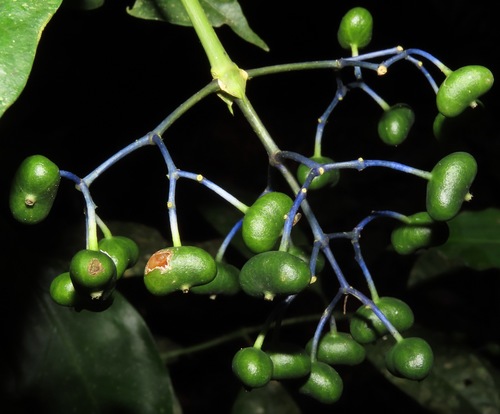
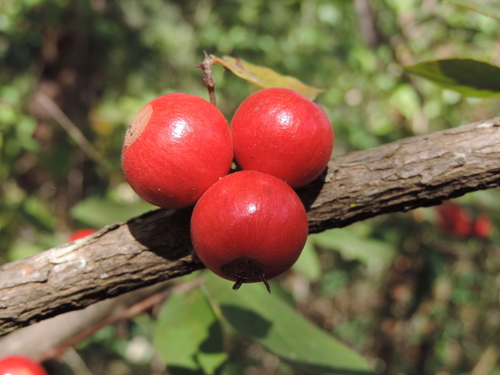
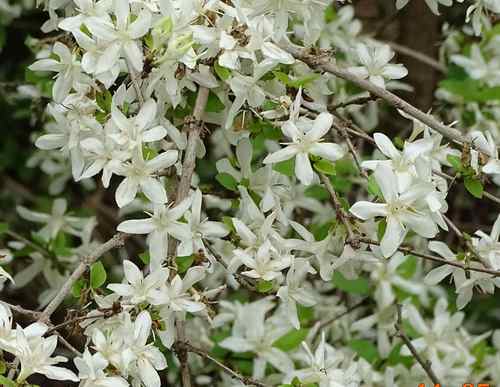
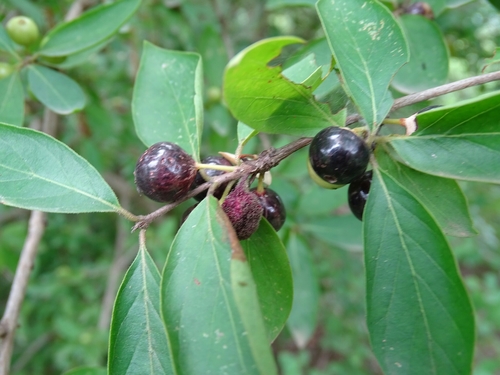
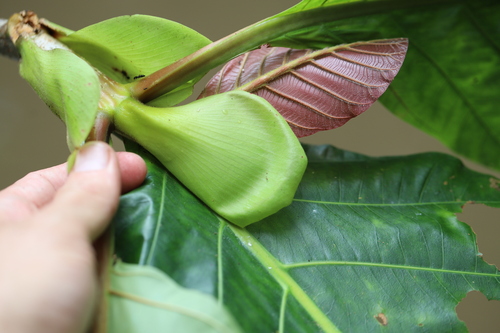
A shrub or small tree. It grows 2-4 m high. The bark is brown. It is rough and flaky. Young shoots are covered with densely woolly hairs. The leaves are broadly oval. They are 2-8 cm long by 1.6-7.5 cm wide. They are covered with woolly hairs. They are dull green above and yellowish underneath. The base is lobed and almost clasps the stem. The flowers are greenish-yellow and 6 mm long. The flowers occur in clusters of 10-12 in the axils of leaves. The fruit are round and 1.5 cm across. They taper towards the base. They are densely covered with soft hairs. Fruit are yellow-brown when mature.
Edible Uses
The fruit is eaten.
Distribution
A tropical plant. It occurs in open woodland often among rocks.
Where It Grows
Africa, East Africa, Malawi, Mozambique, Southern Africa, Zimbabwe,
Synonyms
References (4)
- Palgrave, K.C., 1996, Trees of Southern Africa. Struik Publishers. p 875 (As Tapiphyllum velutinum)
- Peters, C. R., O'Brien, E. M., and Drummond, R.B., 1992, Edible Wild plants of Sub-saharan Africa. Kew. p 176 (As Tapiphyllum velutinum)
- Tredgold, M.H., 1986, Food Plants of Zimbabwe. Mambo Press. p 129 (As Tapiphyllum velutinum)
- Wild, 1975, (As Tapiphyllum velutinum)