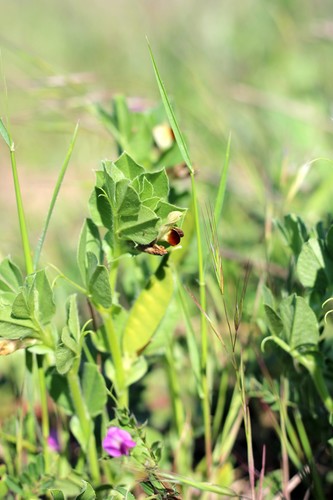
Canavalia ensiformis
(L.) DC.
Jack bean
iNaturalist· cc-by-nc
(c) Edimara Silva cardoso, some rights reserved (CC BY-NC)
iNaturalist· cc-by-nc
(c) Edimara Silva cardoso, some rights reserved (CC BY-NC)
iNaturalist· cc-by
(c) Siddarth Machado, some rights reserved (CC BY)
Summary
Source: WikipediaCanavalia ensiformis (jack bean) is a legume which is used for animal fodder and human nutrition, especially in Brazil where it is called feijão-de-porco ("pig bean"). It is also the source of concanavalin A.
Description
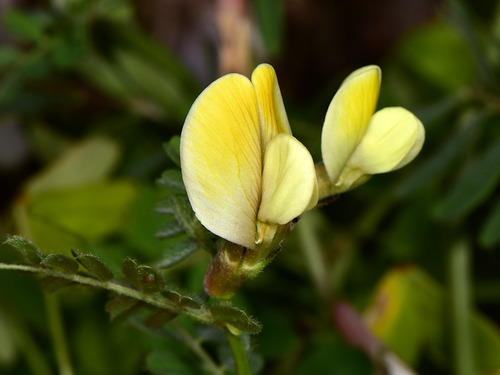
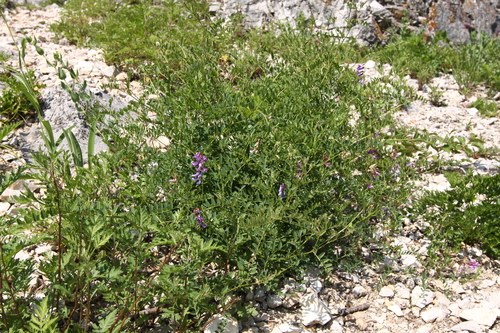
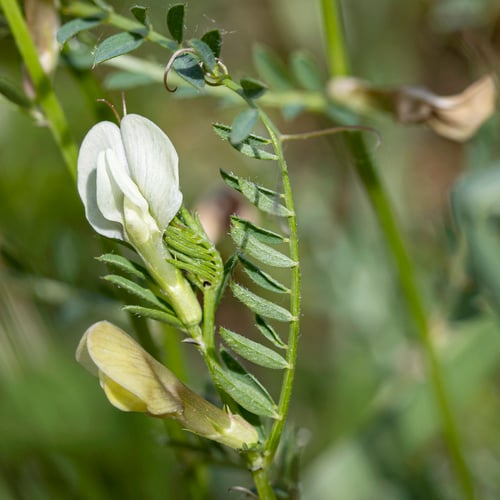
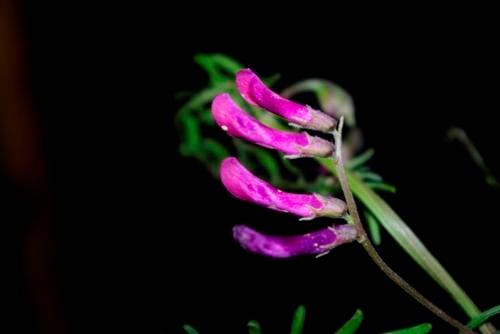
A perennial climber, although short kinds do occur. Often it is a more bushy plant than the sword bean. Plants up to 1.5 m long. Stems can be hairy. Leaves have 3 leaflets. The leaflets are oval and 5.7-20 cm long by 3.2-11.5 cm wide. The leaf tends to be wedge shaped at the base. The leaf stalks are 2.5-11 cm long. Flowers are red/purple. They occur on flower clusters 5-12 cm long and with flower cluster stalks which are 10-34 cm long. The individual flower stalks are 2-5 mm long. Pods are long and sword shaped. Pods can be 15-35 cm long. Seeds are white with a light brown hilum half as long as the seed. Seeds are 2 cm long, by 1 cm across.
Edible Uses
The leaves and top shoots are eaten. Very young pods are boiled and eaten. Flowers are edible. Young seeds are eaten boiled, roasted, peeled and cooked, or fermented. Ripe seeds are roasted and used as a coffee substitute.
Traditional Uses
The leaves and top shoots are eaten. The very young pods are boiled and eaten. The flowers can be eaten. The young seeds are eaten boiled, roasted, or peeled and cooked. The seeds are also fermented. The ripe seeds are roasted and used as a coffee substitute. CAUTION The ripe seeds can contain poison and need to be well cooked and the water changed before eating. They are also often left under running water or fermented.
Medicinal Uses
The plant has medicinal properties.
Known Hazards
Historically, it was used by native tribes for food and forage in droughty regions of Arizona and Mexico. Now, while commonly consumed in Asia and Japan, C. ensiformis seem to be unpopular elsewhere. The beans are mildly toxic, and copious consumption should be avoided. Boiling will, however, remove toxicity if done properly. Young foliage is also edible. The whole plant is used for fodder, although it cannot be used in fodder mixtures containing urea, since it contains large quantities of the enzyme urease, which liberates harmful ammonia from urea. For this reason C. ensiformis has been investigated as a potential source of the urease enzyme. It is also the source of concanavalin A, a lectin used in biotechnology applications, such as lectin affinity chromatography. As a garden plant, it can grow to over 2 metres (6.6 ft), provided it gets enough nutrients, rich soil, sun and warmth. It grows therefore in rich soil, or use extra nutrients, in a sunny warm place.
Distribution
It grows in tropical and subtropical places. It requires a fairly high temperature (15°-30°C). It will possibly grow up to 1,600 m altitude. It is fairly drought resistant and also has some resistance to water-logging and salt in the soil. It can tolerate shade. It can tolerate pH from 4.5 - 8.0 but does best at about 6.1. The optimum mean annual temperature is 14.4°-27.8°C. Seed germinate between 24-27.5°C. It is a short day plant growing well with a daylength of 10-12 hours of sunlight. It can grow in arid places. In Argentina it grows below 500 m above sea level. In XTBG Yunnan.
Where It Grows
Africa, Angola, Argentina, Asia, Australia, Bangladesh, Belize, Benin, Bolivia, Brazil, Burkina Faso, Cambodia, Cameroon, Cape Verde, Caribbean, Central Africa, Central America, Chad, China, Colombia, Congo DR, Costa Rica, Côte d'Ivoire, Cuba, Dominican Republic, East Africa, Ecuador, Egypt, El Salvador, Ethiopia, Fiji, French Guiana, Gabon, Ghana, Grenada, Guadeloupe, Guatemala, Guianas, Guinea, Guinée, Guinea-Bissau, Guyana, Haiti, Hawaii, Himalayas, Honduras, India, Indochina, Indonesia, Ivory Coast, Jamaica, Japan, Kenya, Kiribati, Korea, Laos, Liberia, Madagascar, Malawi, Malaysia, Maldives, Mali, Marianas, Martinique, Mauritius, Mexico, Mozambique, Myanmar, Namibia, Nauru, New Caledonia, Niger, Nigeria, North Africa, North America, Northeastern India, Pacific, Panama, Papua New Guinea, PNG, Paraguay, Peru, Philippines, Puerto Rico, Reunion, Sahel, Sao Tome and Principe, SE Asia, Seychelles, Senegal, Sierra Leone, Singapore, Sri Lanka, Solomon Islands, South Africa, Southern Africa, South America, Sudan, Suriname, Taiwan, Tanzania, Thailand, Togo, Tonga, Trinidad & Tobago, Uruguay, USA, Venezuela, Vietnam, West Africa, West Indies, Zambia, Zimbabwe,
Cultivation
It is grown from seeds. Seeds need to be 2 cm deep. A spacing of about 60 cm is suitable. Plants preferably need a support to climb over. It benefits from a fertile soil but adding nitrogen depresses yield.
Propagation
Seed - sow in situ, placing the seeds 2 - 3cm deep in the soil. The seed germinates in about 72 hours.
Other Uses
The plant fixes atmospheric nitrogen and often has a spreading habit. It is cultivated as a cover crop to conserve and fertilize the soil for other crops. The plant is grown as a green manure.
Production
Green pods are produced in 3-4 months, but ripe seeds need 6-9 months. Yield of seeds can range from 700 to 5,400 kg / ha.
Other Information
It is a commercially cultivated vegetable. It is being accepted and grown in some coastal and mid altitude areas in Papua New Guinea. Pods are sold in local markets.
Notes
There are about 50 Canavalia species. Chemical composition (acid content) (Nigerian sample): oil = 1%; component esters (wt. %): 16:0 = 17%. 16:1 = 2%. 18:0 = 2%. 18:1 = 49%, 18:2 = 18%. 18:3 = 7%. 20:0 = 1%. 22:0 = 1%. 24:0 = 2%. Reported to have a high Threonine value.
Nutrition
| Part | Moisture | kJ | kcal | Protein | Vit A | Vit C | Iron | Zinc |
|---|---|---|---|---|---|---|---|---|
| Seeds | 10 | 1423 | 340 | 20.4 | 160 | 0 | 4.9 | — |
| Pods - fresh | 88 | 155 | 37 | 2.4 | — | — | — | — |
| Leaves | — | — | — | — | — | — | — | — |
| Flowers | — | — | — | — | — | — | — | — |
Synonyms
Also Known As
Banchaki, Bara sem, Baran chaki, Bo ba ji noe, Broad Bean, Chickasaw Lima, Cocorico, Cut-Eye, Dau-rua, Dau-tac, Dolique, Fannto, Feijao, Frejol gigante, Frejol machete, Frijol blanco, Frijol cacao, Garde Place, Giant stock-bean, Gotani bean, Gros Pois, Haba de caballo, Habilla, Horse Bean, Jamaican horse bean, Jangala, Kaat thumbuten kai, Kachang parang puteh, Kalongonda, Kangianeteupi, Ladiko, Makhan shim, Mavi, Nkasa zi madeso, One-Eye Bean, Overlook, Pandhri abai, Papanla, Popondo, Prapiey sbaek, Sabre bean, Samkhra, Seaside bean, Sufed kadsumbal, Sword bean, Tamma, Vella tamma, Vellai tambattai, Voavahibe
References (79)
- Jack bean references
- Abbiw, D.K., 1990, Useful Plants of Ghana. West African uses of wild and cultivated plants. Intermediate Technology Publications and the Royal Botanic Gardens, Kew. p 31
- Ambasta S.P. (Ed.), 2000, The Useful Plants of India. CSIR India. p 100
- Anderson, E. F., 1993, Plants and people of the Golden Triangle. Dioscorides Press. p 205
- Bircher, A. G. & Bircher, W. H., 2000, Encyclopedia of Fruit Trees and Edible Flowering Plants in Egypt and the Subtropics. AUC Press. p 79
Show all 79 references Hide references
- Burkill, I.H., 1966, A Dictionary of the Economic Products of the Malay Peninsula. Ministry of Agriculture and Cooperatives, Kuala Lumpur, Malaysia. Vol 1 (A-H) p 437
- Cobley, L.S. (rev. Steele, W.M.) 2nd Ed., 1976, An Introduction to the Botany of Tropical Crops. Longmans. p 102
- Duarte, M. C., et al, 2022, Diversity of Useful Plants in Cabo Verde Islands: A Biogeographic and Conservation Perspective. Plants 2022, 11, 1313 p 12
- Duke, J.A., 1981, Handbook of Legumes of World Economic Importance. Plenum Press, New York. p 39-41
- Ekman Herbarium records Haiti
- Facciola, S., 1998, Cornucopia 2: a Source Book of Edible Plants. Kampong Publications, p 103
- Fowler, D. G., 2007, Zambian Plants: Their Vernacular Names and Uses. Kew. p 80
- Fox, F. W. & Young, M. E. N., 1982, Food from the Veld. Delta Books. p 204
- French, B.R., 1986, Food Plants of Papua New Guinea, A Compendium. Asia Pacific Science Foundation p 43
- French, B.R., 2010, Food Plants of Solomon Islands. A Compendium. Food Plants International Inc. p 57
- GAMMIE,
- Gori, B., et al, 2022, Understanding the diversity and biogeography of Colombian edible plants. Scientific Reports 12:7835
- Hedrick, U.P., 1919, (Ed.), Sturtevant's edible plants of the world. p 149
- Henty, E.E., 1980, Harmful Plants in Papua New Guinea. Botany Bulletin No 12. Division Botany, Lae, Papua New Guinea. p 79
- Hermandez Bermejo, J.E., and Leon, J. (Eds.), 1994, Neglected Crops. 1492 from a different perspective. FAO Plant Production and Protection Series No 26. FAO, Rome. p18
- Hussey, B.M.J., Keighery, G.J., Cousens, R.D., Dodd, J., Lloyd, S.G., 1997, Western Weeds. A guide to the weeds of Western Australia. Plant Protection Society of Western Australia. p 148
- Jardin, C., 1970, List of Foods Used In Africa, FAO Nutrition Information Document Series No 2.p 25, 62
- Kays, S. J., and Dias, J. C. S., 1995, Common Names of Commercially Cultivated Vegetables of the World in 15 languages. Economic Botany, Vol. 49, No. 2, pp. 115-152
- Kiple, K.F. & Ornelas, K.C., (eds), 2000, The Cambridge World History of Food. CUP p 1790
- Latham, P., 2004, Useful Plants of Bas-Congo province. Salvation Army & DFID p 66
- Lazarides, M. & Hince, B., 1993, Handbook of Economic Plants of Australia, CSIRO. p 46
- Lembogi Biologi Nasional, 1980, Sayur-sayuran. Balai Pustaka, Jakarta. p 46
- Macmillan, H.F. (Revised Barlow, H.S., et al) 1991, Tropical Planting and Gardening. Sixth edition. Malayan Nature Society. Kuala Lumpur. p 322
- Martin, F.W. & Ruberte, R.M., 1979, Edible Leaves of the Tropics. Antillian College Press, Mayaguez, Puerto Rico. p 198
- Medhi, P. & Borthakur, S. K., 2012, Phytoresources from North Cachur Hills of Assam -3: Edible plants sold at Hflong market. Indian Journal or Natural Products and Resources. 3(1) pp 84-109
- Medhi, P. & Borthakur, S. K., 2013, Wild edible plants sold by the Zeme Nagas at the makeshift market of Mahur, Dima Hasao district of Assam. Pleione 7(1): 84 - 93. 2013PNG. p 563, 562
- Medhi, P., Sarma, A and Borthakur, S. K., 2014, Wild edible plants from the Dima Hasao district of Assam, India. Pleione 8(1): 133-148
- Menninger, E.A., 1977, Edible Nuts of the World. Horticultural Books. Florida p 91
- Miguel, E., et al, 1989, A checklist of the cultivated plants of Cuba. Kulturpflanze 37. 1989, 211-357
- Murtem, G. & Chaudhrey, P., 2016, An ethnobotanical note on wild edible plants of Upper Eastern Himalaya, India. Brazilian Journal of Biological Sciences, 2016, v. 3, no. 5, p. 63-81.
- Nyadanu, D., et al, 2015, Agro-biodiversity and challenges of on-farm conservation: the case of plant genetic resources of neglected and underutilized crop species in Ghana. Genet. Resourc. Crop Evol. 62(7):
- Ochse, J.J. et al, 1931, Vegetables of the Dutch East Indies. Asher reprint. p 372
- Omawale, 1973, Guyana's edible plants. Guyana University, Georgetown p 103
- Paczkowska, G . & Chapman, A.R., 2000, The Western Australian Flora. A Descriptive Catalogue. Western Australian Herbarium. p 419
- Peekel, P.G., 1984, (Translation E.E.Henty), Flora of the Bismarck Archipelago for Naturalists, Division of Botany, Lae, PNG. p 255, 254
- Pham-Hoang Ho, 1999, An Illustrated Flora of Vietnam. Nha Xuat Ban Tre. p 944
- Phon, P., 2000, Plants used in Cambodia. © Pauline Dy Phon, Phnom Penh, Cambodia. p 128
- Plants of Haiti Smithsonian Institute http://botany.si.edu/antilles/West Indies
- Plowes, N. J. & Taylor, F. W., 1997, The Processing of Indigenous Fruits and other Wildfoods of Southern Africa. in Smartt, L. & Haq. (Eds) Domestication, Production and Utilization of New Crops. ICUC p 187
- Prodr. 2:404. 1825
- PROSEA handbook Volume 13 Spices. p 275
- PROSEA (Plant Resources of South East Asia) handbook, Volume 4, 1992, Forages.
- Purseglove, J.W., 1968, Tropical Crops Dicotyledons, Longmans. p 242
- Rashid, H. E., 1977, Geography of Bangladesh. Westview. p 261
- Recher, P, 2001, Fruit Spirit Botanical Gardens Plant Index. www.nrg.com.au/~recher/ seedlist.html p 5
- Roa, J. A. G. & Boada, D. S. G., 2018, Fundación para el Fortalecimiento de la Fruticultura y Plantas Alimenticias no Convencionales en Colombia.
- Royal Botanic Gardens, Kew (1999). Survey of Economic Plants for Arid and Semi-Arid Lands (SEPASAL) database. Published on the Internet; http://www.rbgkew.org.uk/ceb/sepasal/internet [Accessed 28th April 2011]
- Ruiters-Welcome, A. K., 2019, Food plants of southern Africa. Ph.D. thesis. Univ. of Johannesburg p 56
- Sharma, B.B., 2005, Growing fruits and vegetables. Publications Division. Ministry of Information and broadcasting. India. p 151
- SHORTT, (As Dolichos ensiformis)
- Sp. pl. 2:725. 1753 (As Dolichos ensiformis)
- Smith, A.C., 1985, Flora Vitiensis Nova, Lawaii, Kuai, Hawaii, Volume 3 p 221
- Sutjaritjai, N., et al, 2019, Traditional Uses of Leguminosae among the Karen in Thailand. Plants 2019, 8, 600 p 5
- van Wyk, B., 2005, Food Plants of the World. An illustrated guide. Timber press. p 113
- Terra, G.J.A., 1973, Tropical Vegetables. Communication 54e Royal Tropical Institute, Amsterdam, p 34
- Tindall, H.D., 1983, Vegetables in the Tropics, Macmillan p 257
- Torre, de la, L., et al, 2008, Enciclopedia de las Plantas Útiles del Ecuador. Herbario QCA. Pontificia Universidad Católica del Ecuador. p 335
- USDA, ARS, National Genetic Resources Program. Germplasm Resources Information Network - (GRIN). [Online Database] National Germplasm Resources Laboratory, Beltsville, Maryland. Available: www.ars-grin.gov/cgi-bin/npgs/html/econ.pl (10 April 2000)
- VAN ETTEN et al (1963),
- van Wyk, Be, & Gericke, N., 2007, People's plants. A Guide to Useful Plants of Southern Africa. Briza. p 22 (As Canavalia ensifolia)
- van Wyk, Be., & Gericke, N., 2007, People's plants. A Guide to Useful Plants of Southern Africa. Briza. p 102 (As Canavalia ensifolia)
- van Wyk, Ben-Erik, 2019, The diversity and multiple uses of southern African legumes. Australian Systematic Botany, 2019, 32, 519–546
- Vasquez, R. and Gentry, A. H., 1989, Use and Misuse of Forest-harvested Fruits in the Iquitos Area. Conservation Biology 3(4): 350f
- Verdcourt, B., 1979, Manual of New Guinea Legumes. Botany Bulletin No 11, Division of Botany, Lae, Papua New Guinea. p 473
- Wealth of India, 1959, Council of Scientific and Industrial Research, New Delhi. p 55-56
- Welcome, A. K. & Van Wyk, B.-E., 2019, An inventory and analysis of the food plants of southern Africa. South African Journal of Botany 122 (2019) 136–179
- Wheeler, J.R.(ed.), 1992, Flora of the Kimberley Region. CALM, Western Australian Herbarium, p 376
- Wiersema, J. H. & Leon, B., 2013, World Economic Plants. A Standard Reference CRC Press. 2nd Ed. p 138
- Williams, C.N., Chew, W.Y., and Rajaratnam, J.A., 1989, Tree and Field Crops of the Wetter Regions of the Tropics. Longman, p 184
- Williamson, J., 2005, Useful Plants of Malawi. 3rd. Edition. Mdadzi Book Trust. p 52
- Wilson, J.M. & Witcombe, J.R., Crops for Arid lands, in Wickens, G.E., Goodin, J.R., and Field, D.V.,(Eds.) 1985, Plants for Arid Lands. Unwin Hyman, London, p 45
- World Checklist of Useful Plant Species 2020. Royal Botanic Gardens, Kew
- Yuncker, T.G., 1959, Plants of Tonga, Bernice P. Bishop Museum, Hawaii, Bulletin 220. p 148
- Zeven, A. C. & de West, J. M. J., 1982, Dictionary of cultivated plants and their regions of diversity. Wageningen. p 76