Indigofera tinctoria
L.
Indigo
iNaturalist· cc-by-nc
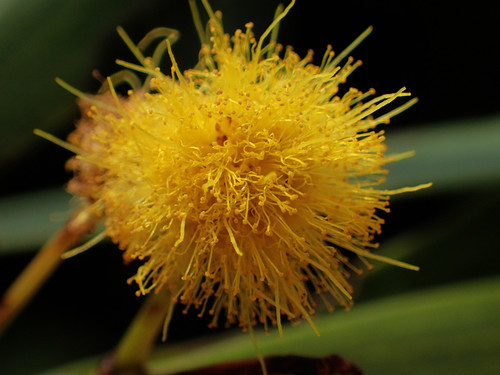
(c) TJ, some rights reserved (CC BY-NC)
iNaturalist· cc-by-nc
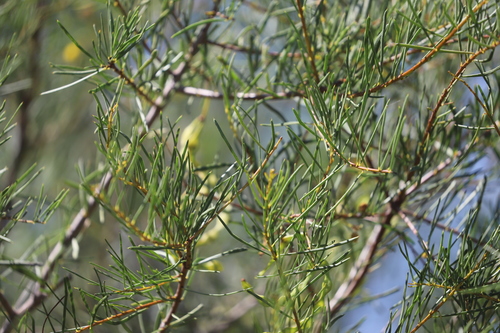
(c) Stargazer, some rights reserved (CC BY-NC)
iNaturalist· cc-by-nc
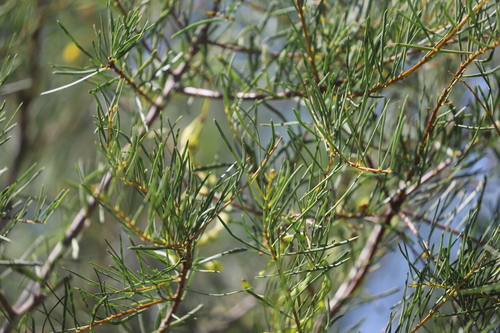
(c) Stargazer, some rights reserved (CC BY-NC)
Summary
Source: WikipediaIndigofera tinctoria, also called true indigo, is a species of plant from the bean family that was one of the original sources of indigo dye.
Description
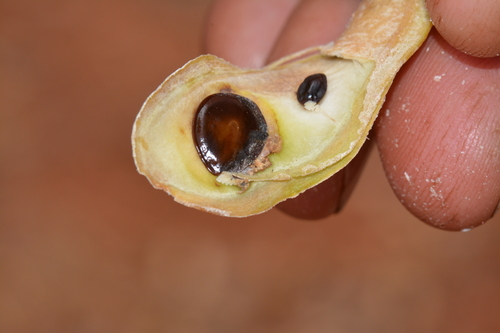
A herb or small shrub. It grows 60-120 cm high. The branches are hairy. The leaves are compound and 2-13 cm long. There are 7-13 leaflets and these are 5-26 mm long. The group of flowers are 5-12 cm long. They are pink. The fruit is a pod 2-4 cm long by 2.5 mm wide. There are 10-12 seeds.
Edible Uses
The deep blue dye obtained from the leaves is sometimes used to counteract the slightly yellow colour of icing sugar.
Traditional Uses
The leaves are the source of a blue dye sometimes used to counteract the slightly yellow colour of icing sugar. The flowers are eaten raw.
This uses section is brief — help expand it
Medicinal Uses
A leaf infusion, sometimes combined with honey or milk, is used to treat epilepsy and nervous disorders, asthma and bronchitis, fever, and complaints of the stomach, liver, kidney and spleen, and as a rabies prophylactic. Applied externally, the leaves are made into an ointment for skin diseases, wounds, sores, ulcers and haemorrhoids. A tincture of the seed is used in India to kill lice. A root preparation is applied to relieve toothache, syphilis, gonorrhoea and kidney stones. A watery root paste is applied topically in India to treat worm-infested wounds, and a root infusion is used there as an antidote to snakebite and to treat insect and scorpion stings.
Distribution
It is a tropical plant. It grows in woodland.
Where It Grows
Africa, Asia, Burkina Faso, China, Dominican Republic, East Africa, East Timor, Ethiopia, Grenada, Guiana, Guianas, Guinea, Guinée, Guinea-Bissau, Guyana, Haiti, India, Indochina, Jamaica, Madagascar, Malaysia, Maldives, Mozambique, Myanmar, Pakistan, Philippines, Sao Tome and Principe, SE Asia, South America, Sri Lanka, Suriname, Taiwan, Thailand, Timor-Leste, Venezuela, Vietnam, West Africa, West Indies, Zambia,
Cultivation
It grows best in areas where annual daytime temperatures are within the range 22 - 28°c, but can tolerate 7 - 32°c. It prefers a mean annual rainfall in the range 1,300 - 1,700mm, but tolerates 640 - 3,000mm. Requires a position in full sun, succeeding in any deep, well-drained and moderately retentive and fertile soil. Prefers a pH in the range 6 - 7, tolerating 4.3 - 8.7. Requires a position sheltered from hot winds. Branches are harvested by cutting 10 - 20cm above ground level when the plants are 4 - 5 months old and have formed a closed stand, usually at the flowering stage. The crop should be harvested promptly because heavy rains or flooding can destroy it in a few hours. In India harvested branches are tied into bundles of about 130 kg and transported to the dye factory. Up to 3 harvests are possible per year. Dye yields can be 1.6 - 5.4 tonnes per hectare. This species has a symbiotic relationship with certain soil bacteria, these bacteria form nodules on the roots and fix atmospheric nitrogen. Some of this nitrogen is utilized by the growing plant but some can also be used by other plants growing nearby. Flowering Time: Mid Spring. Bloom Color: Red-Orange or Pink. Spacing: 36-48 in. (90-120 cm).
Propagation
Pre-soak seed overnight in warm water and sow in a seedbed with partial shade; germination takes about 4 days. Semi-ripe cuttings of lateral shoots with a heel can also be used, as can root cuttings.
Other Uses
A deep blue dye is obtained from the leaves. The leaves and twigs do not contain indigo directly but colourless precursors that must be extracted and processed. Harvested leafy branches are placed in a tank of water with added lime, weighted down with planks, and left to ferment for several hours, during which enzymic hydrolysis produces indoxyl. The liquid is then drained off and stirred continuously for several hours to oxidise the indoxyl, after which it is left to settle and the insoluble indigo sinks as a bluish sludge. The water is drained and the dried indigo is cut into cubes or formed into balls. To dye textiles, indigo is reduced to a soluble form by fermentation under alkaline conditions; traditional preparations use reducing agents such as molasses along with coconut milk, bananas and leaves of Psidium guajava, with lime added to maintain alkalinity. Textiles dipped in the solution turn blue on exposure to air. The plant is also grown as a cover crop and green manure. In India it is used in coffee plantations and as a cover crop preceding rice, maize, cotton and sugarcane. In traditional rainfed rice systems in the Philippines it increases rice yield while reducing the need for nitrogen fertilizer by 50%. The residue left after indigo extraction is applied to land as manure. The plant is also a good nitrogen catch crop, reducing fertilizer nitrate leaching to groundwater. The twigs are used as toothbrushes.
Notes
It is the source of the dye indigo.
Synonyms
Also Known As
Aika, Baludo, Banhebe, Banhepe, Bno, Caro, Carodim-o, Caromessem-o, Carre, Cham nhuom, Daicham, Darko, Gara, Garatchendo, Ipute, Kasti, Kayth, Kheenthey, Kudhihithi, Me, Me-nai, Me-net, Tinta, Valu muranga, Vihafilaa
References (11)
- Amin, M., et al, 2023, Edible wild plant species used by different linguistic groups of Kohistan Upper Khyber Pakhtunkhwa (KP), Pakistan. Journal of Ethnobiology and Ethnomedicine 19:6 p 10
- Facciola, S., 1998, Cornucopia 2: a Source Book of Edible Plants. Kampong Publications, p 106
- Flora of Pakistan. www.eFloras.org
- Fowler, D. G., 2007, Zambian Plants: Their Vernacular Names and Uses. Kew. p 81
- http://palaeoworks.anu.edu.au/Nuno_PhD/04.pdf re Timor
Show all 11 references Hide references
- Molla, A., Ethiopian Plant Names. http://www.ethiopic.com/aplants.htm (As Indigofera houer)
- Plants of Haiti Smithsonian Institute http://botany.si.edu/antilles/West Indies
- Sp. pl. 2:751. 1753
- Sujanapal, P., & Sankaran, K. V., 2016, Common Plants of Maldives. FAO & Kerala FRI, p 149
- Sutjaritjai, N., et al, 2019, Traditional Uses of Leguminosae among the Karen in Thailand. Plants 2019, 8, 600 p 7
- World Checklist of Useful Plant Species 2020. Royal Botanic Gardens, Kew