Protium bahianum
Daly
iNaturalist· cc-by-sa
(c) vitordematos12, some rights reserved (CC BY-SA), uploaded by vitordematos12
Description
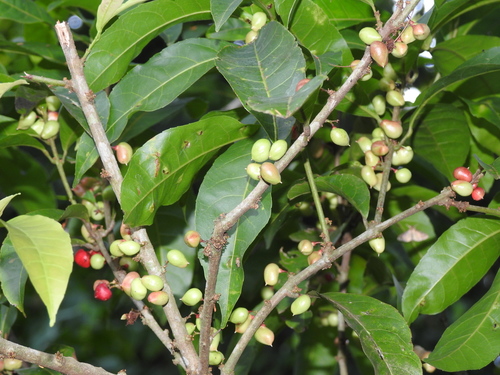
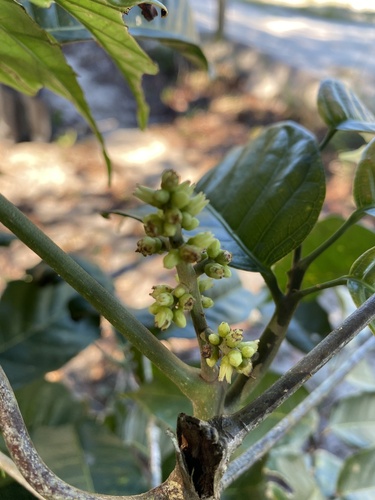
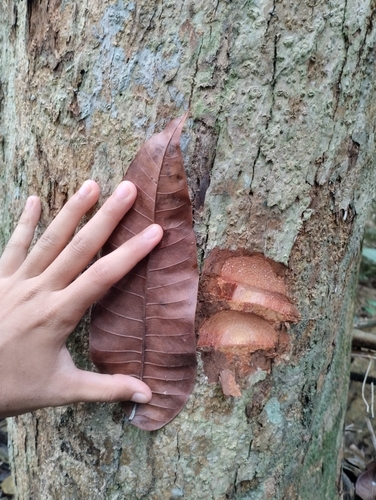
An evergreen shrub or tree. It grows 3-5 m tall. The crown is irregular and dense. The trunk is grooved and 20-30 cm across.
This description is brief — help expand it
Edible Uses
An aromatic, succulent sweet-tasting aril surrounds the seed. This report does not say that the fruit is edible, but it is likely to be since several other members of the genus have edible fruits. It is rather small though, the red to wine-coloured, globose fruits are only 15mm in diameter.
Traditional Uses
The aril or fleshy layer around the seeds is eaten.
This uses section is brief — help expand it
Distribution
It is a tropical plant. It grows in coastal rainforests. It needs a sunny position.
Where It Grows
Brazil, South America,
Cultivation
Requires a sunny position. Growing close to the coast, it is probably safe to assume that the tree is tolerant of strong, salt-laden winds. A slow-growing plant. Most, if not all, species in this genus are dioecious, both male and female forms need to be grown if fruit and seed are required.
Propagation
Seed - best sown as soon as it is ripe in a sunny position in a nursery seedbed. A low germination rate can be expected, with the seed sprouting within 120 - 150 days.
Other Uses
The heartwood and sapwood are not clearly demarcated. The wood is straight-grained, heavy, hard, very durable when exposed to the elements. Because of its small dimensions, the wood is only used for cabinet making and making small wooden utensils.
Production
It is slow growing.
References (1)
- Fern, K., 2012, Tropical Species Database http://theferns.info/tropical/