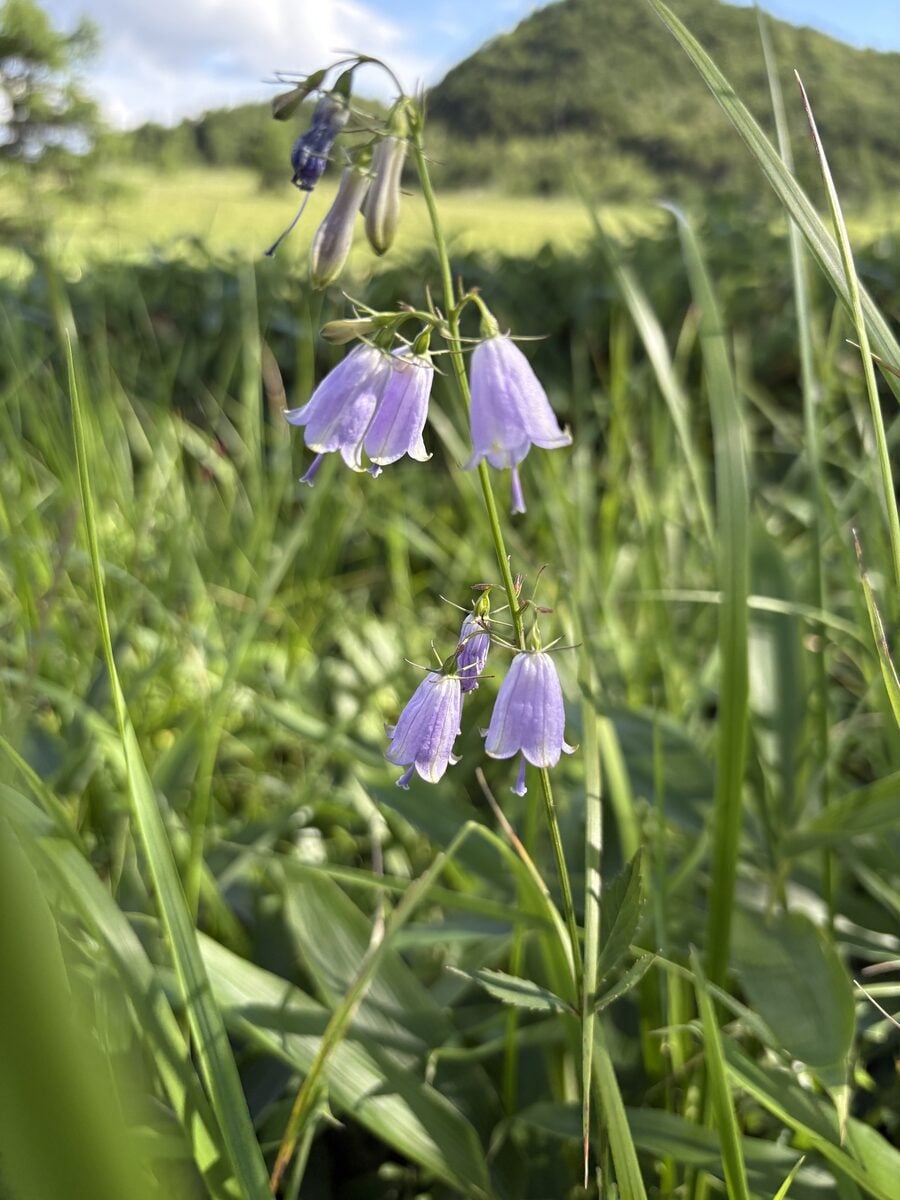
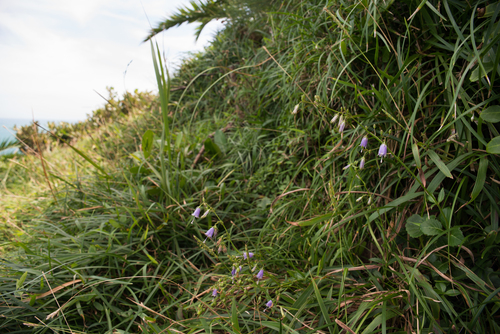
Campanula takesimana
Nakai
Korean bellflower
iNaturalist· cc-by
(c) mami_t_t, some rights reserved (CC BY)
iNaturalist· cc-by-nc
(c) Ryo.T, some rights reserved (CC BY-NC)
iNaturalist· cc-by-nc
(c) 登坂久雄, some rights reserved (CC BY-NC)
Summary
Source: WikipediaCampanula takesimana (Korean bellflower, Korean: 섬초롱꽃, seomchorongkkot) is a species of bellflower. It bears pink to white flowers. There are several cultivars available for the home gardener. Takesimana is seen as a less invasive alternative to Campanula punctata, its close relation. They are similar in appearance, though the flower shape of takesimana can appear more flared. Both range in colour from white to pink. The Korean herbal root, doraji (도라지), does not come from this plant, but rather from the Chinese bellflower (Platycodon grandiflorus), although do-ra-ji is usually translated from Korean as "bellflower".
Description
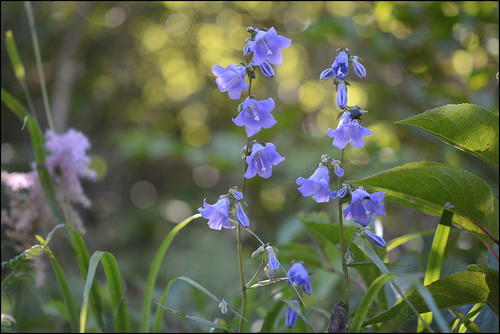
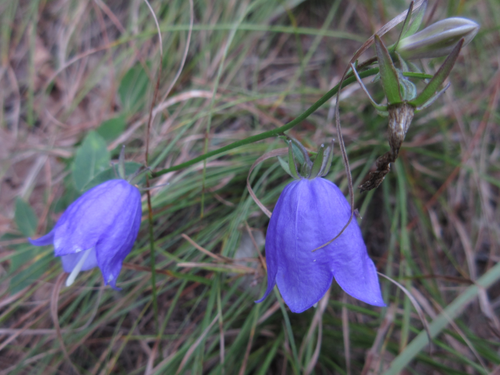
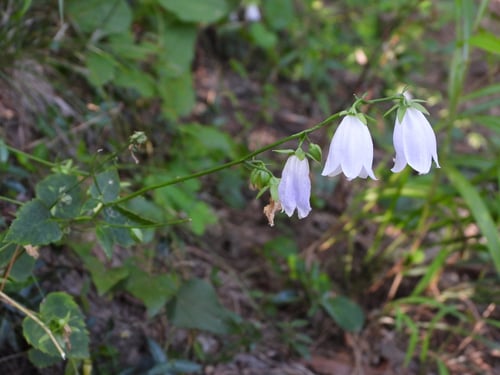
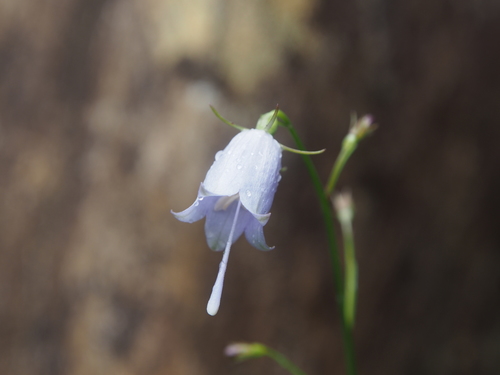
A perennial herb. It has fleshy stems. It grows 45-60 cm high and 45-90 cm wide. The leaves are toothed and heart-shaped. They are in a ring near the base. The flowers are narrow white bells on stalks above the leaves. They are flushed with purple and pink and have maroon spots.
Edible Uses
The leaves can be eaten raw or cooked. Their mild, subtly sweet flavour — particularly in spring and early summer — closely resembles lettuce, making them a pleasant addition to mixed salads. By midsummer, especially on plants growing in sunny positions, the leaves may develop a slightly bitter taste. The flowers are edible raw, offering a delicate sweetness and an attractive appearance that makes them a welcome addition to salads. The roots, known as 'do-ra-jee' in Korea where they are eaten as a delicacy, can be eaten raw, cooked, or dried for later use. Though small and fiddly to prepare, they are said to have an excellent flavour.
Traditional Uses
The leaves are par boiled and dried. They are also blanched and dried.
This uses section is brief — help expand it
Medicinal Uses
None known.
Known Hazards
None known.
Distribution
It is a temperate plant. It is frost hardy. It suits hardiness zones 4-9.
Where It Grows
Asia, Australia, Korea,
Cultivation
Prefers a moist but well-drained rich sandy loam and a neutral or alkaline soil in sun or partial shade. Succeeds in most well-drained soils. The species in this genus do not often hybridize and so seed can generally be relied upon to come true. The plants are self-fertile. This species is closely related to C. punctata. The plant spreads freely at the roots and can become rampant in lighter soils, though it is easily controlled by hoeing (or eating!). Members of this genus are rarely if ever troubled by browsing deer.
Propagation
Surface sow seed in situ in May or June; germination typically occurs within 2–4 weeks at 18°C. If seed is scarce, sow in pots in a cold frame in spring instead. Prick seedlings out into individual pots when large enough to handle and grow on in a cold frame through at least their first winter. Plant out in late spring or early summer after the last expected frosts. Division can be done in spring and is very straightforward — larger clumps can go directly into permanent positions, while smaller sections are better potted up and grown on in a cold frame until well rooted, then planted out in summer or the following spring.
Other Uses
None known.
Notes
There are about 300 Campanula species.
Also Known As
Mosinamul, Mosittakji, Mosittakkae
References (5)
- Cundall, P., (ed.), 2004, Gardening Australia: flora: the gardener's bible. ABC Books. p 322
- Joyce, D., 1998, The Garden Plant Selector. Ryland, Peters and Small. p 214
- Mori, Enum. pl. Corea 339. 1922
- Ong, H. G., et al, 2015, Ethnobotany of the wild edible plants gathered in Ulleung Island, South Korea. Genet Resourc Crop Evol. Springer
- Plants for a Future database, The Field, Penpol, Lostwithiel, Cornwall, PL22 0NG, UK. http://www.pfaf.org