Campanula garganica
Ten.
Adriatic bellflower
iNaturalist· cc-by-nc-nd
(c) Nicholas Turland, some rights reserved (CC BY-NC-ND)
iNaturalist· cc-by-nc
(c) Christian Gilli, some rights reserved (CC BY-NC)
iNaturalist· cc-by-nc
(c) Christian Gilli, some rights reserved (CC BY-NC)
Summary
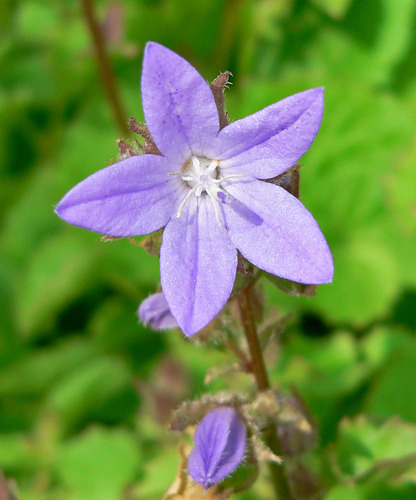
Source: WikipediaCampanula garganica, the Adriatic bellflower, syn. C. elatines var. garganica, is a species of flowering plant in the bellflower family Campanulaceae, native to Southern Europe. It is a small, spreading herbaceous perennial growing to 5 cm (2 in). Basal rosettes of leaves bear a profusion of star-shaped blue flowers in summer. Cultivars include 'Dickson's Gold', with gold-coloured foliage, and 'W.H. Paine', with white-centred, lilac coloured flowers. The latter has gained the Royal Horticultural Society's Award of Garden Merit, along with the species.
Description
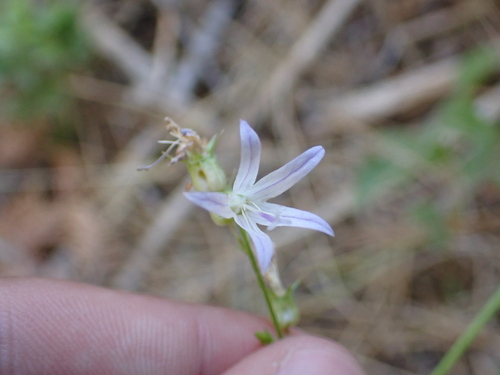
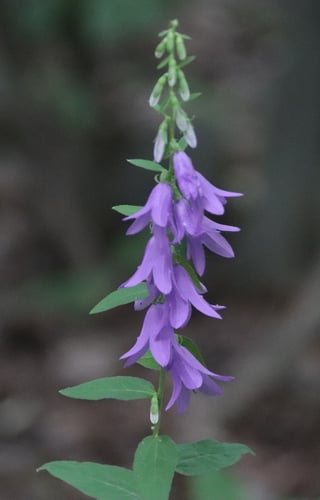
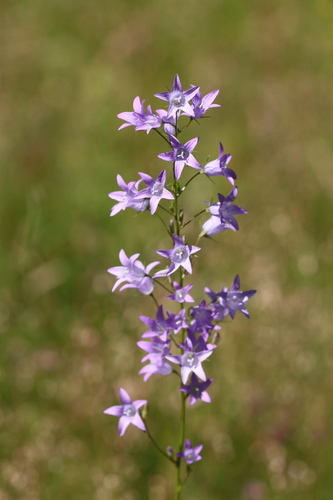
It is a perennial plant. It grows 5-10 cm high and 30-45 cm wide. The leaves are toothed and heart-shaped. They are bright green. The flowers are pale blue and starry.
Edible Uses
The leaves can be eaten raw or cooked. They are quite small but have a pleasant mild flavour and make a very acceptable addition to salads. The flowers are edible raw or cooked and are slightly sweet.
Medicinal Uses
None known.
Distribution
It is frost hardy. It suits hardiness zones 5-9.
Where It Grows
Australia, Europe, Italy, Mediterranean,
Cultivation
An easily grown plant, it succeeds in most fertile well-drained soils, though it prefers a moist but well-drained sandy loam and a neutral or alkaline soil in sun or partial shade. Flowers most freely when growing in full sun with a good supply of chalk or lime in the soil. Plants grow well in a wall so long as there is some soil for them to root into. Plants are hardy to at least -15°c. The species in this genus do not often hybridize and so seed can generally be relied upon to come true. The plants are self-fertile. Plants are often short-lived, though they are easily propagated by seed or basal cuttings. They also usually self-sow freely. This species is closely related to C. elatines. There are some named varieties selected for their ornamental value. 'Dickson's Gold' has golden-green leaves with a pleasant mild flavour. Members of this genus are rarely if ever troubled by browsing deer.
Propagation
Seed: Surface sow in spring in a cold frame. Germination typically occurs in 2–4 weeks at 18°C and is very easy. Once seedlings are large enough to handle, prick them out into individual pots and grow on in a cold frame for at least their first winter. Plant out into permanent positions in late spring or early summer, after the last expected frosts. Basal cuttings: Very easy. Take in spring, harvesting shoots when they are about 10–15cm long with plenty of underground stem. Pot into individual pots and keep in light shade in a cold frame or greenhouse until rooting well, then plant out in summer. Division: Divide in spring or autumn. Very easy. Larger clumps can be replanted directly into permanent positions, though smaller clumps are best potted up and grown on in a cold frame until rooting well, then planted out in summer or the following spring.
Other Uses
None known.
Notes
There are about 300 Campanula species.
Synonyms
References (5)
- App. ind. sem. 1827:3. 1827
- Cundall, P., (ed.), 2004, Gardening Australia: flora: the gardener's bible. ABC Books. p 320
- Hibbert, M., 2002, The Aussie Plant Finder 2002, Florilegium. p 58
- Joyce, D., 1998, The Garden Plant Selector. Ryland, Peters and Small. p 213
- Plants for a Future database, The Field, Penpol, Lostwithiel, Cornwall, PL22 0NG, UK. http://www.scs.leeds.ac.uk/pfaf/