Campanula glomerata
L.
Clustered bellflower
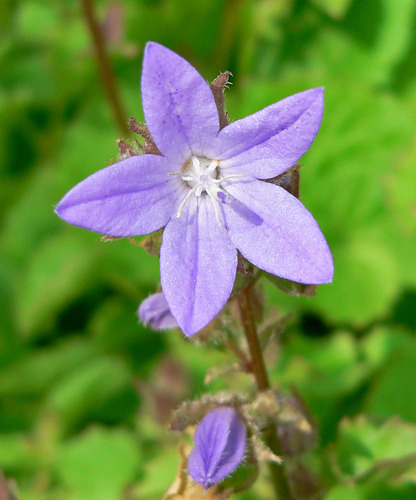
iNaturalist· cc-by-nc
(c) Alexander Wünsche, some rights reserved (CC BY-NC)
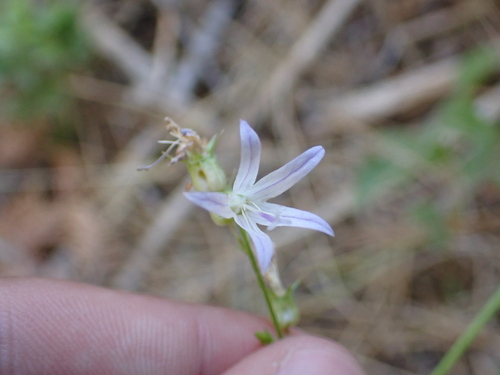
iNaturalist· cc-by-nc
(c) Andrey Efremov, some rights reserved (CC BY-NC), uploaded by Andrey Efremov
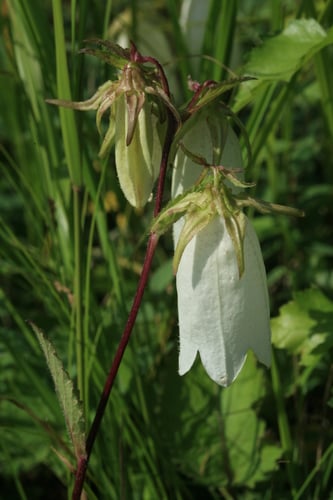
iNaturalist· cc-by-nc
(c) Alexander Wünsche, some rights reserved (CC BY-NC)
Summary
Source: WikipediaCampanula glomerata, known by the common names clustered bellflower or Dane's blood, is a species of flowering plant in the genus Campanula, belonging to the family Campanulaceae. It is the county flower of Rutland, England.
Description
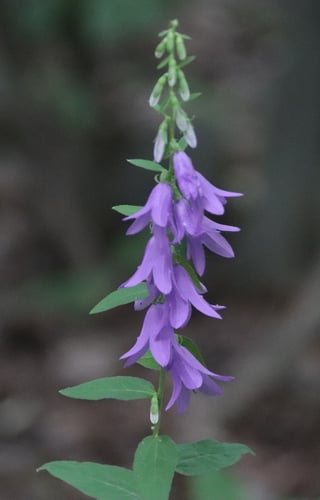
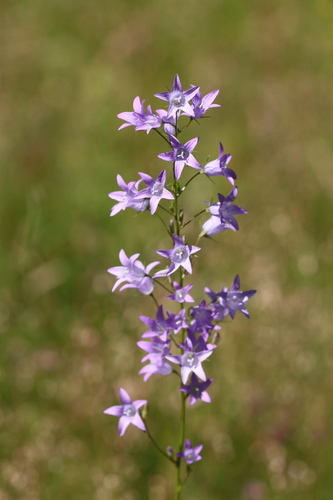
A herb which forms clumps by suckering. It grows 30-90 cm high and spreads 30-60 cm wide. The stems have bristles. The leaves at the base have long leaf stalks. The leaves are 8 cm long and have fine teeth around the edge. The leaves on the stem do not have stalks. They are smaller and clasp the stem. The flowers are blue and in round heads at the tips of the plant. They can also be in the axils of the leaves.
Edible Uses
The leaves can be eaten raw or cooked. They have a mild flavour with a pleasant sweetness and can be used as a major ingredient in salads. The flowers are eaten raw; they are beautiful to look at, carry a pleasant sweetness, and make a very attractive decoration to a salad.
Traditional Uses
The flowers are eaten raw. They are added to salads along with leaves. The young shoots are cooked as a vegetable.
This uses section is brief — help expand it
Medicinal Uses
None known.
Distribution
It is a temperate plant. It does best with rich, calcareous soil. It needs a protected sunny location. It suits hardiness zones 4-9.
Where It Grows
Asia, Australia, Balkans, Bosnia, Britain, Central Asia, China, Europe*, Georgia, Japan, Kazakhstan, Korea, Luxembourg, Mongolia, North America, Russia, Siberia, Tajikistan, Tasmania, Turkey, Türkiye, USA,
Cultivation
Prefers a moist but well-drained rich sandy loam and a neutral or alkaline soil in sun or partial shade. Succeeds in any well-drained soil in sun or partial shade. A very ornamental plant, there are several named forms. This is a very vigorous species and can be invasive, spreading by means of its creeping rootstock, when well suited to its site. Members of this genus are rarely if ever troubled by browsing deer. The species in this genus do not often hybridize and so seed can generally be relied upon to come true. The plants are self-fertile.
Propagation
Seed: Surface sow in spring in a cold frame. Germination typically occurs in 2–4 weeks at 18°C and is very easy. Once seedlings are large enough to handle, prick them out into individual pots and grow on in a cold frame for at least their first winter. Plant out into permanent positions in late spring or early summer, after the last expected frosts. Basal cuttings: Very easy. Take in spring, harvesting shoots when they are about 10–15cm long with plenty of underground stem. Pot into individual pots and keep in light shade in a cold frame or greenhouse until rooting well, then plant out in summer. Division: Divide in spring or autumn. Very easy. Larger clumps can be replanted directly into permanent positions, though smaller clumps are best potted up and grown on in a cold frame until rooting well, then planted out in summer or the following spring.
Other Uses
None known. Suitable for food forest planting.
Notes
There are about 300 Campanula species.
Synonyms
Also Known As
Dilkhami, Zbijeni zvoncic
References (13)
- Bodkin, F., 1991, Encyclopedia Botanica. Cornstalk publishing, p 207
- Bussman, R. W., et al, 2021, Unity in diversity—food plants and fungi of Sakartvelo (Republic of Georgia), Caucasus. Journal of Ethnobiology and Ethnomedicine (2021) 17:72 p 8
- Crawford, M., 2012, How to grow Perennial Vegetables. Green Books. p 79
- Cundall, P., (ed.), 2004, Gardening Australia: flora: the gardener's bible. ABC Books. p 320
- Dogan, Y., et al, 2004, The Use of Wild Edible Plants in Western and Central Anatolia (Turkey). Economic Botany 58(4) pp. 684-690
Show all 13 references Hide references
- Ertug, F, Yenen Bitkiler. Resimli Türkiye Florası -I- Flora of Turkey - Ethnobotany supplement
- Facciola, S., 1998, Cornucopia 2: a Source Book of Edible Plants. Kampong Publications, p 69
- Hibbert, M., 2002, The Aussie Plant Finder 2002, Florilegium. p 58
- Jackes, D. A., Edible Forest Gardens
- Plants for a Future database, The Field, Penpol, Lostwithiel, Cornwall, PL22 0NG, UK. http://www.pfaf.org
- Redzic, S. J., 2006, Wild Edible Plants and their Traditional Use in the Human Nutrition in Bosnia-Herzegovina. Ecology of Food and Nutrition, 45:189-232
- Sp. pl. 1:166. 1753
- Urgamal, M., Oyuntsetseg, B., Nyambayar, D. & Dulamsuren, Ch. 2014. Conspectus of the vascular plants of Mongolia. (Editors: Sanchir, Ch. & Jamsran, Ts.). Ulaanbaatar, Mongolia. “Admon“ Press. 334pp. (p. 158-187).