Camellia sinensis
(L.) Kuntze
Tea
iNaturalist· cc-by-sa
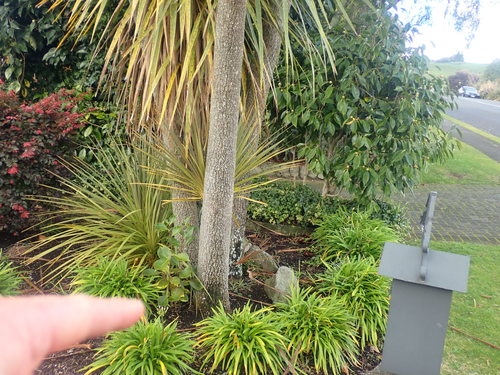
(c) Douglas Goldman, some rights reserved (CC BY-SA), uploaded by Douglas Goldman
iNaturalist· cc-by-nc-sa
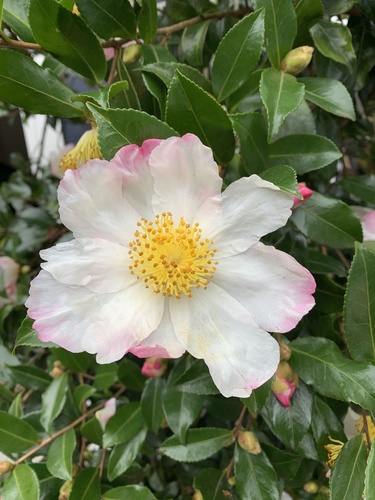
(c) Seongbin Im, some rights reserved (CC BY-NC-SA)
iNaturalist· cc-by-nc
(c) Prawestri Dinda, some rights reserved (CC BY-NC), uploaded by Prawestri Dinda
Summary
Source: WikipediaCamellia sinensis is a species of evergreen shrub or small tree in the flowering plant family Theaceae. Its leaves, leaf buds, and stems are used to produce tea. Common names include tea plant, tea shrub, and tea tree (unrelated to Melaleuca alternifolia, the source of tea tree oil, or the genus Leptospermum commonly called tea tree). White tea, yellow tea, green tea, oolong, dark tea (which includes pu-erh tea) and black tea are all made from two of the five varieties which form the main crops now grown, C. sinensis var. sinensis and C. s. var. assamica, but are processed differently to attain varying levels of oxidation with black tea being the most oxidized and white being the least. Kukicha (twig tea) is also made from C. sinensis, but uses twigs and stems rather than leaves.
Description
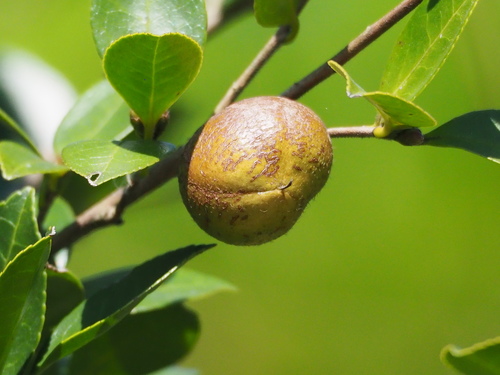
An evergreen tree. It grows to a height of 10-15 m and spreads 4 m across. Trees are normally pruned into bushes. The stem is slender. The bark is yellowish grey. It has a strong taproot and side roots just under the soil. The leaves are dark green and glossy. They are elongated and leathery. They can be 5-30 cm long. The leaves taper towards the base and the tip. The edges of the leaves have fine teeth along them. The leaf stalks are short. The flowers are white and small. They can occur either singly or in broad flat clusters. The fruit is a woody capsule. It can be 1.5 cm across. There are over 350 named cultivated varieties.
Edible Uses
Edible Parts: Leaves Oil Oil Shoots Edible Uses: Colouring Condiment Oil Oil Tea The leaves are infused in hot water and used as the drink that is commonly known as tea. It is widely drunk in many areas of the world. Green tea is made from the steamed and dried leaves, whilst black tea (the form most commonly drunk in the west) is made from leaves that have been fermented and then dried. Tea contains polyphenols, these are antioxidants that help to protect the body against heart diseases, stroke and cancer. It also contains the stimulant caffeine which, when taken in excess, can cause sleeplessness and irritability and also, through its action as a diuretic, act to remove nutrients from the body. Tea is also rich in tannin and is a possible cause of oesophageal cancer. Cold tea is sometimes used as a soaking liquid to flavour dried fruit. One report says that the leaves are used as a boiled vegetable. The leaves contain about 25.7% protein, 6.5% fat, 40.8% carbohydrate, 5% ash, 3.3% caffeine, 12.9% tannin. Terminal sprouts with 2-3 leaves are usually hand-plucked, 10 kg of green shoots (75-80% water) produce about 2.5 kg dried tea. The bushes are plucked every 7-15 days, depending on the development of the tender shoots. Leaves that are slow in development always make a better flavoured product. Various techniques are used to produce black teas, usually during July and August when solar heat is most intense. Freshly picked leaves are spread very thinly and evenly on trays and placed in the sun until the leaves become very flaccid, requiring 13 hours or more, depending on heat and humidity. Other types of black teas are made by withering the leaves, rolling them into a ball and allowing to ferment in a damp place for 3-6 hours, at which time the ball turns a yellowish copper colour, with an agreeable fruity one. If this stage goes too far, the leaves become sour and unfit for tea. After fermenting, the ball is broken up and the leaves spread out on trays and dried in oven until leaves are brittle and have slight odour of tea. Tea is then stored in air-tight tin boxes or cans. As soon as harvested, leaves are steamed or heated to dry the natural sap and prevent oxidation to produce green tea. Still soft and pliable after the initial treatment, the leaves are then rolled and subjected to further firing. Thus dried, the leaves are sorted into various grades of green tea. The flowers are made into 'tempura' using the edible oil that is obtained from the seed. A clear golden-yellow edible oil resembling sasanqua oil is obtained from the seed. The oil needs to be refined before it is eaten. An essential oil distilled from the fermented dried leaves is used as a commercial food flavouring. Tea extract is used as a flavour in alcoholic beverages, frozen dairy desserts, candy, baked goods, gelatines, and puddings. Tea is a potential source of food colours (black, green, orange, yellow, etc.). References More on Edible Uses Composition Figures in grams (g) or miligrams (mg) per 100g of food. Leaves (Dry weight) 0 Calories per 100g Water : 0% Protein: 25.7g; Fat: 6.5g; Carbohydrate: 40.8g; Fibre: 0g; Ash: 5g; Minerals - Calcium: 0mg; Phosphorus: 0mg; Iron: 0mg; Magnesium: 0mg; Sodium: 0mg; Potassium: 0mg; Zinc: 0mg; Vitamins - A: 0mg; Thiamine (B1): 0mg; Riboflavin (B2): 0mg; Niacin: 0mg; B6: 0mg; C: 0mg; Reference: Notes:
Traditional Uses
The leaves are used for tea. The leaves are fermented and eaten in Burma. They are prepared as a vegetable by mixing with garlic, salt, oil and other ingredients. The oil from the seeds is used as a sweetish seasoning and cooking oil.
Medicinal Uses
Antidiarrhoeal Antiemetic Astringent Cardiotonic Diuretic Dysentery Stimulant The tea plant is commonly used in Chinese herbalism, where it is considered to be one of the 50 fundamental herbs. Modern research has shown that there are many health benefits to drinking tea, including its ability to protect the drinker from certain heart diseases. It has also been shown that drinking tea can protect the teeth from decay, because of the fluoride naturally occurring in the tea. However, the tea also contains some tannin, which is suspected of being carcinogenic. The leaves are cardiotonic, diuretic, expectorant, stimulant and astringent. They exert a decided influence over the nervous system, giving a feeling of comfort and exhilaration, but also producing an unnatural wakefulness when taken in large doses. They are used internally in the treatment of diarrhoea, dysentery, hepatitis and gastro-enteritis. Tea is reportedly effective in clinical treatment of amoebic dysentery, bacterial dysentery, gastro-enteritis, and hepatitis. It has also been reported to have antiatherosclerotic effects and vitamin P activity. Excessive use, however, can lead to dizziness, constipation, constipation, indigestion, palpitations and insomnia. Externally, they are used as a poultice or wash to treat cuts, burns, bruises, insect bites, ophthalmia, swellings etc. Only the very young leaves and leaf buds are used, these can be harvested throughout the growing season from plants over three years old and are dried for later use. Teabags have been poulticed onto baggy or tired eyes, compressed onto headache, or used to bathe sunburn.
Distribution
A tropical and subtropical plant. It suits warm temperate climates. It needs light, humus rich soils. Soils should be well drained. A pH less than 6 is best. It requires an open sunny position. It is damaged by drought and by frost. It is common in the wet highlands of many tropical countries. A rainfall over 1,500 mm is suitable. Temperatures in the range 13°-30°C are suitable. In Nepal it grows between 450-1200 m altitude. It suits hardiness zones 10-12. Hobart Botanical Gardens. In Sichuan and Yunnan.
Where It Grows
Africa, Andaman Is., Argentina, Asia, Australia, Bangladesh, Bolivia, Brazil, Burundi, Cambodia, Caucasus, China*, East Africa, East Timor, Ethiopia, Europe, Fiji, Georgia, Hawaii, Himalayas, India, Indochina, Indonesia, Japan, Kenya, Korea, Laos, Madagascar, Malawi, Malaysia, Mauritius, Mozambique, Myanmar, Nepal, Northeastern India, Pacific, Papua New Guinea, PNG, Reunion, Russia, Sao Tome and Principe, Samoa, SE Asia, Seychelles, Sikkim, Sri Lanka, Taiwan, Tasmania, Thailand, Tibet, Timor-Leste, Trinidad-Tobago, Turkey, Türkiye, Uganda, USA, Vietnam, Zimbabwe,
Cultivation
Plants are normally grown by cuttings or layering. They can be grown from seed. Because the seed out breed, this produces a mixture of plants. For seed production special trees are kept and not pruned. The capsule matures after 9-12 months. Seed need to be sown fresh. Seeds can be sown in a nursery and transplanted, or sown and staked in the field. When seedlings are about 3-4 years old they are pruned back to about 10 cm from the ground then transplanted. From cuttings short stem cuttings with a single leaf and its bud in the leaf axil are used. These are grown in moist, shaded propagating nurseries. The cuttings are transplanted after about 1 year. Tea is commercially planted at 5,000-7,000 plants per hectare. That is a spacing of 1.2 m by 1.5 m. Trees are pruned to encourage side branches. The bush height is normally pruned to about 60 cm. The leaves grow in flushes at 70-90 day cycles. Two to four leaves are plucked each 7-14 days from the tree but only every 70-90 days from any one branch shoot. Plants are pruned back each 2-5 years.
Propagation
Seed - can be sown as soon as it is ripe in a greenhouse. Stored seed should be pre-soaked for 24 hours in warm water and the hard covering around the micropyle should be filed down to leave a thin covering. It usually germinates in 1 - 3 months at 23°c. Prick out the seedlings into individual pots when they are large enough to handle and grow them on in light shade in the greenhouse for at least their first winter. Plant them out into their permanent positions when they are more than 15cm tall and give them some protection from winter cold for their first year or three outdoors. Seedlings take 4 - 12 years before they start to produce seed. There are approximately 500 seeds per kilo. Cuttings of almost ripe wood, 10 - 15cm with a heel, August/September in a shaded frame. High percentage but slow. Cuttings of firm wood, 7 - 10cm with a heel, end of June in a frame. Keep in a cool greenhouse for the first year. Leaf-bud cuttings, July/August in a frame.
Other Uses
Dye Essential Oil Oil Tannin Wood An essential oil is distilled from the fermented and dried leaves. It is used in perfumery and in commercial food flavouring. A non-drying oil is obtained from the seeds. Refined teaseed oil, made by removing the free fatty acids with caustic soda, then bleaching the oil with Fuller's earth and a sprinkling of bone black, makes an oil suitable for use in manufacture of sanctuary or signal oil for burning purposes, and in all respects is considered a favourable substitute for rapeseed, olive, or lard oils. The oil is different from cottonseed, corn, or sesame oils in that it is a non-drying oil and is not subject to oxidation changes, thus making it very suitable for use in the textile industry; it remains liquid below -18deg.C. A grey dye is obtained from the pink or red petals. The leaves contain 13 - 18% tannin. The leaves also contain quercetin, a dyestuff that, when found in other plants, is much used as a dye. The quantity of quercetin is not given. Wood - moderately hard, close and even grained. It is very good for walking sticks. Special Uses Scented Plants
Production
Young tips are plucked, then wilted on trays for 18-24 hours, then crushed between rollers and fermented for 18-24 hours before drying at 100°C for half an hour. A shrub can live for 100 years.
Other Information
It is widely cultivated.
Notes
Green tea is made from freshly cut leaves and black tea is made from leaves which have been fermented. There are about 250-300 Camellia species. Tea contains about 50 mg of caffeine per cup. It has anticancer properties. Green tea probably helps against Cardiovascular Disease. Black tea has 21.1 mg per 100 g dry weight and 18.3 mg fresh weight of alpha-tocopherol (Vitamin E).
Synonyms
Also Known As
Cha, Chai, Chiya, Chashu, Chau-kung, Chiyapate, Ditevazaha, Laphet, Perdu teh, Pokok cha, Pokok teh, Saa schein, Thayili, Theyaku, Tra
References (65)
- Ambasta S.P. (Ed.), 2000, The Useful Plants of India. CSIR India. p 99
- Arora, R. K., 2014, Diversity in Underutilized Plant Species - An Asia-Pacific Perspective. Bioversity International. p 112
- Barwick, M., 2004, Tropical and Subtropical Trees. A Worldwide Encyclopedic Guide. Thames and Hudson p 86
- Bianchini, F., Corbetta, F., and Pistoia, M., 1975, Fruits of the Earth. Cassell. p 214
- Bircher, A. G. & Bircher, W. H., 2000, Encyclopedia of Fruit Trees and Edible Flowering Plants in Egypt and the Subtropics. AUC Press. p 76
Show all 65 references Hide references
- Bodkin, F., 1991, Encyclopedia Botanica. Cornstalk publishing, p 207 Bremness, L., 1994, Herbs. Collins Eyewitness Handbooks. Harper Collins. p 96
- Brouk, B., 1975, Plants Consumed by Man. Academic Press, London. p 354
- Burkill, I.H., 1966, A Dictionary of the Economic Products of the Malay Peninsula. Ministry of Agriculture and Cooperatives, Kuala Lumpur, Malaysia. Vol 1 (A-H) p 421
- Bussman, R. W., et al, 2016, A comparative ethnobotany of Khevsureti, Samtskhe-Javakheti, Tusheti, Svaneti, and Racha-Lechkhumi, Republic of Georgia (Sakartvelo), Caucasus. Journal of Ethnobiology and Ethnomedicine.
- Bussman, R. W. et al, 2017, Ethnobotany of Samtskhe-Javakheti, Sakartvelo (Republic of Georgia), Caucasus. Indian Journal of Traditional Knowledge Vol. 16(1) pp 7-24
- Bussman, R. W., et al, 2021, Unity in diversity—food plants and fungi of Sakartvelo (Republic of Georgia), Caucasus. Journal of Ethnobiology and Ethnomedicine (2021) 17:72 p 15
- Chen, B. & Qiu, Z., Consumer's Attitudes towards Edible Wild Plants, Ishikawa Prefecture, Japan. p 22 www.hindawi.com/journals/ijfr/aip/872413.pdf
- Ching, L. S. & Mohamed, S., 2001, Alpha-Tocopherol Content in 62 Edible Tropical Plants. J. Agric. Food Chem. 2001, 49, 3101−3105
- Cobley, L.S. (rev. Steele, W.M.) 2nd Ed., 1976, An Introduction to the Botany of Tropical Crops. Longmans. p 196
- Cundall, P., (ed.), 2004, Gardening Australia: flora: the gardener's bible. ABC Books. p 310
- Dharani, N., 2002, Field Guide to common Trees & Shrubs of East Africa. Struik. p 208
- Engel, D.H., & Phummai, S., 2000, A Field Guide to Tropical Plants of Asia. Timber Press. p 144
- Etherington, K., & Imwold, D., (Eds), 2001, Botanica's Trees & Shrubs. The illustrated A-Z of over 8500 trees and shrubs. Random House, Australia. p 175
- Facciola, S., 1998, Cornucopia 2: a Source Book of Edible Plants. Kampong Publications, p 69
- Gardner, S., et al, 2000, A Field Guide to Forest Trees of Northern Thailand, Kobfai Publishing Project. p 56
- Hedrick, U.P., 1919, (Ed.), Sturtevant's edible plants of the world. p 146 (As Camellia thea)
- Hu, Shiu-ying, 2005, Food Plants of China. The Chinese University Press. p 555
- Katende, A.B., Birnie, A & Tengnas B., 1995, Useful Trees and Shrubs for Uganda. Identification, Propagation and Management for Agricultural and Pastoral Communities. Technical handbook No 10. Regional Soil Conservation Unit, Nairobi, Kenya. p 152
- Kew Plants of the World Online
- Kintzios, S. E., 2006, Terrestrial Plant-Derived Anticancer Agents and Plant Species Used in Anticancer research. Critical Reviews in Plant Sciences. 25: pp 79-113
- Kiple, K.F. & Ornelas, K.C., (eds), 2000, The Cambridge World History of Food. CUP p 1866
- Lazarides, M. & Hince, B., 1993, Handbook of Economic Plants of Australia, CSIRO. p 45
- Liu, Yi-tao, & Long, Chun-Lin, 2002, Studies on Edible Flowers Consumed by Ethnic Groups in Yunnan. Acta Botanica Yunnanica. 24(1):41-56
- Lord, E.E., & Willis, J.H., 1999, Shrubs and Trees for Australian gardens. Lothian. p 210
- Lyle, S., 2006, Discovering fruit and nuts. Land Links. p 95
- Manandhar, N.P., 2002, Plants and People of Nepal. Timber Press. Portland, Oregon. p 130
- Marinelli, J. (Ed), 2004, Plant. DK. p 94
- Martin, F.W. & Ruberte, R.M., 1979, Edible Leaves of the Tropics. Antillian College Press, Mayaguez, Puerto Rico. p 106, 221
- Molla, A., Ethiopian Plant Names. http://www.ethiopic.com/aplants.htm
- Murtem, G. & Chaudhrey, P., 2016, An ethnobotanical note on wild edible plants of Upper Eastern Himalaya, India. Brazilian Journal of Biological Sciences, 2016, v. 3, no. 5, p. 63-81.
- Parham, B. E. V., 1972, Plants of Samoa. New Zealand Department of Scientific and Industrial Research. Information Series. No. 85 p 127
- Pham-Hoang Ho, 1999, An Illustrated Flora of Vietnam. Nha Xuat Ban Tre. p 430
- Phon, P., 2000, Plants used in Cambodia. © Pauline Dy Phon, Phnom Penh, Cambodia. p 126
- Plants for a Future database, The Field, Penpol, Lostwithiel, Cornwall, PL22 0NG, UK. http://www.scs.leeds.ac.uk/pfaf/
- Polunin, O., & Stainton, A., 2006, Flowers of the Himalaya, Oxford India Paperbacks. p 58
- Purseglove, J.W., 1968, Tropical Crops Dicotyledons, Longmans. p 599
- Rashid, H. E., 1977, Geography of Bangladesh. Westview. p 303 (As Thea camellia)
- Recher, P, 2001, Fruit Spirit Botanical Gardens Plant Index. www.nrg.com.au/~recher/ seedlist.html p 3 (As Thea sinensis)
- Reis, S. V. and Lipp, F. L., 1982, New Plant Sources for Drugs and Foods from the New York Botanical Garden herbarium. Harvard. p 185 (As Thea oleosa)
- Savita, et al, 2006, Studies on wild edible plants of ethnic people in east Sikkim. Asian J. of Bio Sci. (2006) Vol. 1 No. 2 : 117-125
- Smith, A.C., 1981, Flora Vitiensis Nova, Lawaii, Kuai, Hawaii, Volume 2 p 322
- Smith, N., Mori, S.A., et al, 2004, Flowering Plants of the Neotropics. Princeton. p 370
- Solomon, C., 2001, Encyclopedia of Asian Food. New Holland. p 376
- Staples, G.W. and Herbst, D.R., 2005, A tropical Garden Flora. Bishop Museum Press, Honolulu, Hawaii. p 546
- Sukarya, D. G., (Ed.) 2013, 3,500 Plant Species of the Botanic Gardens of Indonesia. LIPI p 603
- Sukenti, K., et al, 2016, Ethnobotanical study on local cuisine of the Sasak tribe in Lombok Island, Indonesia. Journal of Ethnic Foods. 3 (2016) 189-200 p 198
- Syarfina, F., et al, 2017, The relation between green tea consumption and CVD (cardiovascular disease) development as action plan for the prevention and control: A systematic review. China Botanical Congress.
- Trudy Imp. S.-Peterburgsk. Bot. Sada 10:195. 1887*
- Valder, P., 1999, The Garden Plants of China. Florilegium. p 148
- van Wyk, B., 2005, Food Plants of the World. An illustrated guide. Timber press. p 112
- Vickery, M.L. and Vickery, B., 1979, Plant Products of Tropical Africa, Macmillan. p 59
- Visser, T., 1979, Tea, in Simmonds N.W.,(ed), Crop Plant Evolution. Longmans. London. p 18
- Wiersema, J. H. & Leon, B., 2013, World Economic Plants. A Standard Reference CRC Press. 2nd Ed. p 135
- Williams, C.N., Chew, W.Y., and Rajartnam, J.A., 1989, Tree and Field Crops of the Wetter Regions of the Tropics. Longman, p 68
- Williamson, J., 2005, Useful Plants of Malawi. 3rd. Edition. Mdadzi Book Trust. p 50
- Woo, Y., et al, 2017, Antioxidant Potential of Selected Korean Edible Plant Extracts. Hindawi BioMed Research International Volume 2017, Article ID 7695606
- www.wildediblefood.com
- Yasukawa, K., Medicinal and Edible Plants as Cancer Preventive Agents. Drug Discovery Research in Pharmacognosy. p185 www.intechopen.com
- Young, J., (Ed.), 2001, Botanica's Pocket Trees and Shrubs. Random House. p 188
- Zeven, A. C. & de West, J. M. J., 1982, Dictionary of cultivated plants and their regions of diversity. Wageningen. p 79