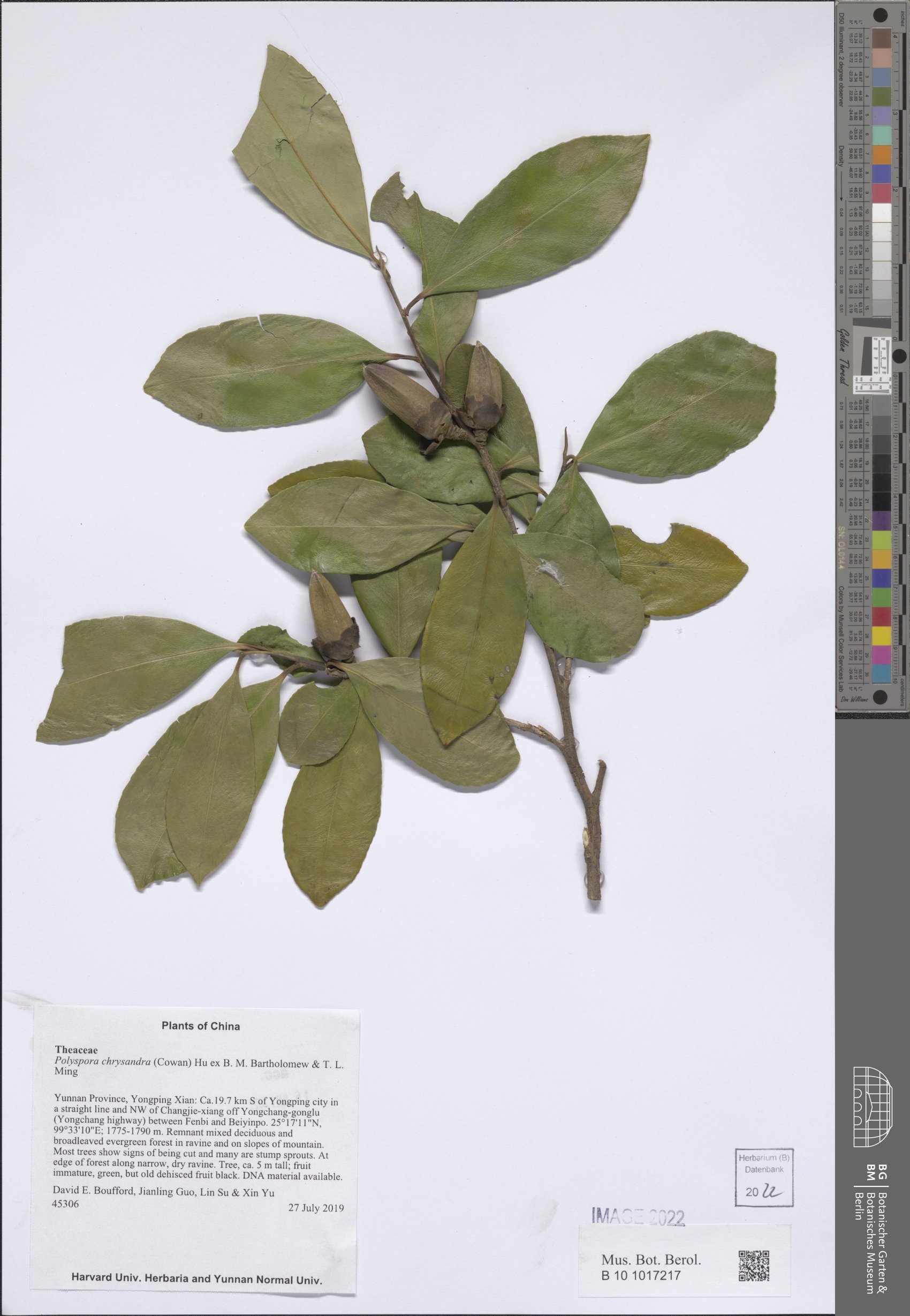
Camellia kissii
Wall.
Kissi, Let-pet tea of Burma
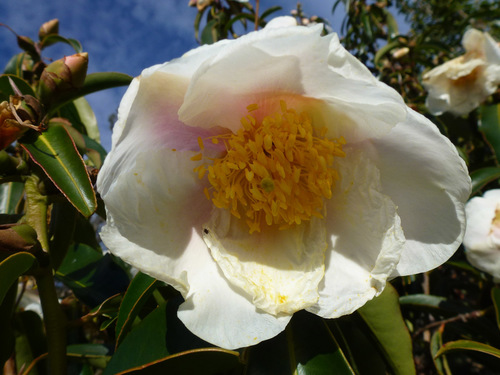
iNaturalist· cc-by-nc
(c) T. Abe Lloyd, some rights reserved (CC BY-NC), uploaded by T. Abe Lloyd
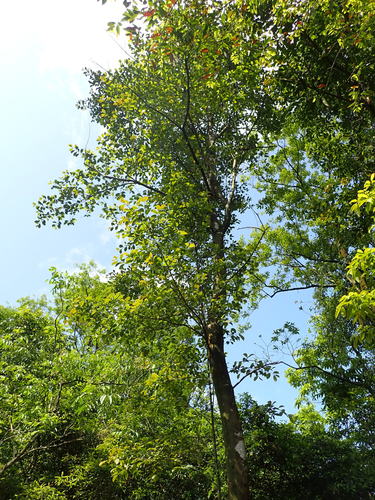
iNaturalist· cc-by-nc
(c) tkp123, some rights reserved (CC BY-NC)
Description
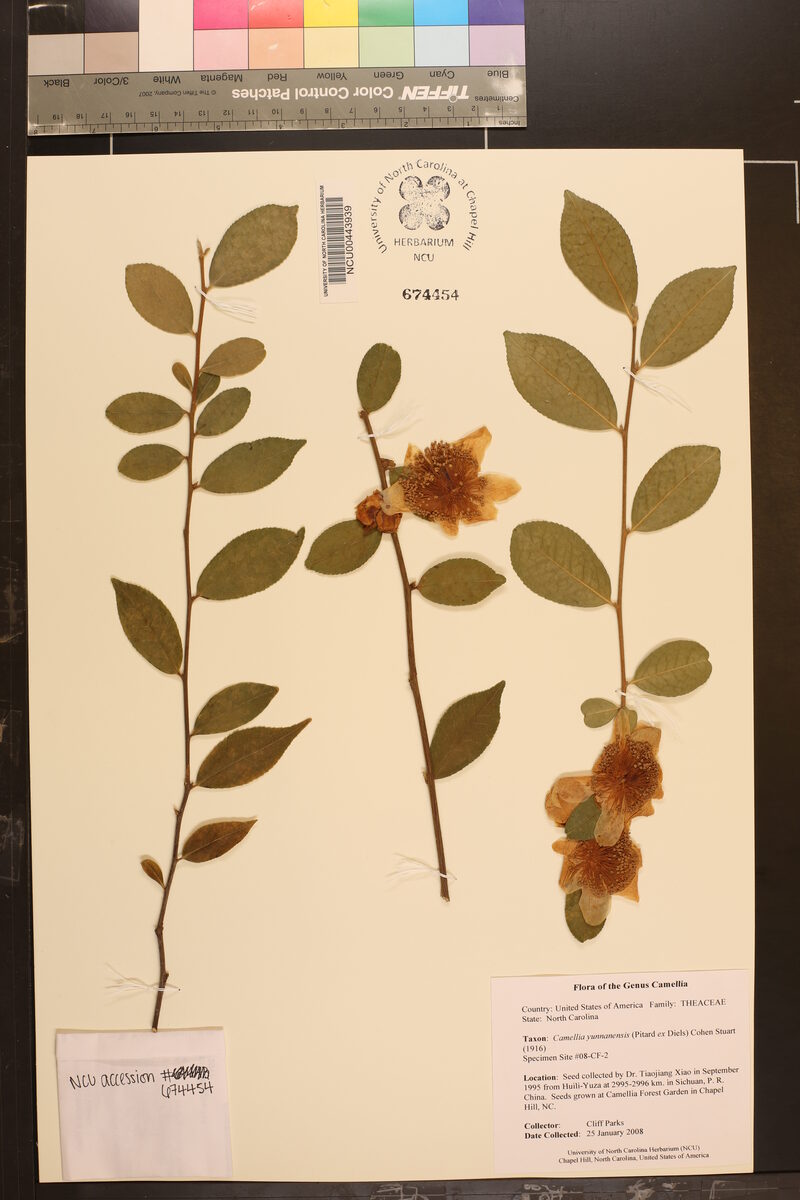
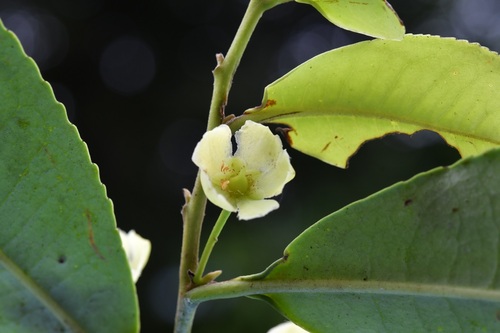
A shrub 2m to 12 m high. The leaves have short stalks. The leaves are 3-10 cm long by 1.5-4.5 cm wide. The leaves are oval and have teeth along the edge. The flowers are single and in the axils of leaves. They are white and fragrant. The fruit is a capsule. It is round and reddish.
Edible Uses
Edible Parts: Fruit Oil Edible Uses: Oil Tea An oil is obtained from the seed. It is used for cooking. A tea is made from the steamed then dried leaves. It is used as a substitute for China tea (obtained from C. sinensis). The flowers are boiled then pickled. The fruit is said to be edible. This seems a very strange report, the fruit is a dry wooden capsule.
Traditional Uses
Tea is made from the leaves. They are steamed, dried and used as a substitute for tea.
This uses section is brief — help expand it
Medicinal Uses
Miscellany The oil is much valued in medicine. No more details given.
Distribution
It is a subtropical plant. It grows in evergreen forest between 1,000 and 2,100 m altitude. In Nepal it grows between 900-2100 m altitude. It grows on moist ground in hill forest. In Melbourne Botanical Gardens. In Yunnan.
Where It Grows
Asia, Australia, Bhutan, Cambodia, China, Himalayas, India, Indochina, Laos, Myanmar, Nepal, Northeastern India, SE Asia, Sikkim, Thailand, Vietnam,
Cultivation
Plants can be grown from seed or cuttings.
Propagation
Seed - can be sown as soon as it is ripe in a greenhouse. Stored seed should be pre-soaked for 24 hours in warm water and the hard covering around the micropyle should be filed down to leave a thin covering. It usually germinates in 1 - 3 months at 23°c. Prick out the seedlings into individual pots when they are large enough to handle and grow them on in light shade in the greenhouse for at least their first winter. Plant them out into their permanent positions when they are more than 15cm tall and give them some protection from winter cold for their first year or three outdoors. Cuttings of almost ripe wood, 10 - 15cm with a heel, August/September in a shaded frame. High percentage but slow. Cuttings of firm wood, 7 - 10cm with a heel, end of June in a frame. Keep in a cool greenhouse for the first year. Leaf-bud cuttings, July/August in a frame.
Other Uses
Miscellany Oil None known Special Uses
Notes
There are about 250-300 Camellia species.
Synonyms
Also Known As
Ban chiya, Diend-tyrnem-bhai, Hinguwa, Sa reng reng, Tra nhuy-ngan, Yua Cha Shue
References (13)
- Altschul, S.V.R., 1973, Drugs and Foods from Little-known Plants. Notes in Harvard University Herbaria. Harvard Univ. Press. Massachusetts. no. 2836
- Ambasta S.P. (Ed.), 2000, The Useful Plants of India. CSIR India. p 99
- Asiat. Res. 13:429. 1820
- Bircher, A. G. & Bircher, W. H., 2000, Encyclopedia of Fruit Trees and Edible Flowering Plants in Egypt and the Subtropics. AUC Press. p 76 (As kissi)
- Facciola, S., 1998, Cornucopia 2: a Source Book of Edible Plants. Kampong Publications, p 69
Show all 13 references Hide references
- Hibbert, M., 2002, The Aussie Plant Finder 2002, Florilegium. p 54
- Manandhar, N.P., 2002, Plants and People of Nepal. Timber Press. Portland, Oregon. p 130
- Plants for a Future database, The Field, Penpol, Lostwithiel, Cornwall, PL22 0NG, UK. http://www.scs.leeds.ac.uk/pfaf/
- Polunin, O., & Stainton, A., 2006, Flowers of the Himalaya, Oxford India Paperbacks. p 58
- Sundriyal, M., et al, 1998, Wild edibles and other useful plants from the Sikkim Himalaya, India. Oecologia Montana 7:43-54
- Sundriyal, M., et al, 2004, Dietary Use of Wild Plant Resources in the Sikkim Himalaya, India. Economic Botany 58(4) pp 626-638
- Teron, R. & Borthakur, S. K., 2016, Edible Medicines: An Exploration of Medicinal Plants in Dietary Practices of Karbi Tribal Population of Assam, Northeast India. In Mondal, N. & Sen, J.(Ed.) Nutrition and Health among tribal populations of India. p 156
- Wild edible plants of Himachal Pradesh