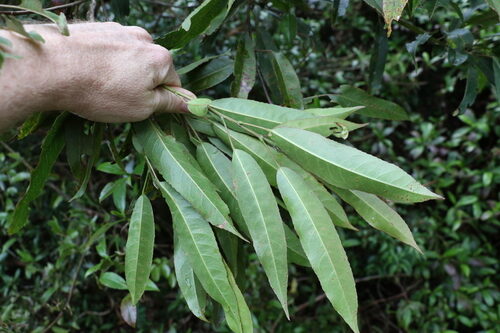
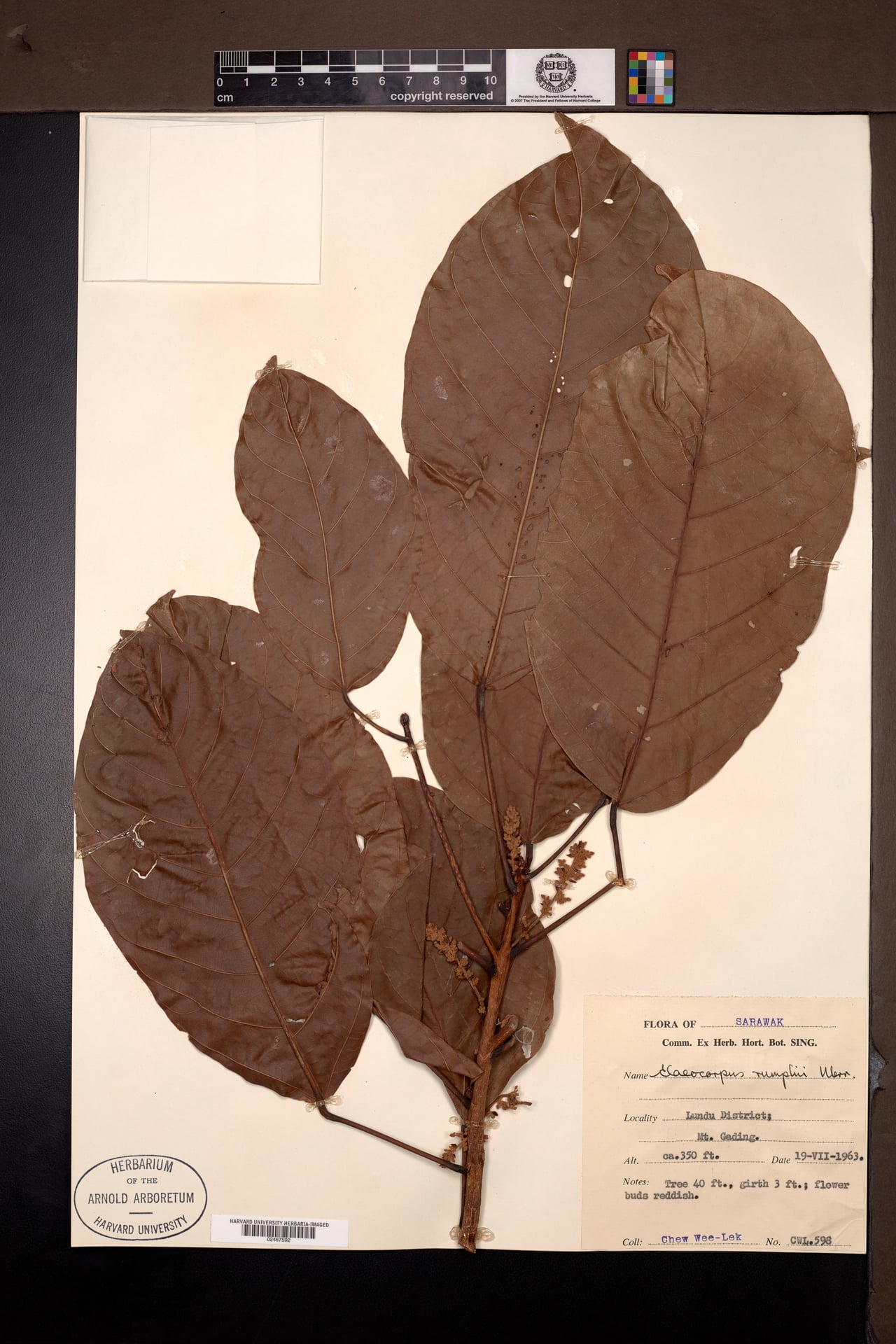
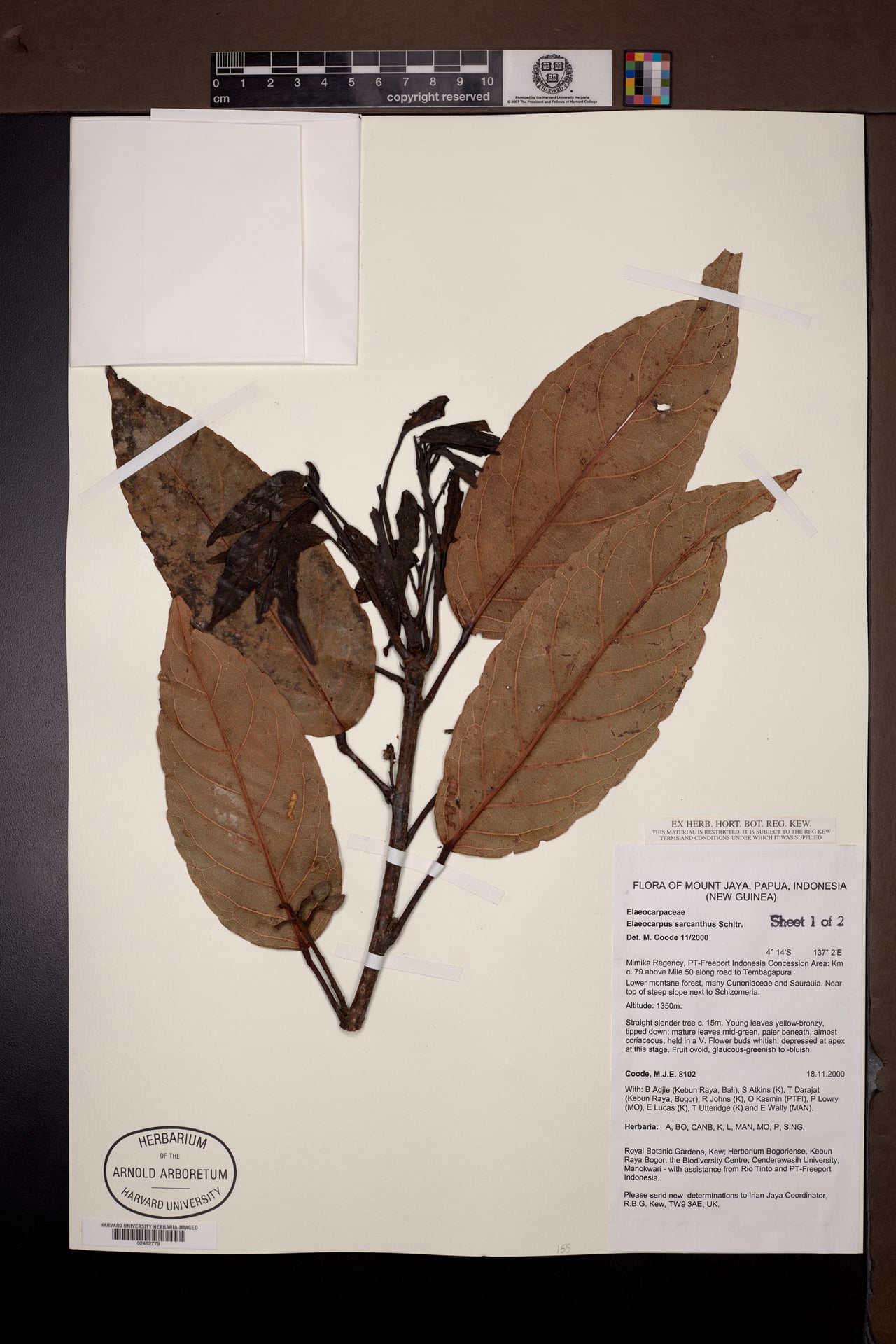
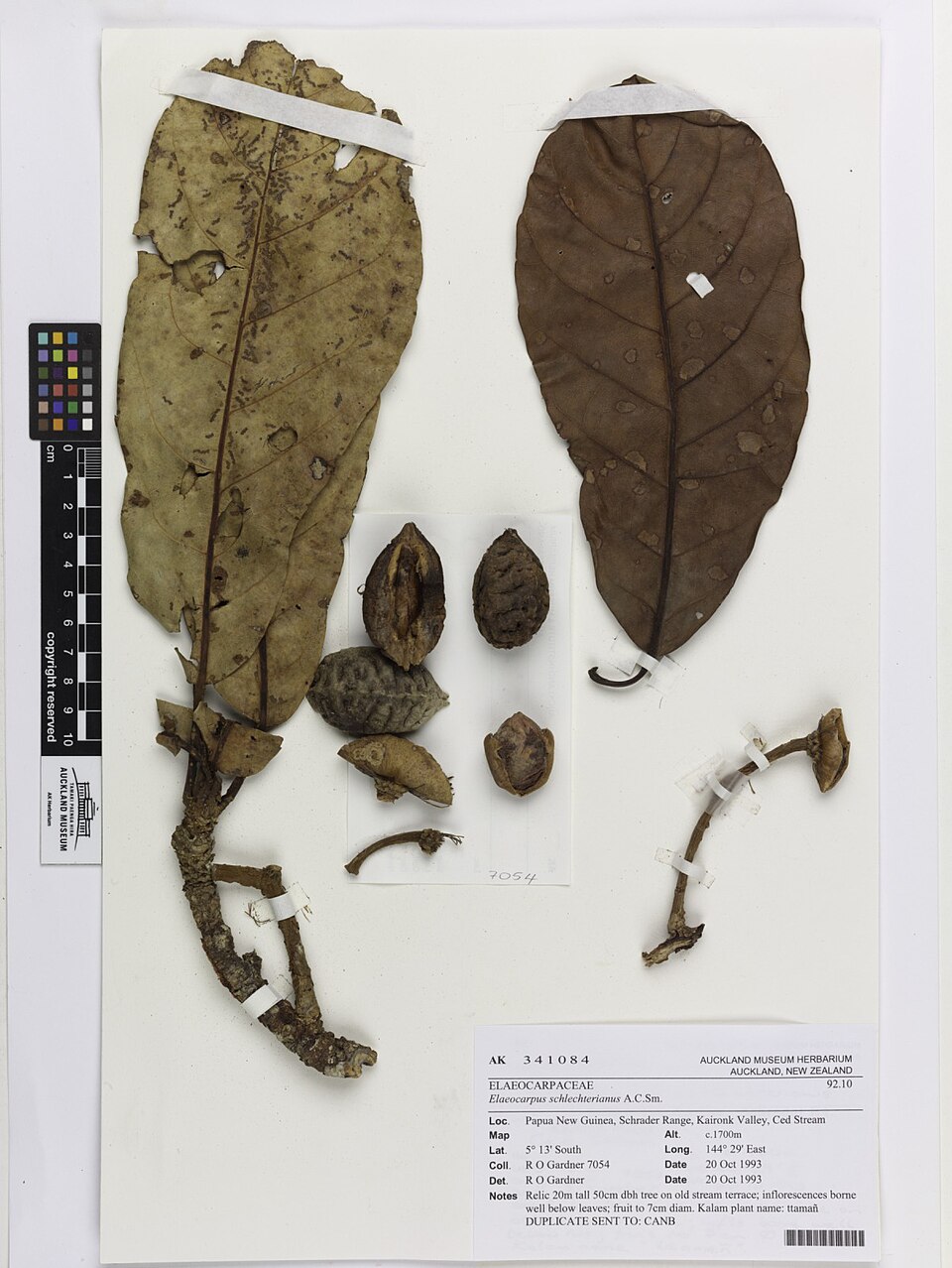
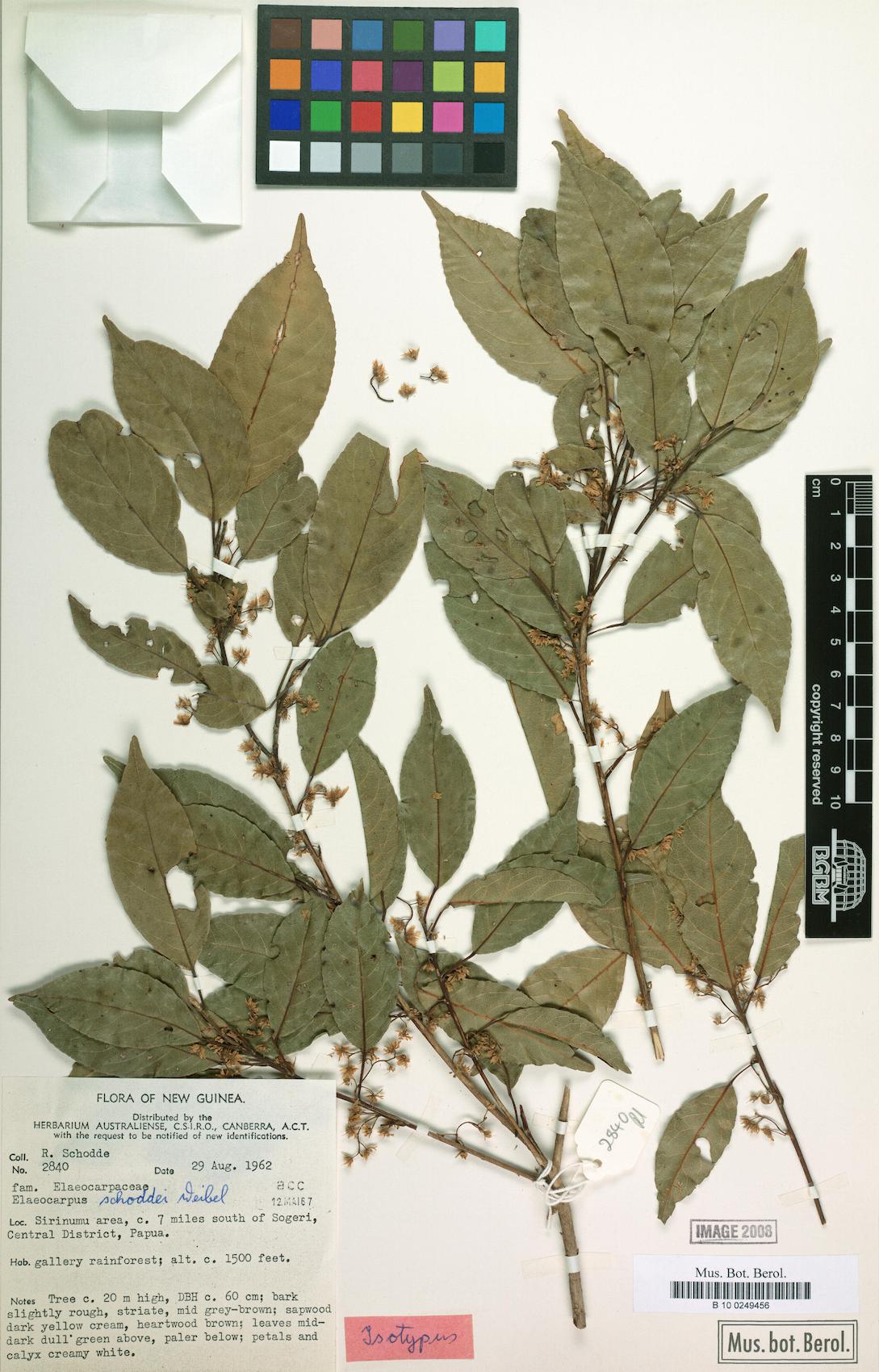
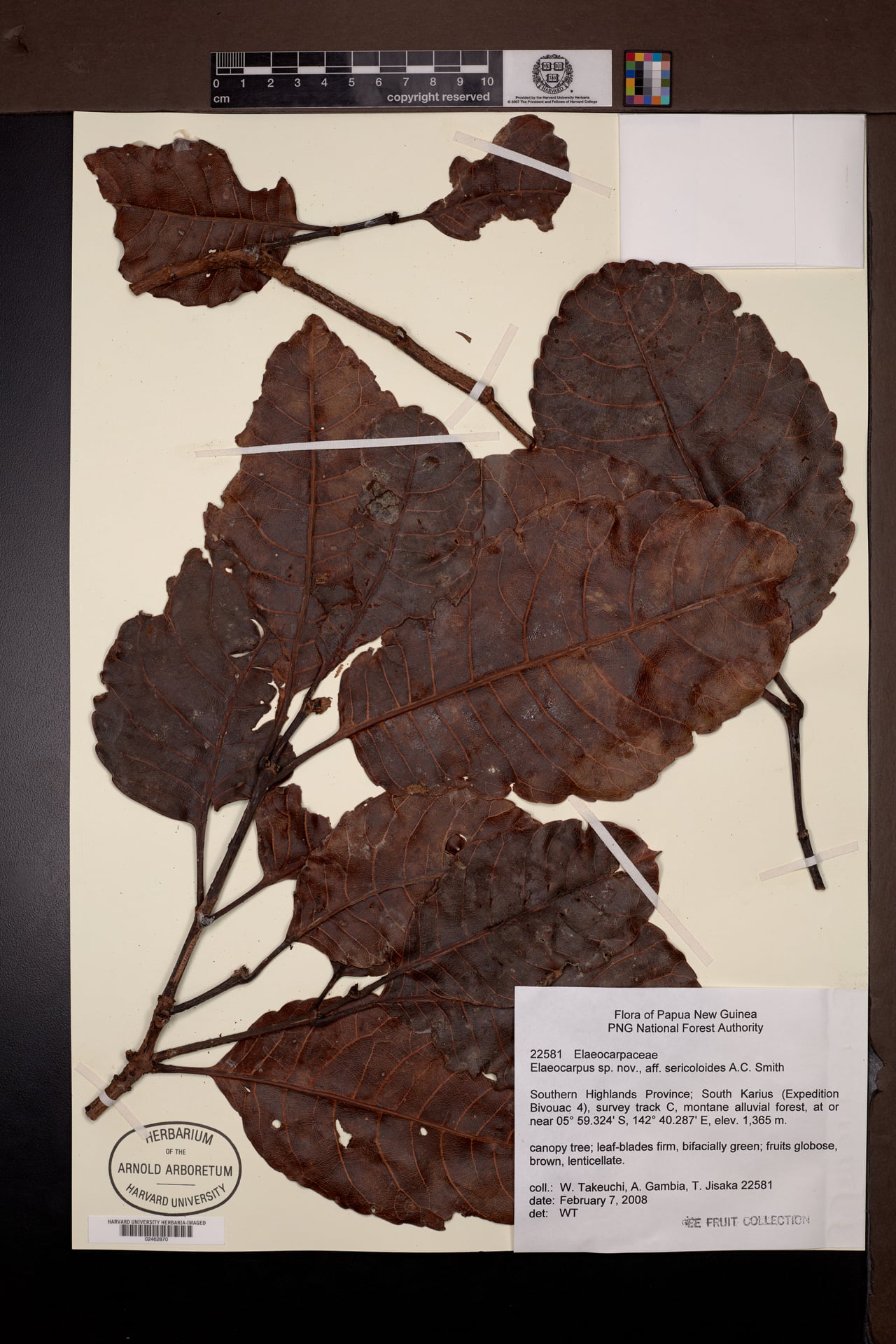
Aceratium ferrugineum
C. T. White
Rusty Carabeen
iNaturalist· cc-by-nc
(c) sworboys, some rights reserved (CC BY-NC), uploaded by sworboys
iNaturalist· cc-by-nc
(c) frankaz, some rights reserved (CC BY-NC)
iNaturalist· cc-by-nc
(c) frankaz, some rights reserved (CC BY-NC)
Summary
Source: WikipediaAceratium ferrugineum is a species of medium-sized trees, commonly known as rusty carabeen, constituting part of the plant family Elaeocarpaceae. They are endemic to the Wet Tropics of Queensland in Australia. Aceratium ferrugineum only grows in luxuriant, mature, mountain rainforests on the Mount Carbine Tableland between Black Mountain and Mount Spurgeon, and on Mount Lewis.
Description
A shrub or small tree. It grows 5 m tall. There are prickles along the stem. The leaves are twice divided and there are 8-18 pairs of pinnae. There are up to 50 pairs of pinnules on each pinnae. The flowers are yellow. They are in large clusters at the ends of branches. The pods are flattened.
Edible Uses
The flesh of the fruit is eaten.
Traditional Uses
The flesh of the fruit is eaten.
This uses section is brief — help expand it
Known Hazards
Seeds are difficult to propagate from; aerial layering or cuttings are preferred propagation methods.
Distribution
It occurs in Australia in north east Queensland at high altitudes in the rainforest. It grows between 900-1300 m altitude. It prefers a cooler climate with acid well drained soil. It needs regular watering during dry periods.
Where It Grows
Australia*,
Cultivation
Seeds are hard to get to grow. Aerial layering can be used and the plant will naturally form aerial roots where branches join. Cuttings of the stem can be used but with difficulty.
Production
Fruiting is August to May.
Notes
There are 20 Aceratium species.
References (6)
- Cooper, W. & Cooper, W. T., 1994, Fruits of the Rain Forest. RD Press p 12
- Cooper, W. and Cooper, W., 2004, Fruits of the Australian Tropical Rainforest. Nokomis Editions, Victoria, Australia. p 157
- Elliot, W.R., & Jones, D.L., 1982, Encyclopedia of Australian Plants suitable for cultivation. Vol 2. Lothian. p 135
- Jones D, L, 1986, Ornamental Rainforest Plants in Australia, Reed Books, p 140
- Nicholson, N & H., 1994, Australian Rainforest Plants 4, Terania Rainforest Publishing. NSW. p 5
Show all 6 references Hide references
- Townsend, K., 1994, Across the Top. Gardening with Australian Plants in the tropics. Society for Growing Australian Plants, Townsville Branch Inc. p 67