Asparagus aphyllus
Linn.
Prickly asparagus
iNaturalist· cc-by
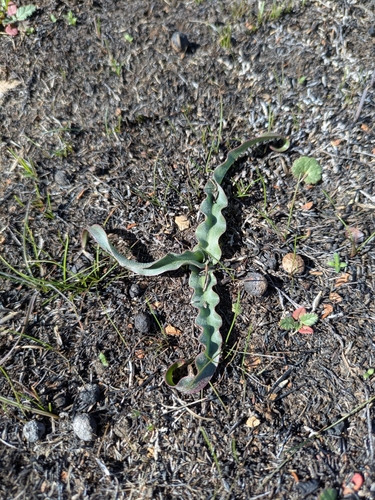
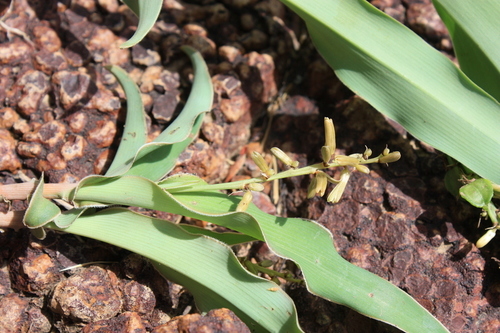
(c) Duarte Frade, some rights reserved (CC BY), uploaded by Duarte Frade
iNaturalist· cc-by-nc
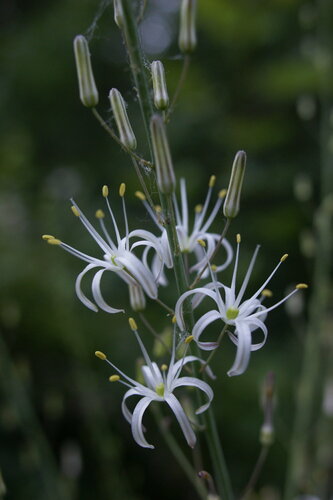
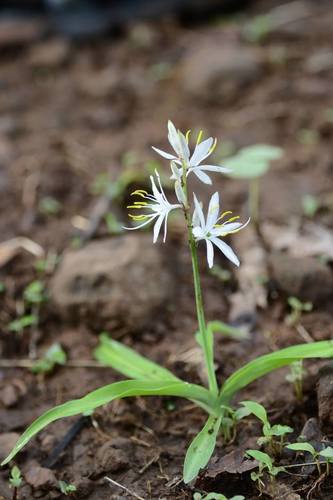
(c) David Claro, some rights reserved (CC BY-NC), uploaded by David Claro
iNaturalist· cc-by-nc
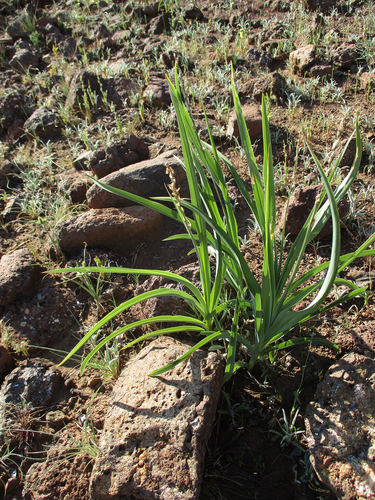
(c) Uriah Resheff, some rights reserved (CC BY-NC), uploaded by Uriah Resheff
Summary
Source: WikipediaAsparagus aphyllus is a species of plants in the family Asparagaceae. They are climbing plants. Flowers are visited by the Western honey bee, Syritta pipiens, Phthiria, and Halictus.
Description
A tall plant. It can be 1 m tall. The stems are woody and have many branches. They are smooth and green. The flattened green stems are unequal and occur in clusters of 3-7. They are 10-20 mm long and have spines at their tips. Plants are separately male or female. The flowers are in groups of 3-6. They are 3-4 mm long. They are yellowish green. They have a sweet scent. The flowers are mixed with the leaves. The fruit is a berry which is black when ripe. It is 7-8 mm across.
Edible Uses
Edible Parts: Shoots Stem Edible Uses: Young shoots - raw or cooked. A slightly bitter flavour.
Traditional Uses
The slightly bitter young shoots are eaten raw or cooked. They are used in vegetable dishes and soups.
This uses section is brief — help expand it
Medicinal Uses
None known
Distribution
It is a Mediterranean climate plant. It grows in rocky habitats and scrub.
Where It Grows
Africa, Australia, Crete, Europe, Greece, Israel, Italy, Jordan, Libya, Mediterranean, Middle East, North Africa, Palestine, Portugal, Sicily, Spain,
Cultivation
We have very little information on this species and do not know if it will be hardy in Britain, though judging by its native range it could succeed outdoors in many parts of this country. The following notes are based on the general needs of the genus. Easily grown in any good garden soil. Prefers a rich sandy loam. Dioecious. Male and female plants must be grown if seed is required.
Propagation
Seed - pre-soak for 12 hours in warm water and then sow in spring or as soon as the seed is ripe in early autumn in a greenhouse. It usually germinates in 3 - 6 weeks at 25°c. Prick out the seedlings into individual pots when they are large enough to handle and grow them on in a sunny position in the greenhouse for their first winter. Plant them out into their permanent positions in late spring or early summer. Division in early spring as the plant comes into growth.
Other Uses
None known Special Uses
Notes
There are between 160-300 Asparagus species.
Also Known As
Ajram, Halyn, Sparaciu niuru, Sparagi, Sparangia
References (16)
- Ali-Shtayeh, M. S., et al, 2008, Traditional knowledge of wild edible plants used in Palestine (Northern West Bank): A comparative study. J Ethnobiol Ethnomed. 4: 13
- Al-Qura'n, S. A., 2010, Ethnobotanical and Ecological Studies of Wild Edible Plants in Jordan. Libyan Agriculture Research Center Journal International 1(4):231-243
- Blamey, M and Grey-Wilson, C., 2005, Wild flowers of the Mediterranean. A & C Black London. p 483
- Dretakis, M. et al, 2012, Flora and Fauna Biodiversity in an ancient olive grove in Crete (Greece) in Calabrese G. (Ed.) Study on Biodiversity in Century-Old Olive Groves. CIHEAM - Mediterranean Agronomic Institute of Bari. p 94
- Facciola, S., 1998, Cornucopia 2: a Source Book of Edible Plants. Kampong Publications, p 32
Show all 16 references Hide references
- Geraci, A., et al, 2018, The wild taxa utilized as vegetables in Sicily (Italy): a traditional component of the Mediterranean diet. Journal of Ethnobiology and Ethnomedicine (2018) 14:14
- Hedrick, U.P., 1919, (Ed.), Sturtevant's edible plants of the world. p 80
- Hinnawi, N. S. A., 2010, An ethnobotanical study of wild edible plants in the Northern West Bank "Palestine". An-Najah National University. p 94
- Jardin, C., 1970, List of Foods Used In Africa, FAO Nutrition Information Document Series No 2.p 57
- Mahklouf, M. H., 2019, Ethnobotanical Study of Edible Wild Plants in Libya. European Journal of Ecology. 5(2): 30-40
- Martin, F.W. & Ruberte, R.M., 1979, Edible Leaves of the Tropics. Antillian College Press, Mayaguez, Puerto Rico. p 202
- Mayer-Chussuck, U & Lev, E., 2014, Wild Edible Plants in Israel Tradition Versus Cultivation. in Z. Yaniv, N. Dudai (eds.), Medicinal and Aromatic Plants of the Middle-East, Springer
- Pasta, S., et al, 2020, An Updated Checklist of the Sicilian Native Edible Plants: Preserving the Traditional Ecological Knowledge of Century-Old Agro-Pastoral Landscapes. Frontiers in Plant Science. Volume 11|Article 388
- Sp. pl. 1:314. 1753
- Tukan, S. K., et al, 1998, The use of wild edible plants in the Jordanian diet. International Journal of Food Sciences and Nutrition. 49:225-235
- World Checklist of Useful Plant Species 2020. Royal Botanic Gardens, Kew