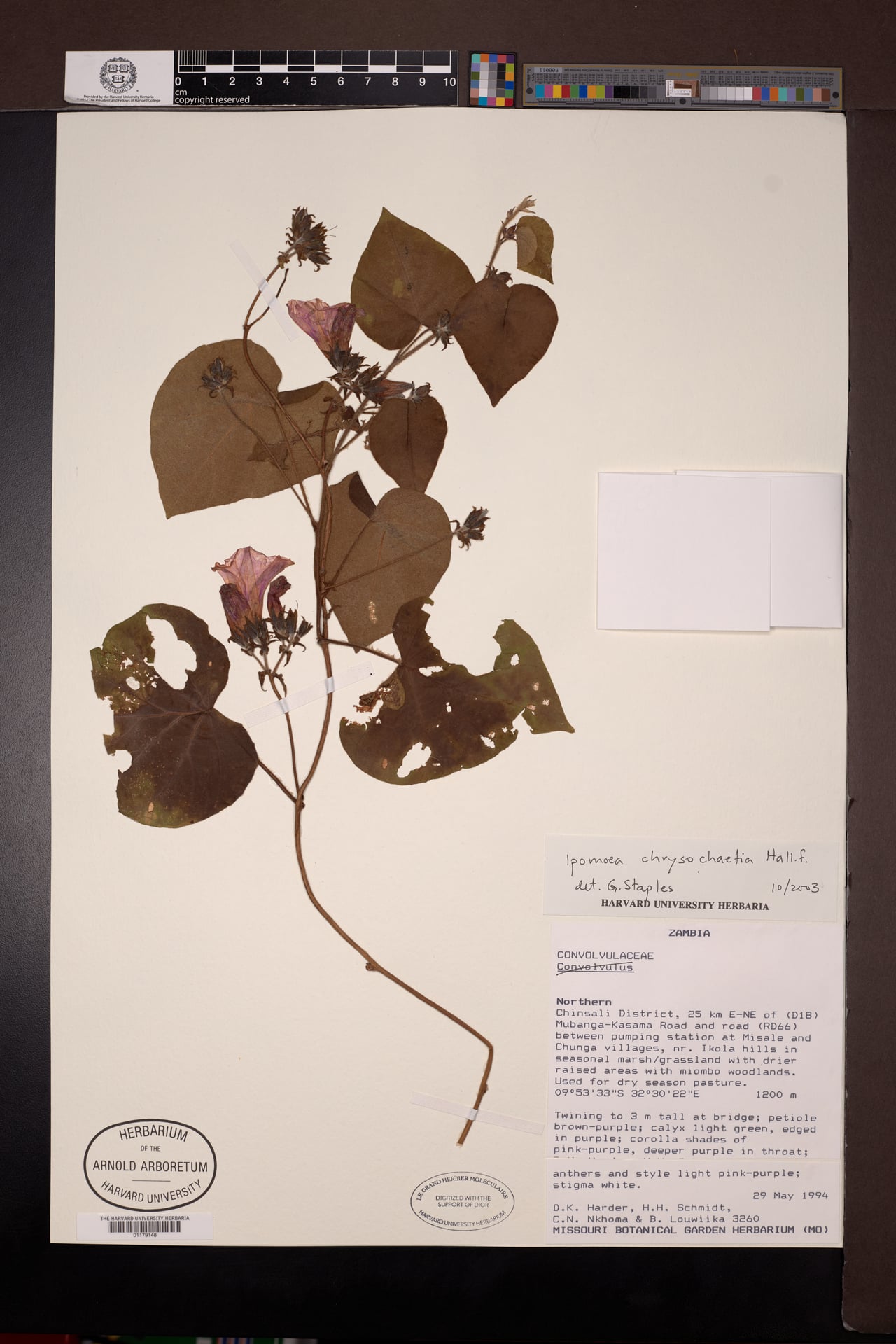
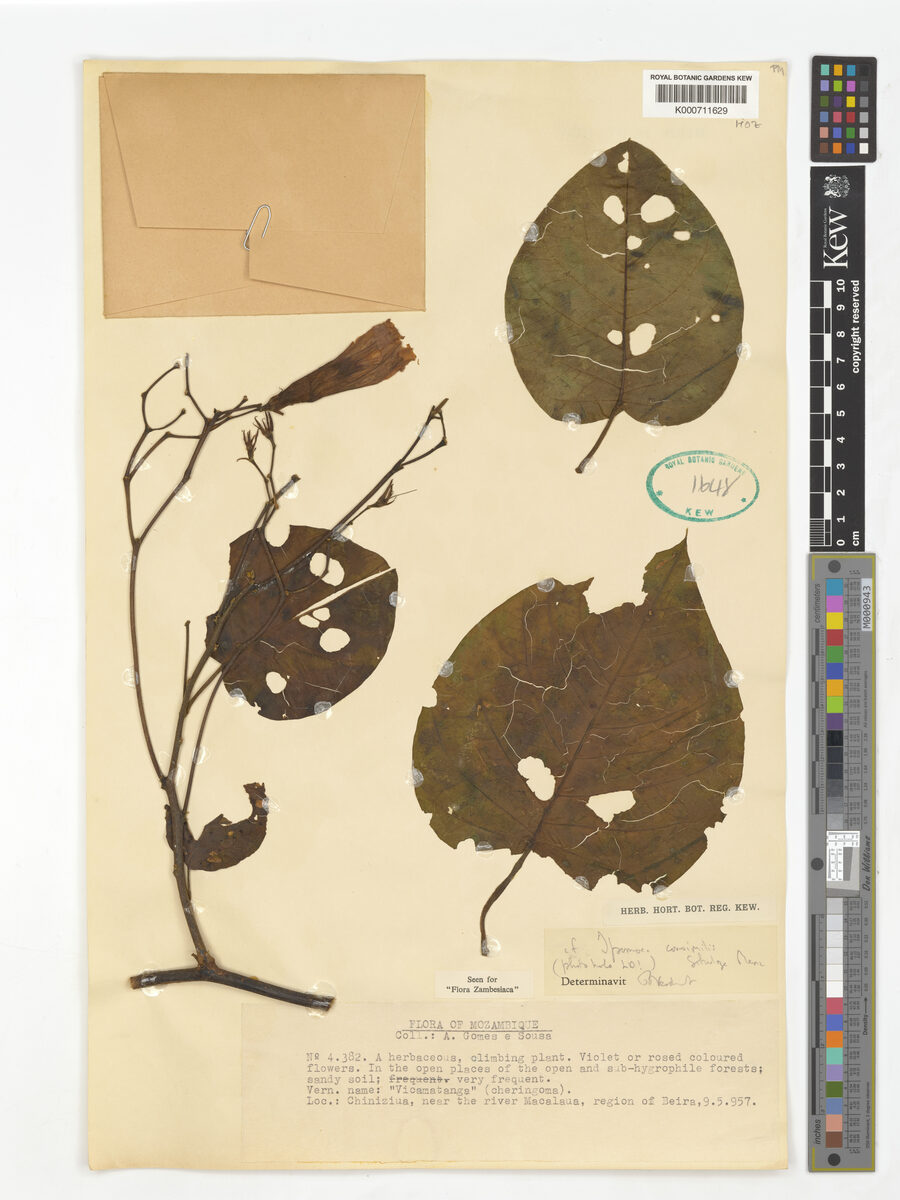
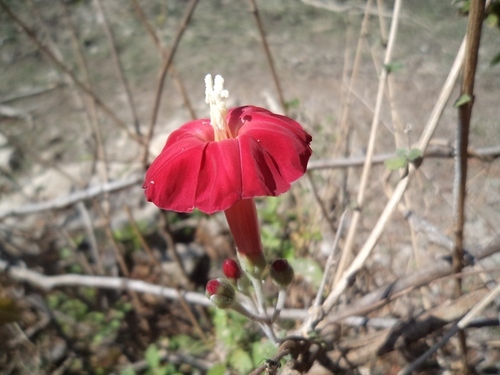
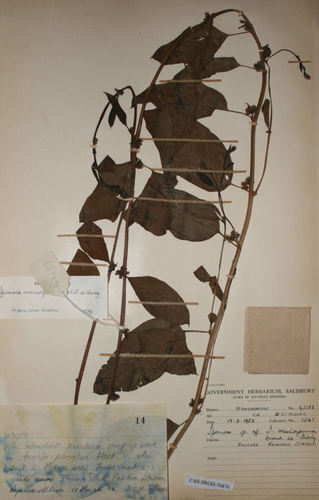
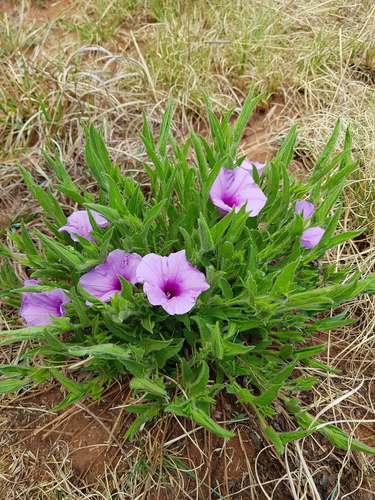
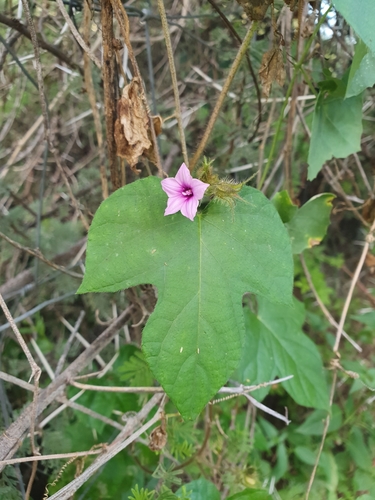
Ipomoea transvaalensis
Meeuse
Transvall orange seeded morning glory
iNaturalist· cc-by-nc
(c) fayne, some rights reserved (CC BY-NC), uploaded by fayne
iNaturalist· cc-by
(c) Petra Holland, some rights reserved (CC BY), uploaded by Petra Holland
iNaturalist· cc-by-nc
(c) Troos van der Merwe, some rights reserved (CC BY-NC), uploaded by Troos van der Merwe
Description
A climbing herb. It can grow 2-3 m long. It has annual stems from a long tuber. The leaf blade can be triangle shaped or oval. They are 2-8 cm long by 105 cm wide. The flowers occur singly or in groups or 2. They are funnel shaped and 4-6 cm long.
Edible Uses
Roots - raw or cooked. The younger ones are often eaten raw, older ones either cooked or dried and ground to a powder. The roots are rather fibrous, traditionally they would be chewed and the fibrous portion spat out. If the root is dried and powdered, the fibre can be separated by sieving prior to cooking
Traditional Uses
The tuber is eaten raw.
This uses section is brief — help expand it
Distribution
It is a tropical plant.
Where It Grows
Africa, East Africa, South Africa, Southern Africa, Tanzania, Zimbabwe,
Notes
subsp. orientalis in Zimbabwe.
Nutrition
| Part | Moisture | kJ | kcal | Protein | Vit A | Vit C | Iron | Zinc |
|---|---|---|---|---|---|---|---|---|
| Tubers | 91.8 | 1246 | 298 | 2.3 | — | — | — | — |
References (6)
- Ichikawa, M., 1980, The Utilization of Wild Food Plants by the Suiei Dorobo in Northern Kenya. J. Anthrop. Soc. Nippon. 88(1): 25-48
- Marshall, 1976,
- Peters, C. R., O'Brien, E. M., and Drummond, R.B., 1992, Edible Wild plants of Sub-saharan Africa. Kew. p 96
- Ruiters-Welcome, A. K., 2019, Food plants of southern Africa. Ph.D. thesis. Univ. of Johannesburg p 46
- Silberbauer, 1981,
Show all 6 references Hide references
- Welcome, A. K. & Van Wyk, B.-E., 2019, An inventory and analysis of the food plants of southern Africa. South African Journal of Botany 122 (2019) 136–179