Ipomoea sinensis subsp. blepharosepala
(Desr.) Choisy, (Hochst. ex A. Rich.) Verdc. ex A. Meeuse
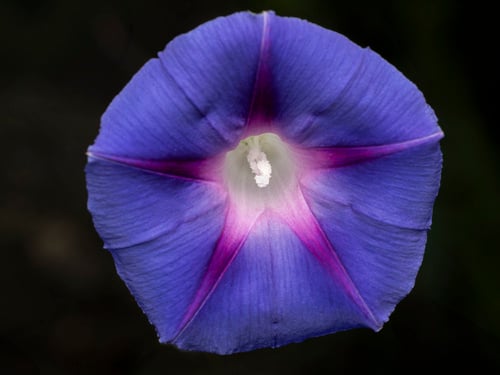
iNaturalist· cc-by-nc
(c) James Bailey, some rights reserved (CC BY-NC), uploaded by James Bailey
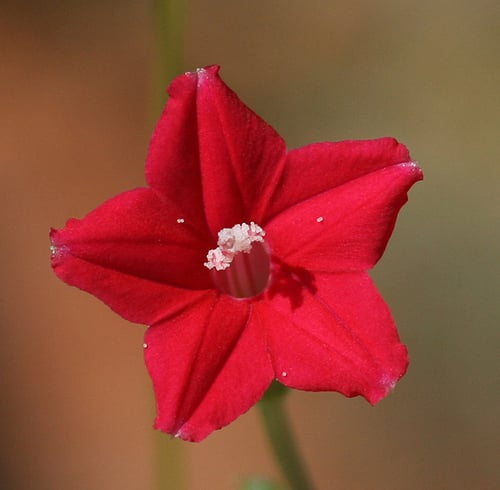
iNaturalist· cc-by-nc
(c) James Bailey, some rights reserved (CC BY-NC), uploaded by James Bailey
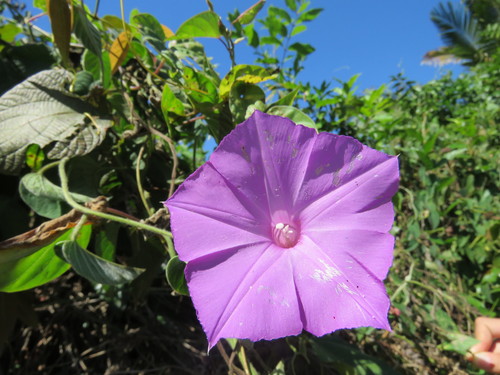
iNaturalist· cc-by-nc
(c) Riana Fourie, some rights reserved (CC BY-NC), uploaded by Riana Fourie
Description
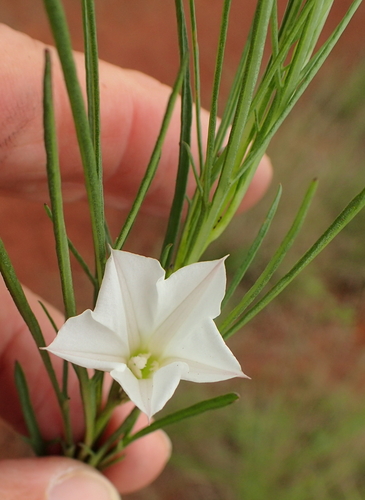
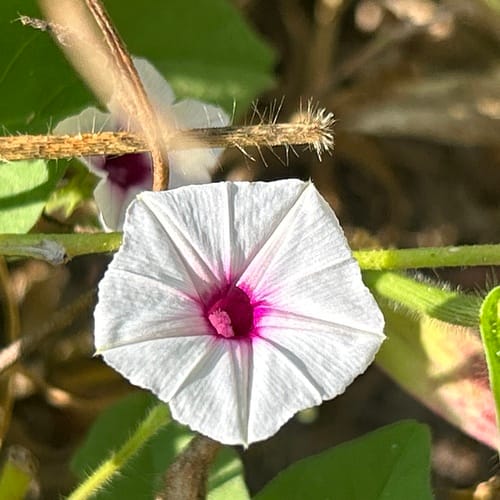
A herb or creeper. It keeps growing from year to year. It puts up annual shoots several metres long. These are twining or trailing. The leaves are light green. They are 4 cm long by 2 cm wide. The base is deeply lobed and it tapers to the tip. The flowers are white with a pink centre. They can occur singly or in clusters.
Edible Uses
The leaves are eaten raw or cooked; when cooked, the water is typically changed to remove the strong sour taste.
Traditional Uses
The leaves are eaten raw or cooked. If cooked the water is changed to remove the strong sour taste.
This uses section is brief — help expand it
Distribution
It is a tropical plant. It grows on alluvial soils, sands and loams. It can grow in seasonally waterlogged soils. It grows between 5-1,450 m above sea level. It can grow in arid places.
Where It Grows
Africa, Angola, Arabia, Botswana, Central Africa, East Africa, Eritrea, Eswatini, Ethiopia, Kenya, Middle East, Mozambique, Namibia, Saudi Arabia, Socotra, Somalia, South Africa, Southern Africa, Swaziland, Tanzania, Uganda, Yemen, Zambia, Zimbabwe,
Synonyms
Also Known As
Ijalambu, Kokorokadee, Menhoca-nhocani, Nakatombo, Okashila konoka, Umdzandzabuka
References (2)
- Leger, S., 1997, A Description of Today's Use of Plants in West Bushmanland (Namibia). German Development Service. PO Box 220035, 14061 Berlin, Germany. http://www.sigridleger.de/book/
- Royal Botanic Gardens, Kew (1999). Survey of Economic Plants for Arid and Semi-Arid Lands (SEPASAL) database. Published on the Internet; http://www.rbgkew.org.uk/ceb/sepasal/internet [Accessed 14th April 2011]