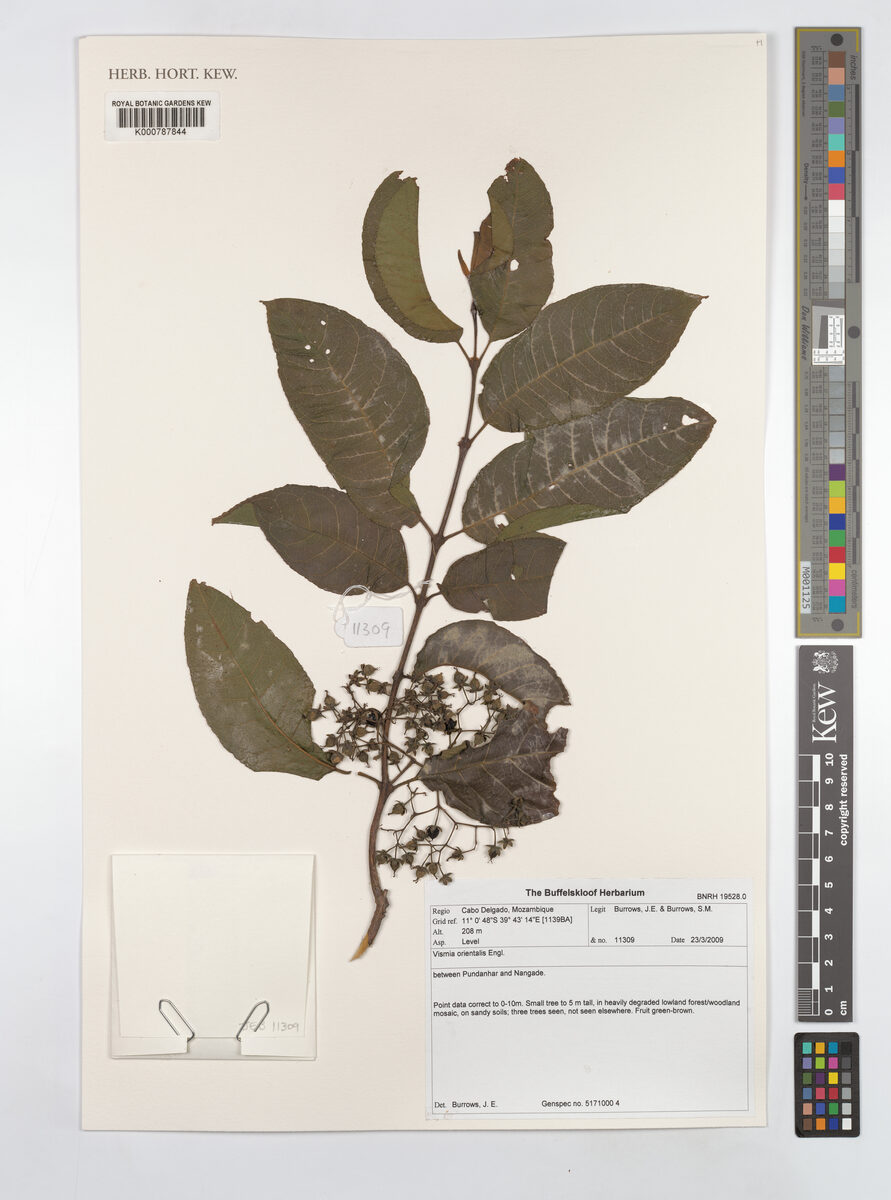
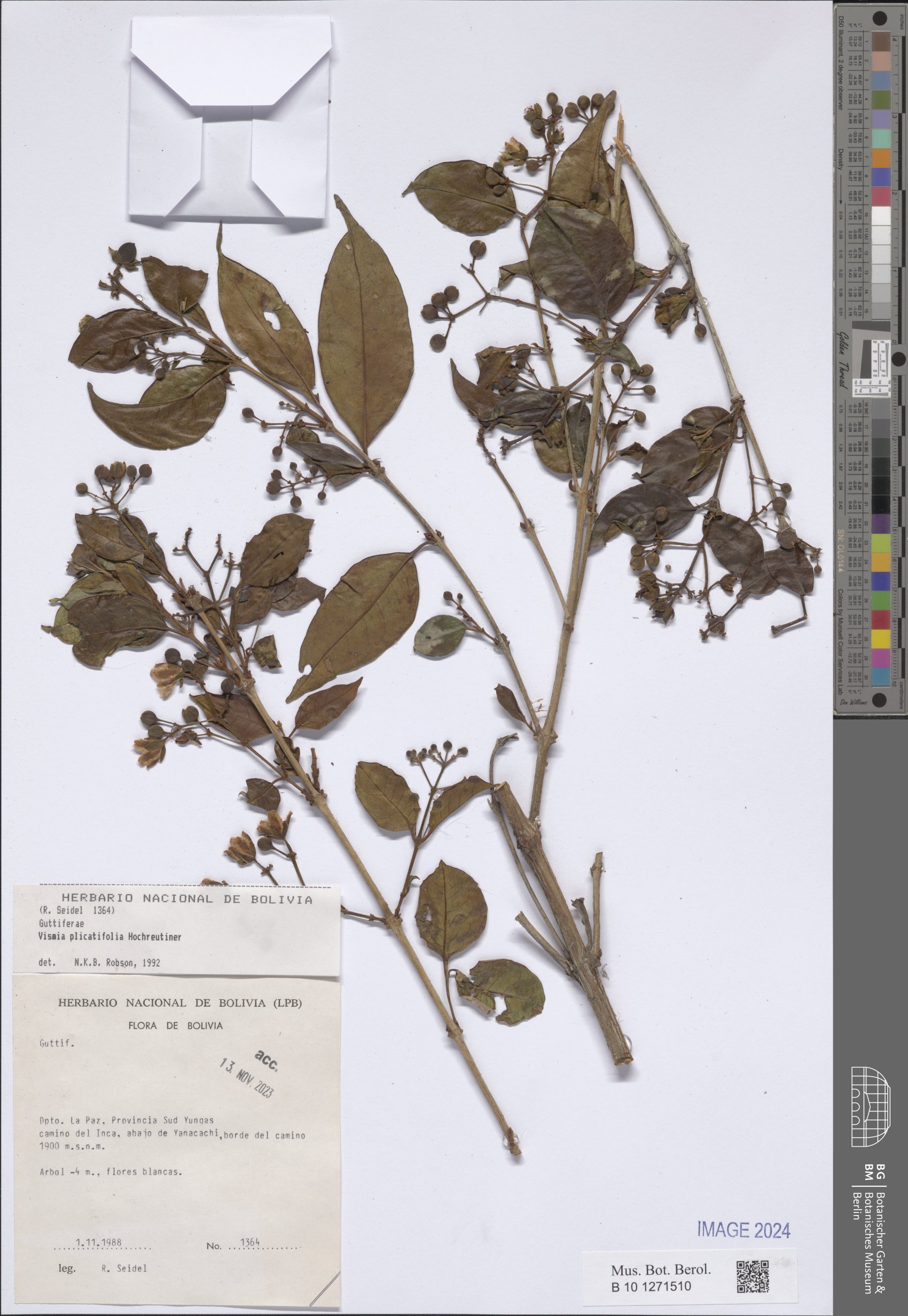
Psorospermum febrifugum
Spach
Christmas bush
iNaturalist· cc-by-nc
(c) bureaubenjamin, some rights reserved (CC BY-NC)
iNaturalist· cc-by-nc
(c) Oliver Haumann, some rights reserved (CC BY-NC), uploaded by Oliver Haumann
iNaturalist· cc-by-sa
(c) Tony Rebelo, some rights reserved (CC BY-SA), uploaded by Tony Rebelo
Summary
Source: WikipediaPsorospermum febrifugum is a species of flowering plant in the family Hypericaceae. It is found across tropical Africa in seasonally dry tropical biomes. French botanist Édouard Spach described Psorospermum febrifugum in 1836.
Description
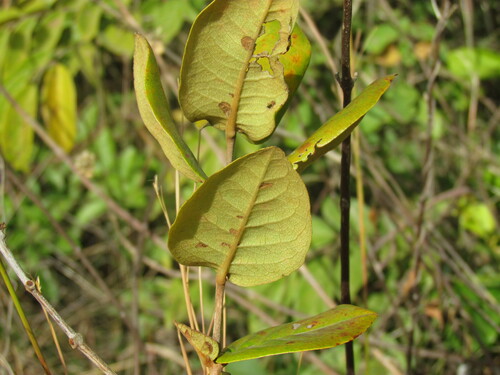
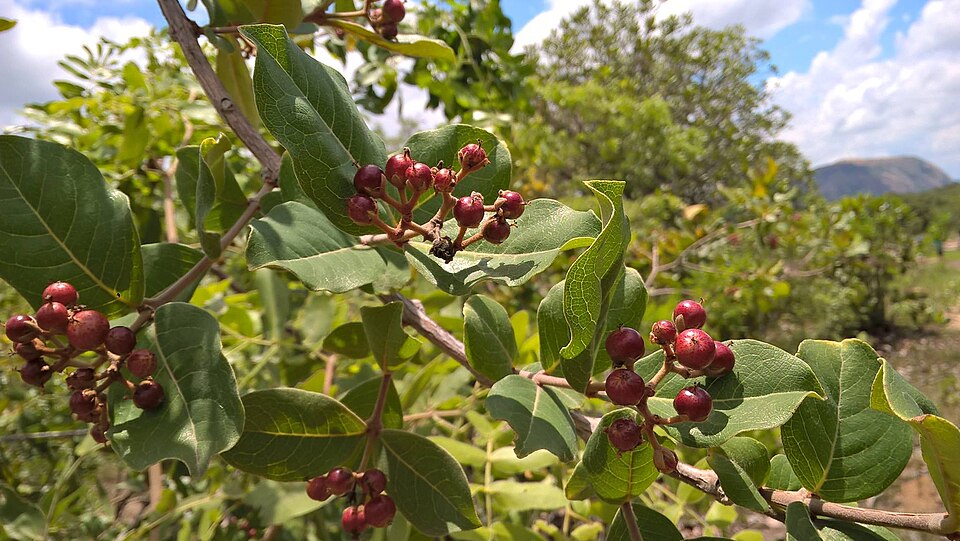
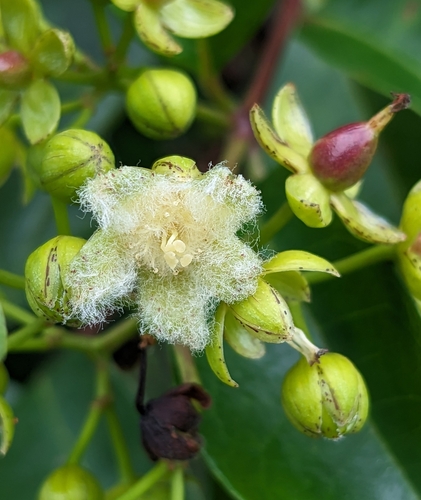
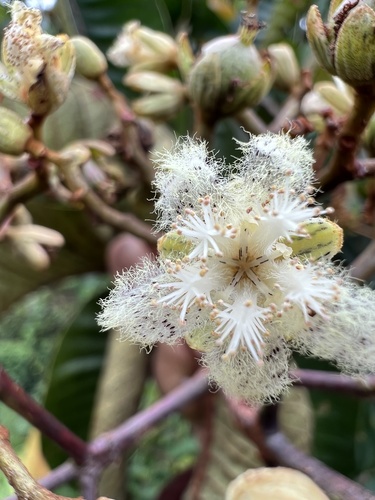
A shrub or small tree. It grows 4 m high. It has many branches. The bark is often corky and peels off. The stems can be round and smooth or angular and hairy. The leaves are leathery. The fall off during the year. The leaf blade is 11 cm long by 8 cm wide but is often much smaller. They have a rusty coating underneath. The flowering shoots are on the ends of branches. The petals are white with dark red streaks. The fruit is a bright red berry. It is 10 mm across. The seeds are 5 mm long. The plant is very variable.
Edible Uses
Fruit. A sweet flavour, they are much liked by children and travellers. The fruit is a bright to dark red, round berry about 6 - 10mm in diameter, carried in clusters on the plant.
Traditional Uses
The ripe fruit are eaten raw.
This uses section is brief — help expand it
Medicinal Uses
Psorospermum febrifugum has been used as a febrifuge, leprosy treatment, antidote, and purgative. As an ethnomedicine in Tanzania and among the Baganda people of Uganda, it has also been used to treat epilepsy, pneumonia, and tuberculosis. A 1972 study demonstrated that ethanol extracts of the plant exhibited activity in a laboratory setting against leukemia in mice and a human cell line.
Distribution
It is a tropical plant. It grows in savannah in West Africa. It grows in open deciduous woodland. It grows between 15-1,950 m altitude.
Where It Grows
Africa, Angola, Benin, Burkina Faso, Cameroon, Central Africa, Central African Republic, CAR, Congo DR, Côte d'Ivoire, East Africa, Ethiopia, Gabon, Gambia, Guinea, Guinée, Ivory Coast, Kenya, Malawi, Mozambique, Nigeria, Rwanda, Sierra Leone, Southern Africa, Sudan, Tanzania, Uganda, West Africa, Zambia, Zimbabwe,
Cultivation
Plants can be grown from seeds.
Other Uses
A yellow dye is obtained from the bark. The wood is used to make tool handles The wood is used for fuel. When burnt the wood produces much smoke, and the Gbaya of Central African Republic hold it to be unusable on this account.
Production
In Tanzania fruit are collected in November and December. In Central African Republic fruit have been recorded in July.
Other Information
The fruit are especially eaten by children. Fruit are sold locally.
Notes
Also put in the family Clusiaceae.
Synonyms
Also Known As
Da-aahugmo, Gapococo, Kalijenge, Katumbi, Kihibihibi, Kisokosoko, M'tsilote, Mchakwe, Mfwifwi, Mofere, Mumhinu, Munyamharadzi, Muparadsamusha, Murima, Musvasva, Nyobalia, Owegba, Sowike, Tchapue, Tiku, Umchithamuzi, Umukubagwa, Wanzokoroma
References (11)
- Achigan-Dako, E, et al (Eds), 2009, Catalogue of Traditional Vegetables in Benin. International Foundation for Science.
- Burkill, H. M., 1985, The useful plants of west tropical Africa, Vol. 3. Kew.
- Chapman, J. D. & Chapman, H. M., 2001, The Forest Flora of Taraba and Andamawa States, Nigeria. WWF & University of Canterbury. p 178
- Flora Zambesiaca. http://apps.kew.org/efloras
- Fowler, D. G., 2007, Zambian Plants: Their Vernacular Names and Uses. Kew. p 18
Show all 11 references Hide references
- Latham, P., 2004, Useful Plants of Bas-Congo province. Salvation Army & DFID p 229
- Latham, P & Mbuta, A., 2017, Useful Plants of Central Province, Democratic Republic of Congo. Volume 2. Salvation Army p 120
- Malaisse, F., 1997, Se nourrir en floret claire africaine. Approche ecologique et nutritionnelle. CTA., p 67
- Ruffo, C. K., Birnie, A. & Tengnas, B., 2002, Edible Wild Plants of Tanzania. RELMA p 548
- World Checklist of Useful Plant Species 2020. Royal Botanic Gardens, Kew
- www.zimbabweflora.co.zw 2011