Blighia welwitschii
(Hiern.) Radlk.
wikimedia· cc-by-sa
Wikimedia Commons - Jerome Walker
gbif· cc-by-sa
Saint Fédriche NDZAI
gbif· cc-by-sa
Saint Fédriche NDZAI
Description
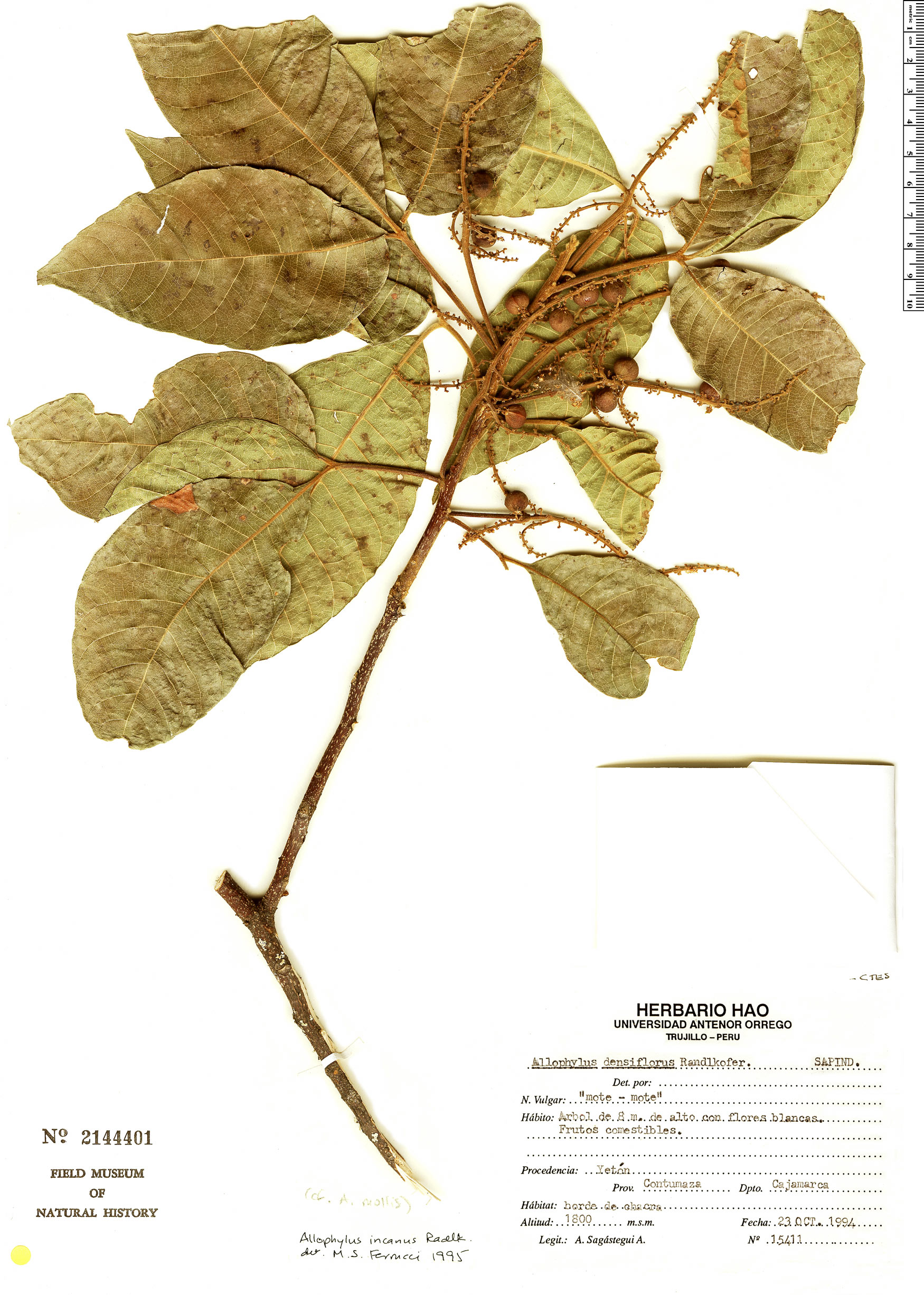
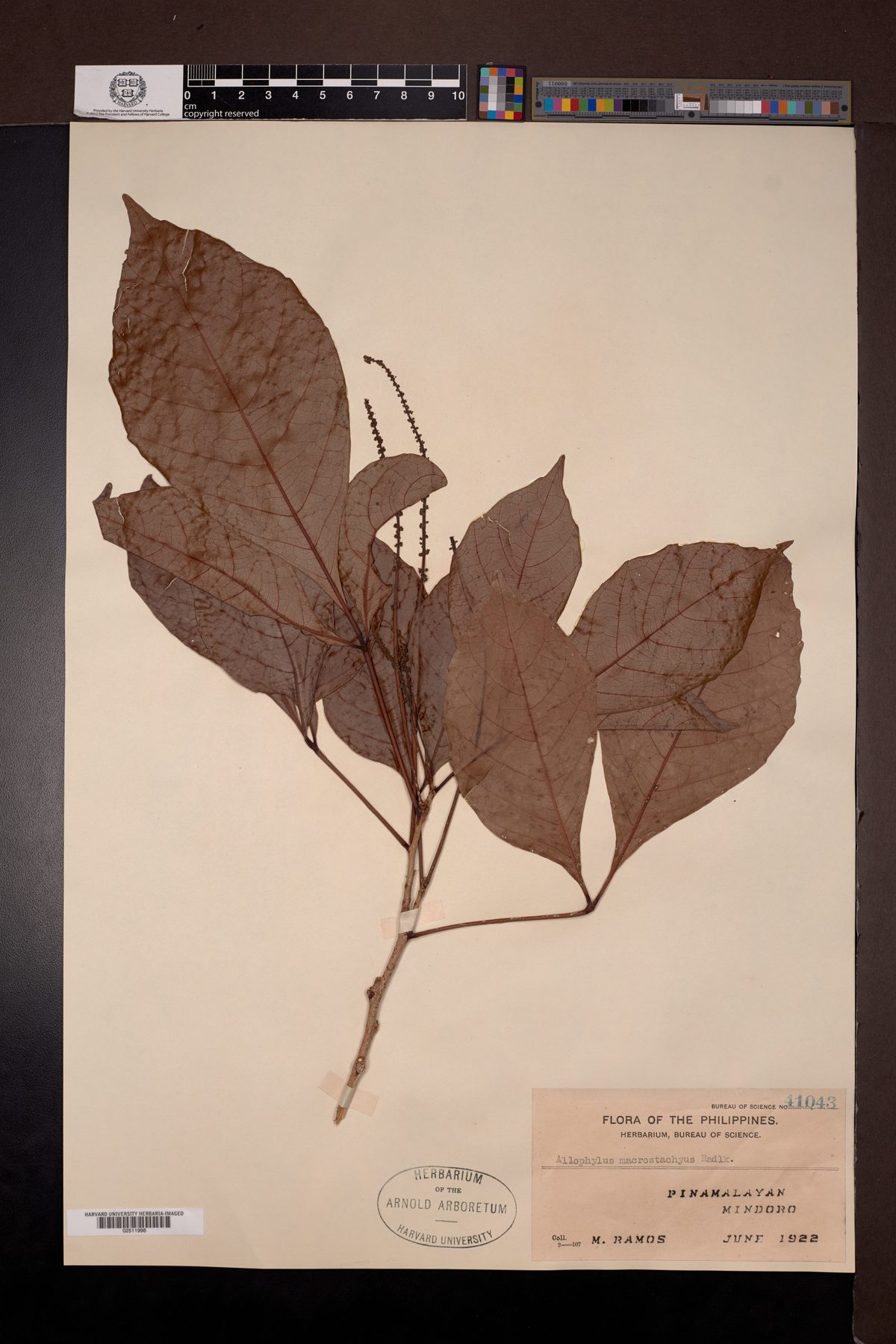
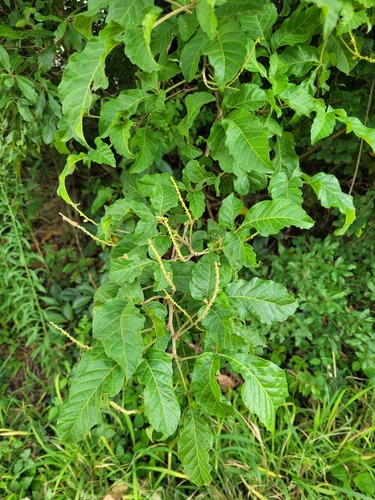
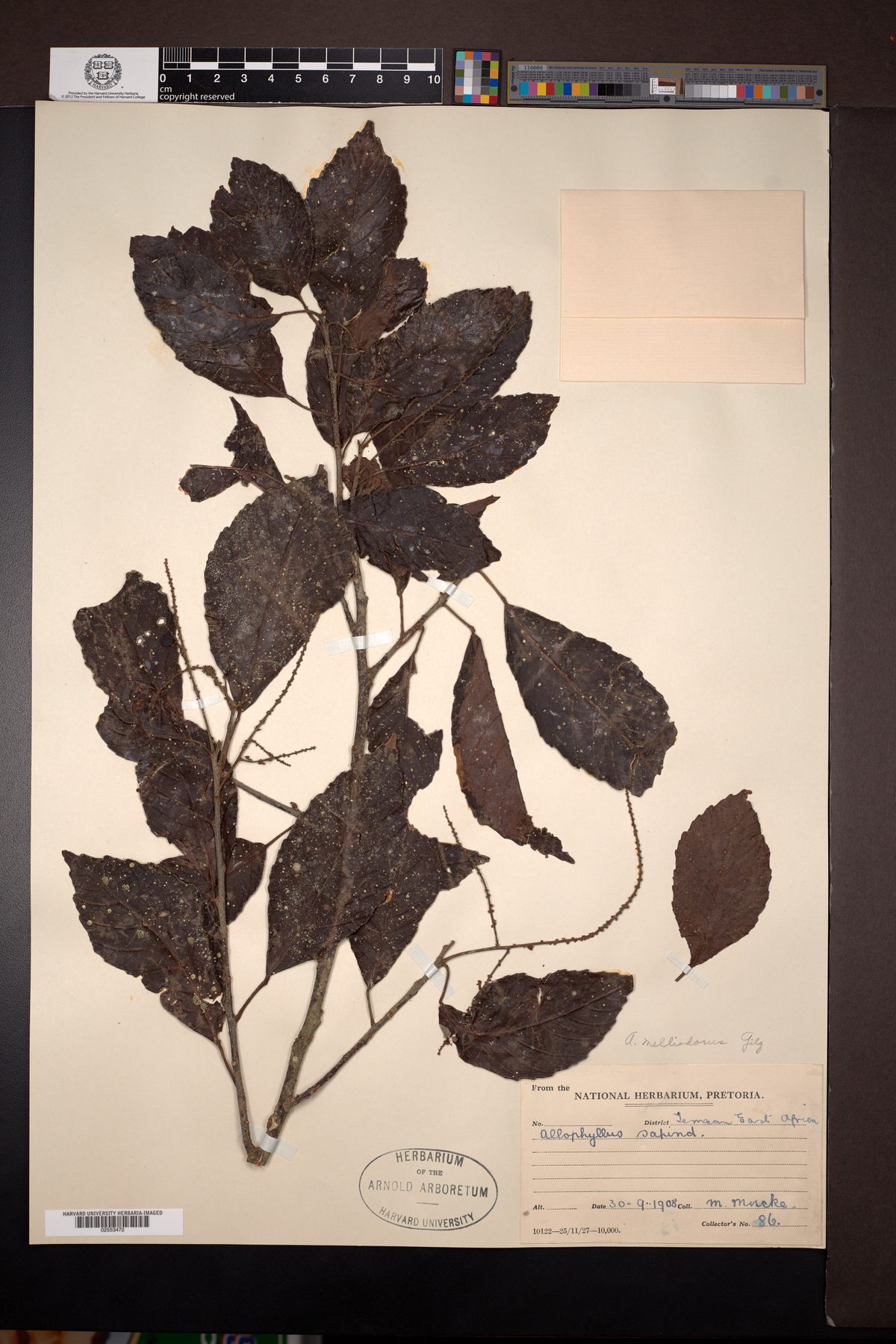
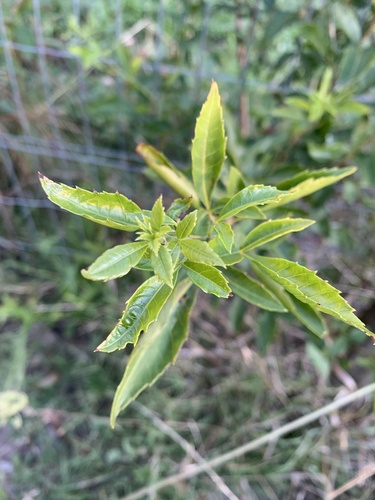
A tree. It grows 30-50 m high. The trunk is straight. It has a dense crown. Plants are separately male and female. Flowers are in small panicles. The fruit are pear shaped and with 3 parts. They are 4-8 cm long by 3-5 cm wide. They are orange to red when ripe. There can be 3 seeds in each section. The seeds are narrowly oval and 2-3 cm long.
Edible Uses
Young leaves are used to flavor soup. The aril (seed covering) and fruit are edible.
Traditional Uses
The young leaves are used to flavour soup. Caution: The aril probably needs to be very ripe and in sunlight. If unripe they are probably toxic.
This uses section is brief — help expand it
Medicinal Uses
The bark is used as a revulsive on the skin to relieve kidney, costal and lumbago pain. A bark decoction is taken as a purgative and to treat cough. The leaves are aphrodisiac and cholagogue. The powdered leaves are eaten with ripe banana when used as an aphrodisiac. The leaf sap is applied as drops to the ear to treat ear inflammations.
Known Hazards
The aril must be very ripe and exposed to sunlight; unripe arils are probably toxic.
Distribution
It is a tropical plant. It grows in the forest zone in West Africa. In Uganda it grows up to 1,150 m above sea level.
Where It Grows
Africa, Angola, Benin, Cameroon, Central Africa, Central African Republic, CAR, Congo DR, Côte d'Ivoire, East Africa, Gabon, Ghana, Ivory Coast, Nigeria, Sierra Leone, Uganda, West Africa,
Cultivation
A dioecious species, both male and female forms need to be grown if fruit and seed are required.
Other Uses
Several saponins have been isolated from the fruits, some of which showed insecticidal activity against Spodoptera frugiperda and toxicity in the brine shrimp test. The heartwood is pale brown to reddish brown, often with white specks; it is usually distinctly demarcated from the white to pinkish yellow, about 10cm wide band of sapwood. The grain is straight or interlocked; texture usually moderately fine; quarter-sawn material usually shows a ribbon stripe of narrow vertical bands alternately yellow and brown; the wood is moderately lustrous. The wood is moderately heavy to heavy; very strong; tough; quite hard; moderately durable and quite resistant to insect attacks, but susceptible to Lyctus attack. It saws well but slowly, and works easily with both machine and hand tools despite its high density; it polishes and sands to an attractive finish; has good nailing and screwing properties; hold nails firmly; and glues moderately well. The wood is commonly used for light construction, light flooring, joinery, interior trim, furniture, poles, piles, mine props, toys, novelties, boxes, crates, pestles, mortars, agricultural implements, oars and turnery. It is suitable for ship building, railway sleepers, veneer, plywood and pulpwood. The plant has been reported to be a host of okra mosaic virus. It showed symptoms that were similar to that of the infected vegetables, i.e. leaves with chlorosis near the veins, and was considered to pose a risk when planted close to okra fields.
Synonyms
Also Known As
Bate, Bolo, Boso, Boloko, Botoko, Bowso, Buba, Buwa, Bwalu nkusu, Engbangbaye, Inshi, Kamberanguhu, Kibambi, Kote, Luinda, Mbaka, Mbongendo, Maiyo-sundo, Mukusuku, Musanda, Ngekajusu, Ngondakea, Nkusu nkusu, Nofua, Oloko, Ongende, Onkom, Sabawoi, Toko, Ukpe, Wiligbise
References (10)
- Burkill, H. M., 1985, The useful plants of west tropical Africa, Vol. 5. Kew.
- Idohou, I., et al, 2013, National inventory and prioritization of crop wild relatives: case study for Benin. Genet Resour Crop Evol (2013) 60:1337–1352
- Irvine, 1961,
- Latham, P. & Mbuta, A. K., 2014, Useful Plants of Bas-Congo Province, Democratic Republic of Congo. Volume 1. Salvation Army. p 75
- Liengola, I. B., 2001, A contribution to the study of native edible plants by the Turumbu and Lokele of the Tshopo District, Province Orientale, D. R. Congo. Syst. Geogr. Pl. 71:687-698
Show all 10 references Hide references
- Seidemann J., 2005, World Spice Plants. Economic Usage, Botany, Taxonomy. Springer. p 66
- The Digital Flora of Central Africa, 2013, (Democratic Republic of Congo, Rwanda & Burundi) Botanical Garden Meise
- Uphof, 1968,
- von Katja Rembold, 2011, Conservation status of the vascular plants in East African rain forests. Dissertation Universitat Koblenz-Landau p 160
- World Checklist of Useful Plant Species 2020. Royal Botanic Gardens, Kew