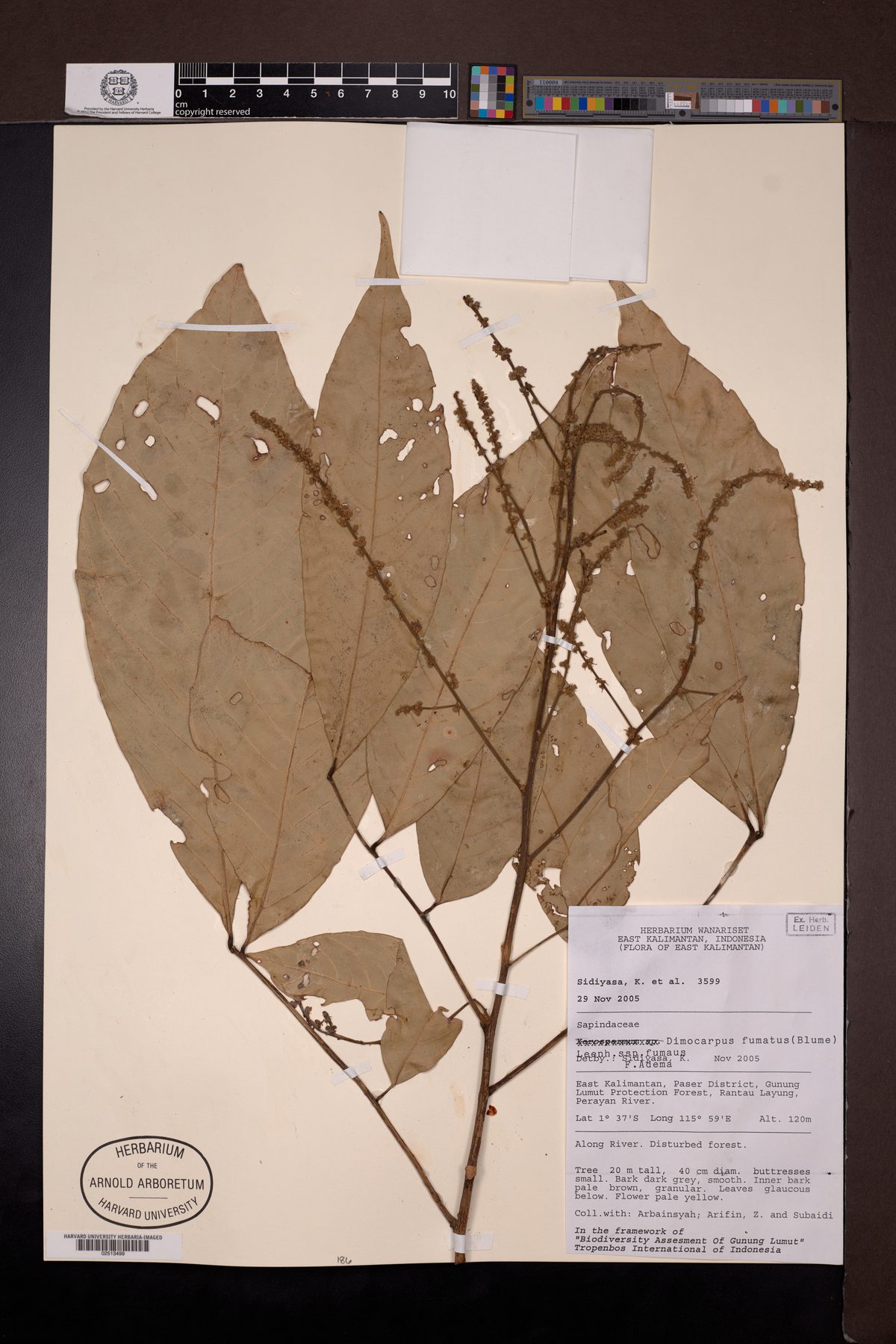
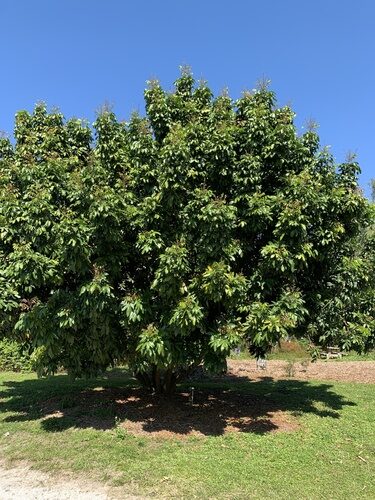
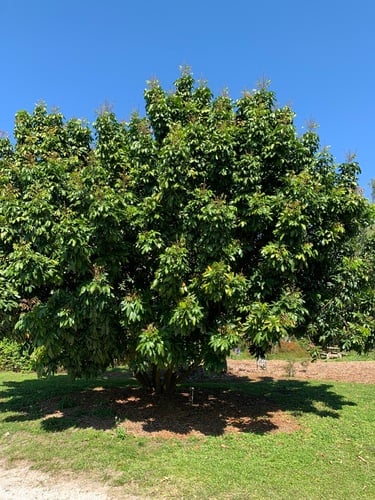
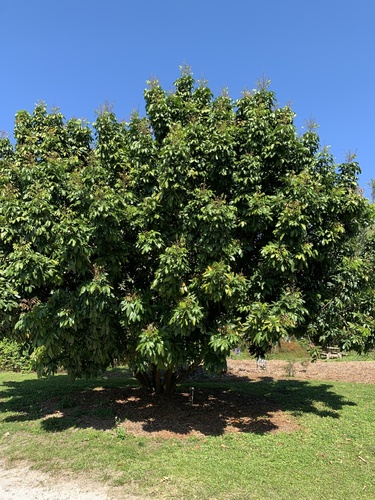
Mischarytera lautereriana
(Bailey) Turner
Corduroy tamarind
iNaturalist· cc-by-sa
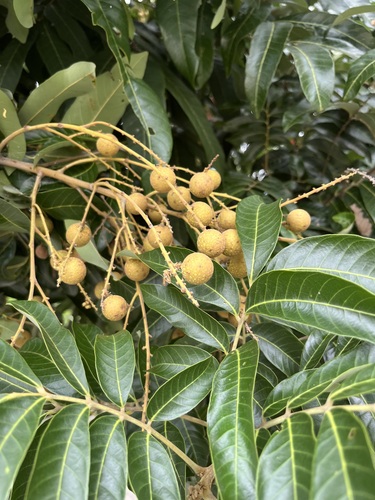
(c) Greg Tasney, some rights reserved (CC BY-SA), uploaded by Greg Tasney
iNaturalist· cc-by-nc
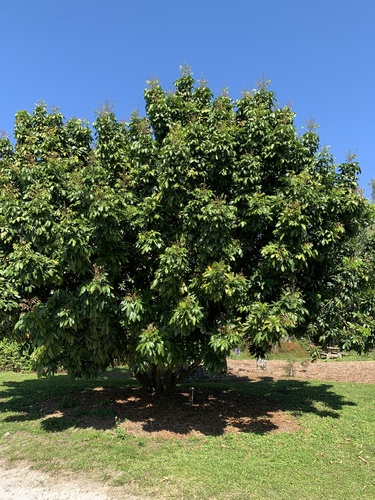
(c) R.M, some rights reserved (CC BY-NC)
iNaturalist· cc-by-nc
(c) R.M, some rights reserved (CC BY-NC)
Description
A tree up to 30 m high. It spreads 6-8 m wide. The young shoots are sticky and bright red. The leaves are compound. The leaflets are alternate and along the stalk and have wavy edges. The leaflets occur as 8-16 leaflets which are 6-15 cm long by 2-4 cm wide. The leaflets can have fine teeth along the edge. The flowers are small and white. The fruit are 2-4 cm across. They hang in bunches. They can be in the axils of leaves or at the ends of branches. The aril or layer around the seed is edible.
Edible Uses
The fleshy aril layer surrounding the seed can be eaten fresh or used to make jam.
Traditional Uses
The fleshy layer around the seed can be eaten while fresh. It can be used to make jam.
This uses section is brief — help expand it
Distribution
A tropical plant. It grows naturally in highland rainforest in Queensland Australia. In the Queensland tropics it grows between 150-1200 m altitude. It requires well drained soil.
Where It Grows
Australia*,
Cultivation
Plants can be grown from fresh seed. They are difficult to grow from cuttings.
Production
Plants can be slow growing while young.
Notes
There are 3 Mischarytera species.
Synonyms
References (14)
- Bailey, F. M., 1913, Comprehensive Catalogue of Queensland Plants. Queensland Government. (As Nephelium lautereriana)
- Cherikoff V. & Isaacs, J., The Bush Food Handbook. How to gather, grow, process and cook Australian Wild Foods. Ti Tree Press, Australia p 198 (As Arytera lautereriana)
- Cooper W & Cooper W T, 1994, Fruits of the Rain Forest. RD Press p 44 (As Arytera lautereriana)
- Cooper, W. and Cooper, W., 2004, Fruits of the Australian Tropical Rainforest. Nokomis Editions, Victoria, Australia. p 495
- Cribb, A.B. & J.W., 1976, Wild Food in Australia, Fontana. p 22 (As Arytera lautereriana)
Show all 14 references Hide references
- Edible and Useful Native Plants (off internet)
- Elliot, W.R., & Jones, D.L., 1982, Encyclopedia of Australian Plants suitable for cultivation. Vol 2. Lothian. p 237 (As Arytera lautereriana)
- Hibbert, M., 2002, The Aussie Plant Finder 2002, Florilegium. p 33 (As Arytera lautereriana)
- Jones D, L, 1986, Ornamental Rainforest Plants in Australia, Reed Books, p 121 (As Arytera lautereriana)
- Low, T., 1991, Wild Food Plants of Australia. Australian Nature FieldGuide, Angus & Robertson. p 87 (As Arytera lautereriana)
- Melzer, R. & Plumb, J., 2011, Plants of Capricornia. Belgamba, Rockhampton. p 333
- Ratcliffe D & P., 1987, Australian Native Plants for Indoors. Little Hills press. p 58 (As Arytera lautereriana)
- Townsend, K., 1994, Across the Top. Gardening with Australian Plants in the tropics. Society for Growing Australian Plants, Townsville Branch Inc. p 89 (As Arytera lautereriana)
- Williams, J.B., Harden, G.J., and McDonald, W.J.F., 1984, Trees and shrubs in rainforests of New South Wales and Southern Queensland. Univ. of New England, Armidale. p 47, 50 (As Arytera lautereriana)