Alchornea cordifolia
(Schum. & Thonn.) Mull.-Arg.
Christmas bush
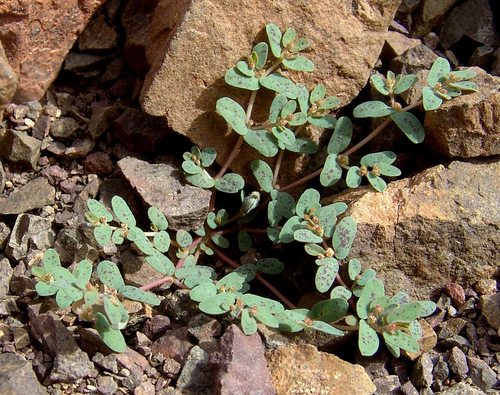
iNaturalist· cc-by-nc
(c) moise, some rights reserved (CC BY-NC), uploaded by moise
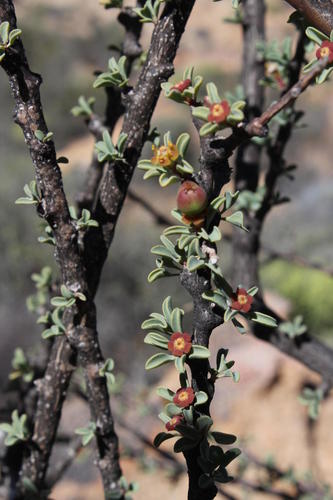
iNaturalist· cc-by-nc
(c) Peter Zika, some rights reserved (CC BY-NC), uploaded by Peter Zika
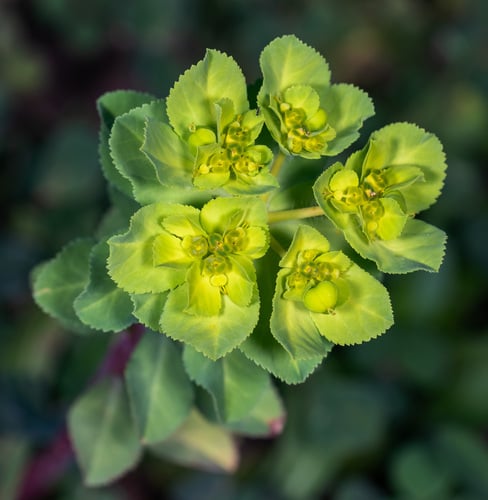
iNaturalist· cc-by-nc
(c) Luc Strydom, some rights reserved (CC BY-NC), uploaded by Luc Strydom
Summary
Source: WikipediaAlchornea cordifolia is a shrub or small tree distributed throughout tropical Africa, it can grow up to 8 metres tall. The plant is used in traditional African medicine. Common name is the Christmas bush.
Description
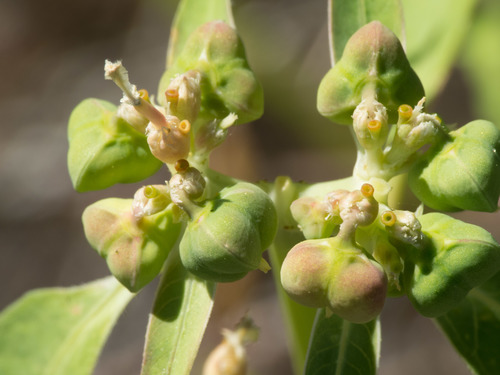
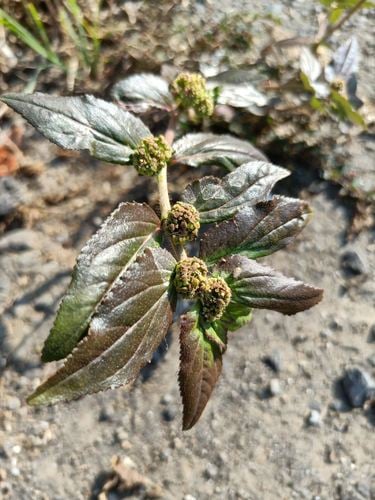
A sprawling shrub. It can grow 8 m tall. The leaves are simple and alternate. They are 10-28 cm long by 7-16 cm wide. The leaves are oval with a heart shaped base and with irregular teeth along the edge. They have distinct glands at the base of the leaf blade. The leaf stalk is long. The male flowers are on long spikes. The female flowers are on short stalks.
Edible Uses
Dried leaves can be used as a tea substitute. The fruits, which have an acidulous flavour, are considered edible in parts of Africa.
Traditional Uses
The dried leaves are cooked and used to make a tea drink.
This uses section is brief — help expand it
Medicinal Uses
Alchornea cordifolia is an important medicinal plant in African traditional medicine with well-documented antibacterial, antifungal, antiprotozoal and anti-inflammatory activity, largely attributed to its flavonoids and tannins, though the precise relationship between compounds and specific actions is not yet fully understood. The leaves are the primary part used, but the stem bark, stem pith, leafy stems, root bark, roots and fruits are also employed. The leaves and leafy stems are considered abortifacient, antispasmodic, blood-purifying, diuretic, emetic (in large doses), emmenagogue, oxytocic, purgative, sedative and tonic. Taken as an infusion or chewed fresh, they treat respiratory problems (sore throat, cough, bronchitis), genito-urinary conditions (venereal diseases, menstrual problems, impotency, female sterility), intestinal complaints (gastric ulcers, diarrhoea, amoebic dysentery, worms), anaemia, epilepsy and tachycardia; leaves are also used as a purgative enema. Crushed fresh or powdered dry leaves are applied externally to wounds, fractures, backache, headache, eye infections and skin diseases including leprosy, sores, abscesses, yaws and filariasis. A decoction of leafy twigs is used as a wash for feverish chills, rheumatic pain, sores and sore feet. Leaf and root decoctions are used as a mouthwash for ulcers, toothache and caries; twigs are chewed for the same purpose. The young stem pith, bitter and astringent, is chewed for tachycardia and may be rubbed on the chest for respiratory complaints. The root treats venereal diseases, amoebic dysentery and diarrhoea, and is used externally as eye drops for conjunctivitis. A decoction of bruised fruit is taken to prevent miscarriage, and fruit sap is applied externally for eye problems and skin diseases.
Distribution
It is a tropical plant. It grows on the edges of forests near fresh and sea water. It grows in open places. In Nigeria it has been recorded at 1,060 m above sea level. It suits acid soils.
Where It Grows
Africa, Burkina Faso, Cameroon, Central Africa, Central African Republic, CAR, Congo DR, Côte d'Ivoire, East Africa, Gabon, Gambia, Ghana, Guinea, Guinée, Guinea-Bissau, Ivory Coast, Liberia, Mali, Nigeria, Sao Tome and Principe, Senegal, Sierra Leone, Togo, West Africa,
Cultivation
Plants can be grown from stem cuttings. They can also be grown from seed. Plants can be cut back and will re-grow.
Propagation
Seed germinates in 3–12 weeks when sown directly in moist soil. The easiest propagation method is stem cuttings, which root within 9 weeks.
Other Uses
The tree improves soil fertility and is known to restore calcium levels in acid soils. As a pioneer species it is among the first to colonise vegetation dominated by the invasive shrub Chromolaena odorata. It has good potential as a mulch crop for restoring soil fertility, given its standing biomass, root distribution, nutrient content, decomposition rate, nutrient release patterns and mycorrhizal associations. It is also planted as a windbreak around crops. Leaves are used as packing material for cola nuts and a Nigerian condiment; infructescences are used decoratively; and pipe stems are made from branches with the pith removed. The fruits yield a black dye, used alone or combined with fermented Parkia pods, stems and leaves of Mucuna flagellipes, or the bark of Bridelia ferruginea, to colour mats, cloth, pottery, calabashes and leather. Leaves are often added to indigo to deepen its colour, and leaves and fruits are used to dye and preserve fishing nets — dried leaves giving a darker result than fresh. The bark and leaves contain up to 11% tannin, used locally for purposes such as waterproofing rope. Wood ash serves as a mordant. An extract of the plant is used in marine antifouling paints and coatings for metal surfaces. Alchorneic acid from the plant has been proposed as a raw material for hemi-synthesis of plastic. The wood is light, soft and perishable, but where larger pieces are available it is used for house construction, stakes, kitchen utensils and benches; split stems are used to line baskets. The wood is also used as fuel.
Production
In Central African Republic plants flower in April and fruit in July.
Notes
There are about 70 Alchornea species. They are in the tropics. It is regarded as a medicine.
Synonyms
Also Known As
Abona, Arcu, Blora, Blore, Brusus, Bugi bugi, Bugou, Bulora, Bunce, Bunzi, Cacgume, Cachumbe, Charque, Curo-djendjen-ghadje, Djebonedje, Echumbe, Eginija, Ensumbe, Fiili, Gboo, Gracassaque, Ira, Kibunsi, Kibunsila, Liondje, Lionje, Liyotche, Lungusu, M'bolota, M'sumena, M'sumuna, Po-de-arco, Po-di-lingiana, Ugonga
References (14)
- Aniama, S. O., et al, 2016, Ethnobotanical documentaton of some plants among Igala people of Kogi State (Nigeria). The International Journal Of Engineering And Science (IJES). 5(4) pp 33-42
- Batawila, K., et al, 2007, Diversite et gestion des legumes de cueillete au Togo. African Journal of Food, Agriculture, Nutrition and Development 7( 3& 4): 65
- Burkill, H. M., 1985, The useful plants of west tropical Africa, Vol. 2. Kew.
- Chapman, J. D. & Chapman, H. M., 2001, The Forest Flora of Taraba and Andamawa States, Nigeria. WWF & University of Canterbury. p 174
- FAO Corporate Document Repository. The Major Significance of 'Minor' Forest Products. Appendix 3
Show all 14 references Hide references
- Global Plants JSTOR
- Kouahkou-Siransy, G., et al, 2010, Oxygen species scavenger activities and phenolic contents of four West African plants. Food Chemistry 118: 430-435
- Latham, P., 2004, Useful Plants of Bas-Congo province. Latham & DFID p 22
- Latham, P. & Mbuta, A. K., 2017, Plants of Kongo Central Province, Democratic Republic of Congo. Volume 1. 3rd ed p 37
- Schmelzer, G.H. & Gurib-Fakim, A. (Editors), 2008. Plant Resources of Tropical Africa 11(1)-Medicinal plants 1.PROTA Foundation, Wageningen, Netherlands /791 pp
- Termote, C., et al, 2011, Eating from the wild: Turumbu, Mbole and Bali traditional knowledge of non-cultivated edible plants, District Tshopo, DRCongo, Gen Resourc Crop Evol. 58:585-618
- Terashima, H., et al, 1992, Ethnobotany of the Lega in the Tropical Rainforest of Eastern Zaire (Congo): Part Two, Zone de Walikale, African Study Monographs, Suppl. 19:1-60
- von Katja Rembold, 2011, Conservation status of the vascular plants in East African rain forests. Dissertation Universitat Koblenz-Landau
- World Checklist of Useful Plant Species 2020. Royal Botanic Gardens, Kew